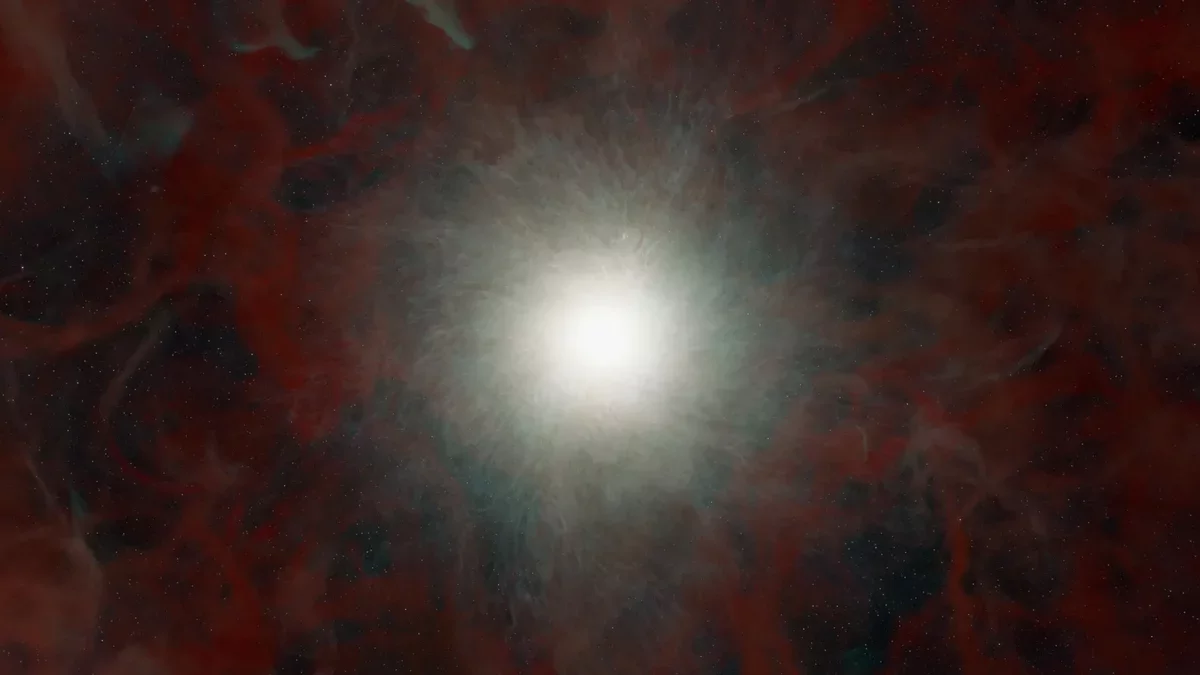
By integrating recent telescope observations with over a decade of archived data, researchers have been able to test and enhance long-held theories regarding the demise of the universe's most massive stars. Contrary to the common expectation of a spectacular supernova explosion, this star's core succumbed to gravitational forces, resulting in the formation of a black hole while its unstable outer layers were gradually expelled.
The research, published on February 12 in Science, has garnered significant attention as it provides a rare glimpse into the formation of a black hole. These findings may help to clarify why some massive stars end their life cycles with dramatic explosions, while others collapse in a more subdued manner.
"This is merely the beginning of our understanding," remarks Kishalay De, an associate research scientist at the Simons Foundation's Flatiron Institute and the principal author of the study. The light emitted from the dusty remnants surrounding the newly formed black hole, he notes, "will be observable for decades with sensitive telescopes like the James Webb Space Telescope, as it will continue to fade slowly. This could serve as a benchmark for understanding the formation of stellar black holes in the cosmos."
The Disappearance of M31-2014-DS1 in Andromeda
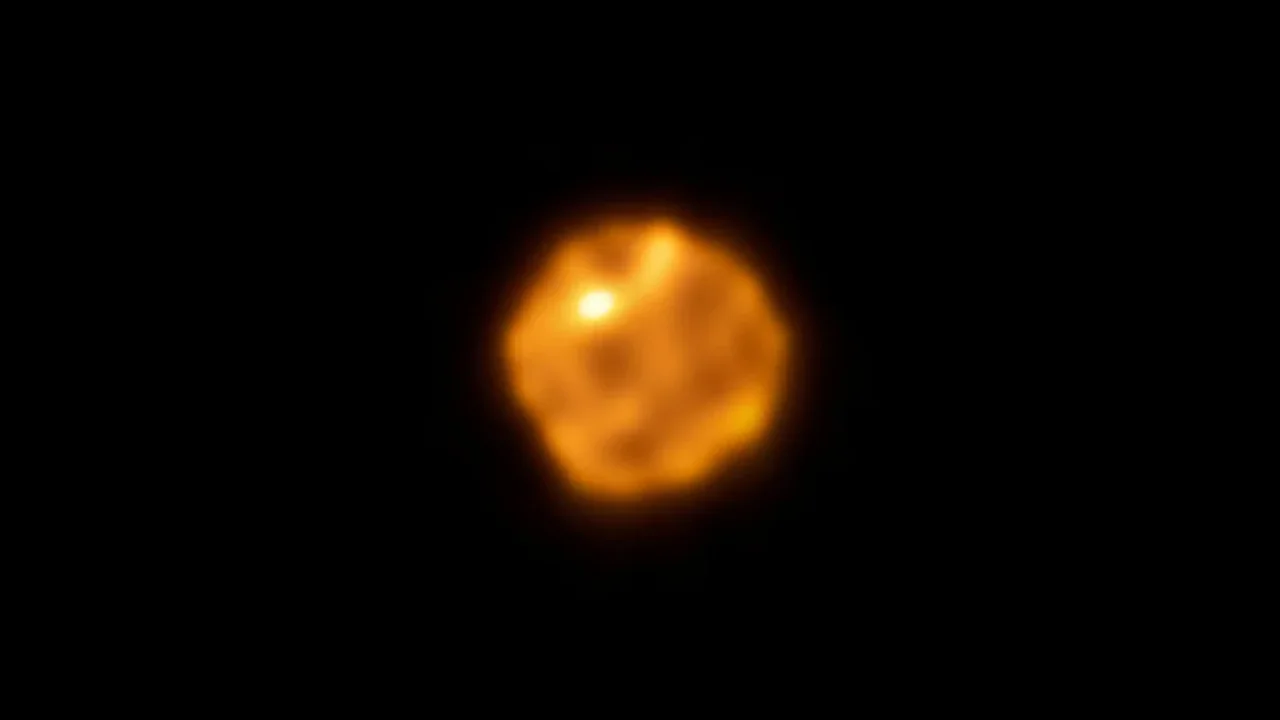
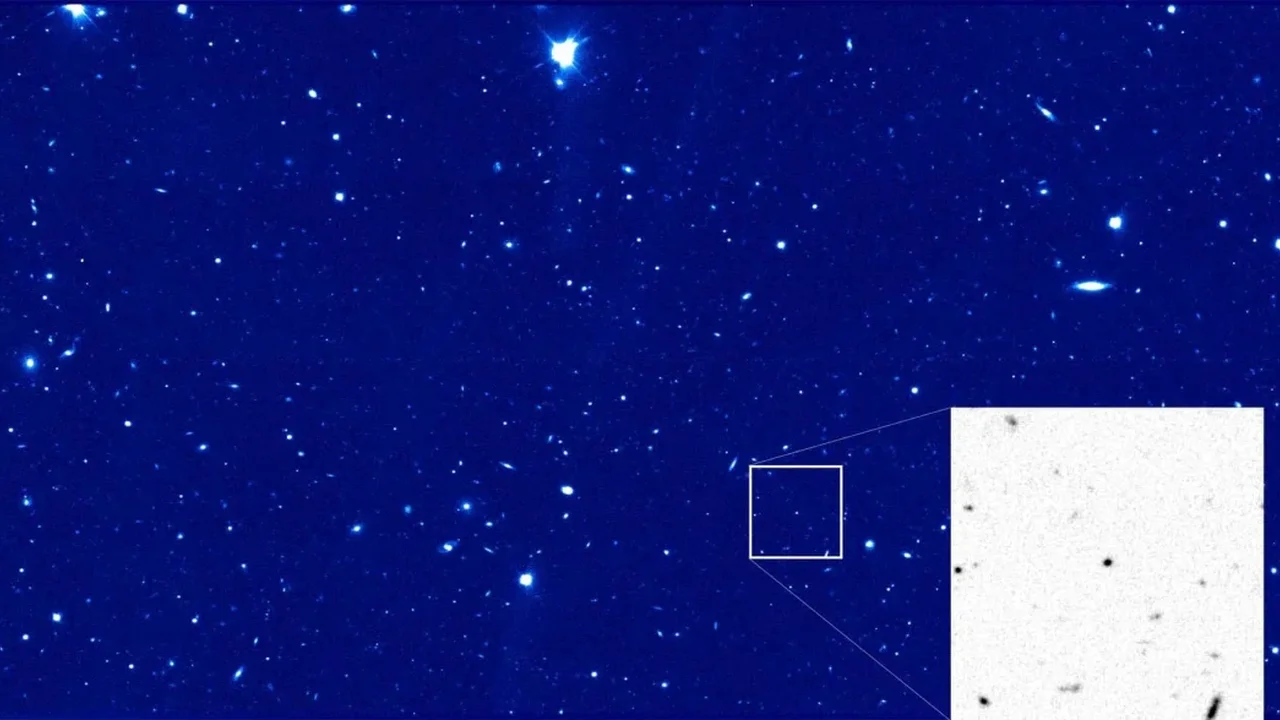
The star, designated M31-2014-DS1, is located approximately 2.5 million light-years away in the Andromeda Galaxy. De and his team analyzed data collected from NASA's NEOWISE mission and various ground and space telescopes between 2005 and 2023. They observed that the star began to brighten in infrared light in 2014, followed by a sharp decline in brightness in 2016, occurring in less than a year.
By 2022 and 2023, the star had nearly disappeared in both visible and near-infrared wavelengths, fading to just one ten-thousandth of its original brightness in those bands. Currently, it can only be detected in mid-infrared light, where it glows at about one-tenth of its initial intensity.
De explains, "This star was once among the brightest in the Andromeda Galaxy, and now it has seemingly vanished. Imagine if the star Betelgeuse suddenly disappeared--people would be astonished! A similar phenomenon was occurring with this star in Andromeda."
Upon comparing their observations with theoretical models, the researchers concluded that the dramatic decrease in brightness strongly suggests that the star's core collapsed, leading to the formation of a black hole.
Understanding Why Some Massive Stars Do Not Explode
Stars emit light because nuclear fusion in their cores transforms hydrogen into helium, generating outward pressure that counteracts gravitational forces. For stars that are at least ten times more massive than our sun, this balance eventually falters when nuclear fuel becomes scarce. Gravity then prevails, causing the core to collapse and form a dense neutron star.
In many instances, the collapse releases a torrent of neutrinos, generating a powerful shock wave that can disintegrate the star in a supernova. However, if that shock wave is insufficient to expel the surrounding material, much of the star may fall back inward. Theoretical models suggest that this fallback can convert the neutron star into a black hole.
"For nearly 50 years, we have confirmed the existence of black holes," states De, "yet we are only beginning to comprehend which stars evolve into black holes and the mechanisms behind this transformation."
The Importance of Convection
The thorough examination of M31-2014-DS1 also prompted researchers to revisit a similar object, NGC 6946-BH1, identified a decade earlier. Reassessing both cases revealed a critical missing element in understanding the fate of a star's outer layers following a failed supernova: convection.
Convection occurs due to significant temperature disparities within a star. The core is extremely hot, while the outer layers are considerably cooler. This difference causes gas to circulate between these regions. When the core collapses, the outer gas remains in motion due to this convective activity. According to models developed at the Flatiron Institute, this motion prevents most of the outer material from plunging directly into the black hole. Instead, some inner layers orbit the black hole, while the outermost layers are expelled outward.
As the ejected material travels away, it cools. At lower temperatures, atoms and molecules combine to form dust, which obstructs light from the hotter gas near the black hole, absorbs energy, and re-emits it in infrared wavelengths. This results in a persistent reddish glow that can last for decades after the original star has vanished.
Co-author and Flatiron Research Fellow Andrea Antoni developed the theoretical framework for these convection models. Drawing from the new observations, she notes, "The accretion rate--the speed at which material falls in--is significantly slower than if the star had imploded directly. This convective material possesses angular momentum, causing it to orbit the black hole. Rather than taking months or a year to fall in, it takes decades. Consequently, it becomes a brighter source than it would have been otherwise, leading to a prolonged dimming of the original star."
Much like water spiraling down a drain rather than falling straight through, gas continues to orbit the newly formed black hole as gravity gradually draws it inward. This delayed infall means the entire star does not collapse instantaneously; even after the core quickly gives way, some material falls back slowly over many decades.
Researchers estimate that only about one percent of the star's original outer envelope ultimately contributes to the black hole, producing the faint light that is still detectable today.
Expanding Our Understanding of Black Hole Formation
As they studied M31-2014-DS1, the team also re-evaluated NGC 6946-BH1. This new research provides compelling evidence that both stars followed a similar evolutionary path. What initially appeared to be an isolated case now seems to belong to a broader category of failed supernovae that quietly give rise to black holes.
M31-2014-DS1, once considered an "oddball," De notes, now appears to be one of several examples, including NGC 6946-BH1.
"Through these unique discoveries, we begin to construct a more comprehensive picture," De concludes.