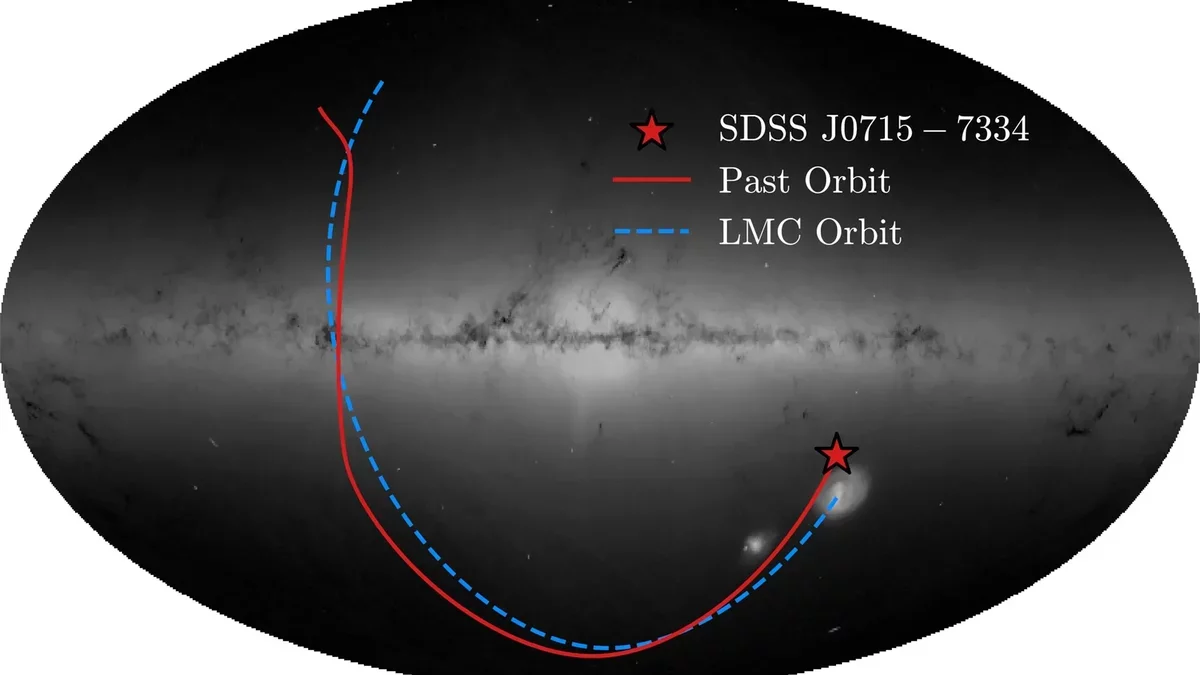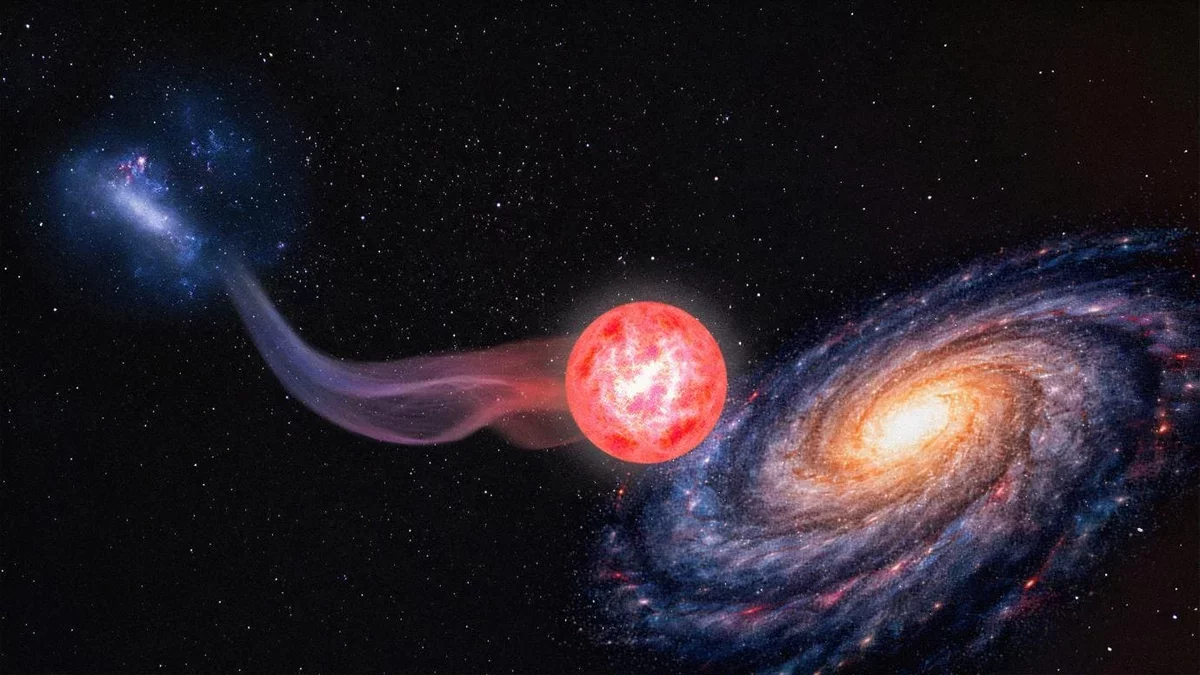
A groundbreaking discovery has emerged from the cosmos, as astronomers have identified what might be the most chemically pristine star ever observed. This dim red giant, known as SDSS J0715-7334, contains an astonishingly low quantity of heavy elements, acting as a relic from a time when the universe was still evolving its stellar population. This star originated from gas influenced by a single prior supernova, providing invaluable insights into the early stages of cosmic history.
The significance of this discovery lies in the understanding of the universe's first stars, which were predominantly composed of hydrogen and helium from the Big Bang and were massive and ephemeral. While none of these primordial stars are believed to exist today, their immediate successors--smaller stars formed from gas that was only lightly contaminated by earlier supernovae--might still be present. Finding such a star is akin to uncovering a fragment of original paint on a building that has undergone numerous renovations.
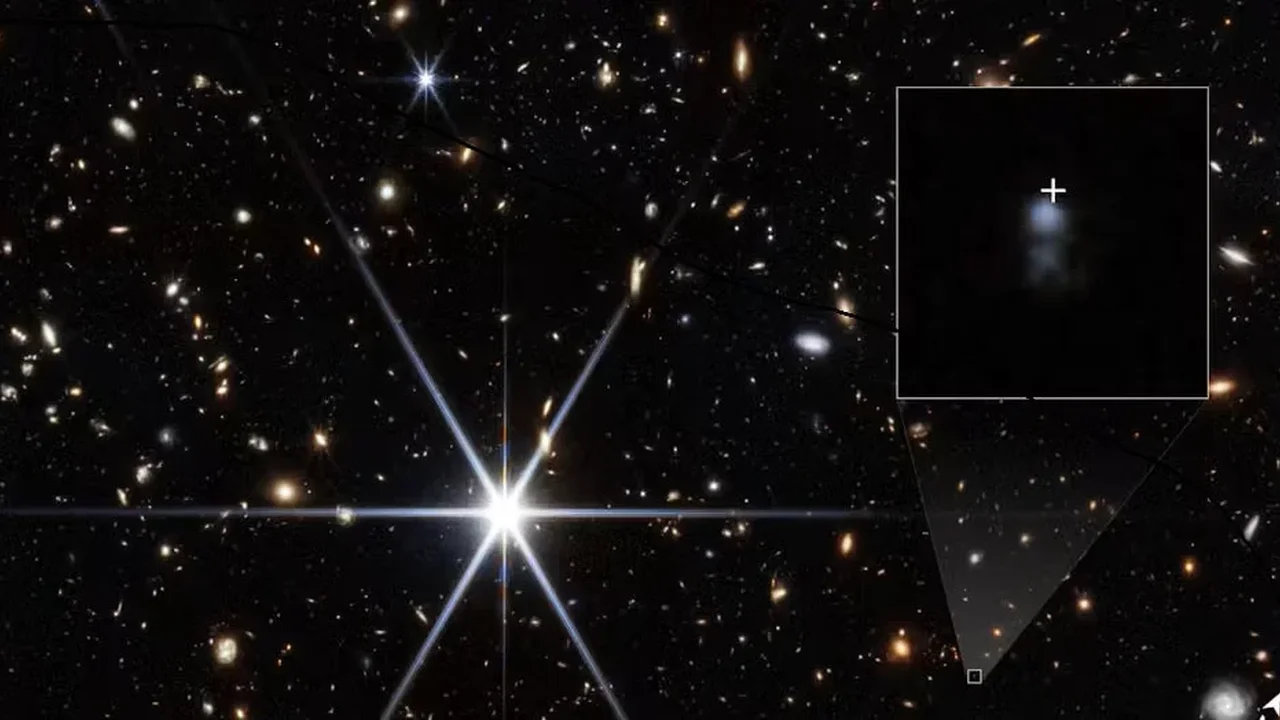
A recent study published in Nature Astronomy reveals that SDSS J0715-7334 possesses extraordinarily low levels of iron and carbon, elements typically used by astronomers to assess a star's chemical enrichment. The research team asserts that this star is over ten times more chemically pristine than the most extreme high-redshift galaxies currently being observed by the James Webb Space Telescope.
Carnegie Science, which contributed data from its Las Campanas Observatory in Chile, proclaimed this star as the most pristine known in the universe. Initially detected in the Sloan Digital Sky Survey-V (SDSS-V), SDSS J0715-7334 was subsequently analyzed with enhanced precision using the Magellan telescopes.
Co-lead author Alexander Ji expressed that these pristine stars serve as windows into the dawn of stars and galaxies. He shared that his collaboration with undergraduate students from the University of Chicago during an observational trip to Las Campanas was particularly inspiring. "My first visit to LCO is where I truly fell in love with astronomy," he remarked.
In astronomical terms, any element heavier than helium is classified as a metal. The early universe had a scarcity of such elements, which had to be synthesized by stars and dispersed through supernova explosions. Therefore, a star with minimal metals likely dates back to the universe's formative epochs.
Interestingly, SDSS J0715-7334 appears to be a galactic immigrant, as its orbit indicates it did not form within the Milky Way but rather in or near the halo of the Large Magellanic Cloud, a dwarf galaxy currently interacting with our own. This finding not only adds to the star's uniqueness but also enhances our understanding of galactic evolution.
This discovery could reshape our comprehension of how the universe transitioned from creating massive, metal-free stars to producing smaller, longer-lived stars. The ongoing debate among astronomers regarding this transition may gain clarity through further studies of similar stars.
Ultimately, the existence of SDSS J0715-7334 reveals the remarkable journey of a small star that survived the universe's early chaotic phases, drifting into our galaxy as a testament to the cosmos's rich history.