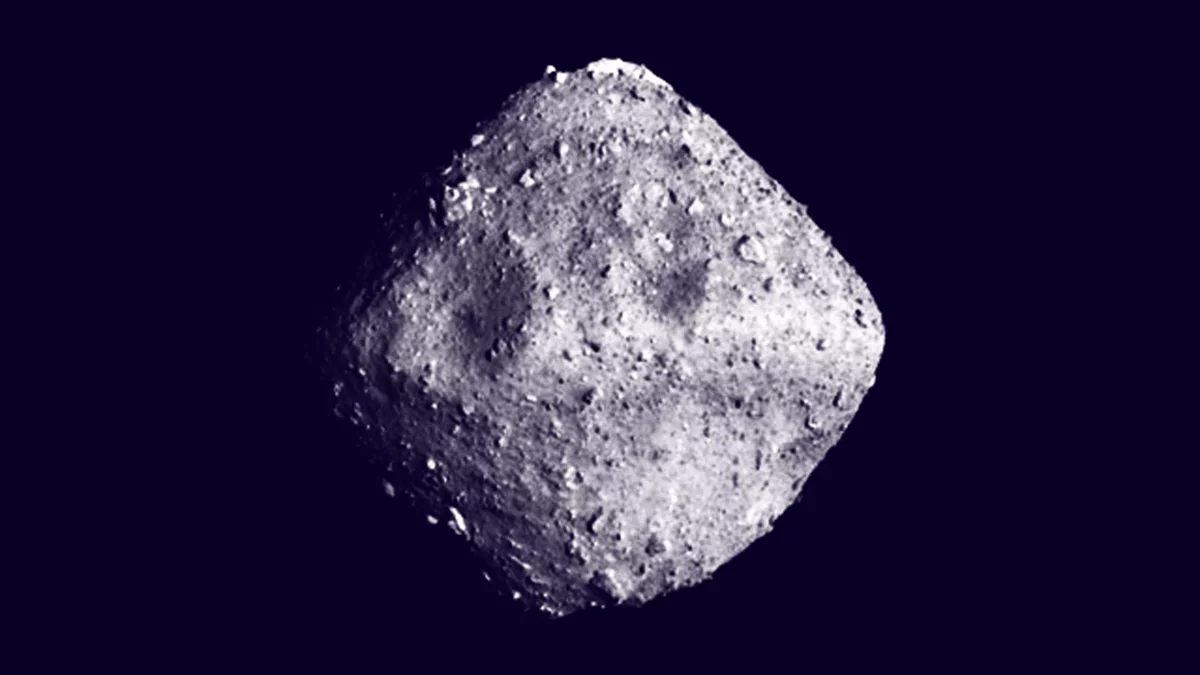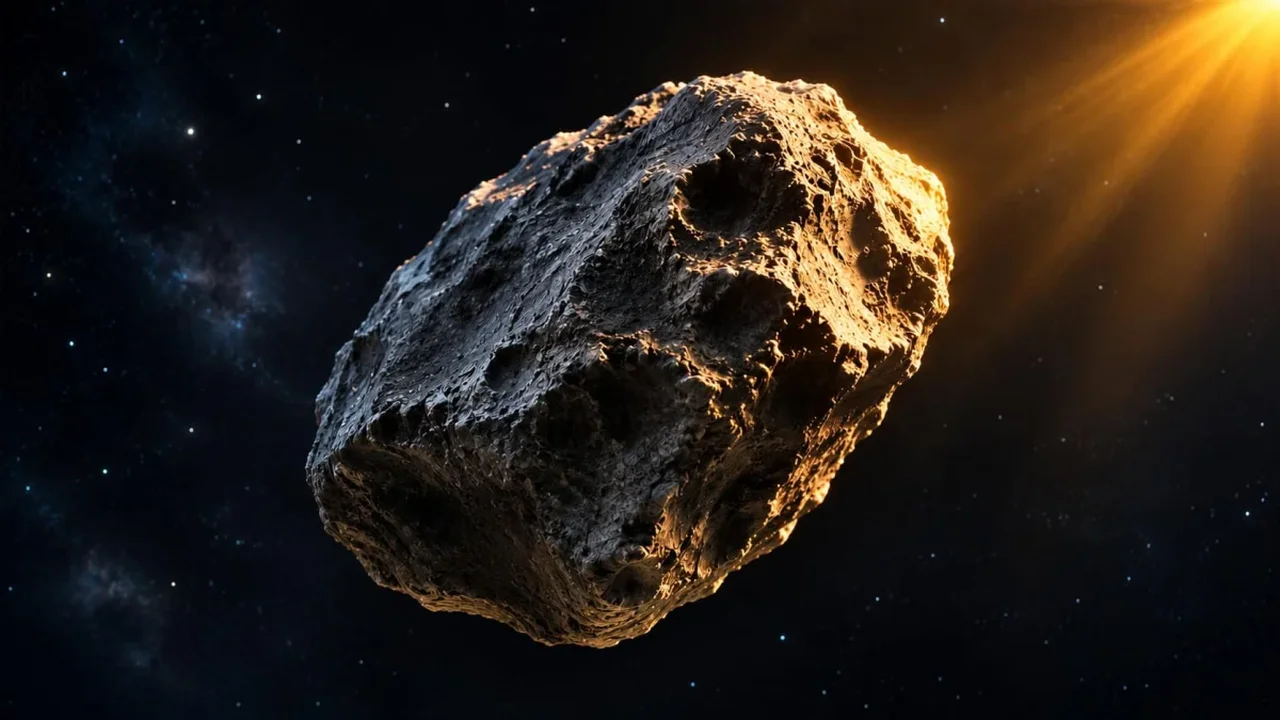
A small asteroid's unusual acceleration may have a surprising explanation: sunlight. New research suggests 1998 KY26 is unlikely to hold enough ice to release the gas once thought to be nudging it through space.
The roughly 11-metre-wide object spins once every 5.35 minutes. It has been considered a possible "dark comet"--an asteroid-like body that moves as if propelled by escaping gas, but shows no visible tail.
Researchers at the Georgia Institute of Technology modelled the asteroid's temperatures across 260 simulations. Their results put its average temperature at about minus 47°C, with even its coldest areas averaging no lower than minus 61°C over an orbit. That is far warmer than the roughly minus 128°C threshold needed for buried water ice to persist over long periods.
The team's calculations suggest that ice making up 1% of the asteroid's mass could disappear in about 2,065 years. If outgassing were responsible for the observed acceleration, the supply would be exhausted in just 62 years. The findings, published in Icarus, therefore point toward KY26 being largely dry.
Sunlight offers another explanation
Sunlight can exert pressure, while heat absorbed by an asteroid and later released can also affect its motion. These subtle forces may have a significant effect on such a small, rapidly rotating object. Earlier research has proposed that solar radiation pressure and thermal emissions could account for KY26's acceleration without gas escaping from its interior.
Japan's Hayabusa2 spacecraft is scheduled to rendezvous with the asteroid in July 2031. Its observations could help clarify KY26's composition and the forces shaping its trajectory. The encounter may also deepen scientists' understanding of how sunlight can steer even the smallest bodies in space.