Kitsissut, a formidable cluster of islands in the High Arctic, poses a challenge even for seasoned sailors today. Its treacherous fog, unpredictable winds, and dangerous currents make it a place most sailors avoid.
However, 4,000 years ago, the Paleo-Inuit thrived in this challenging environment.
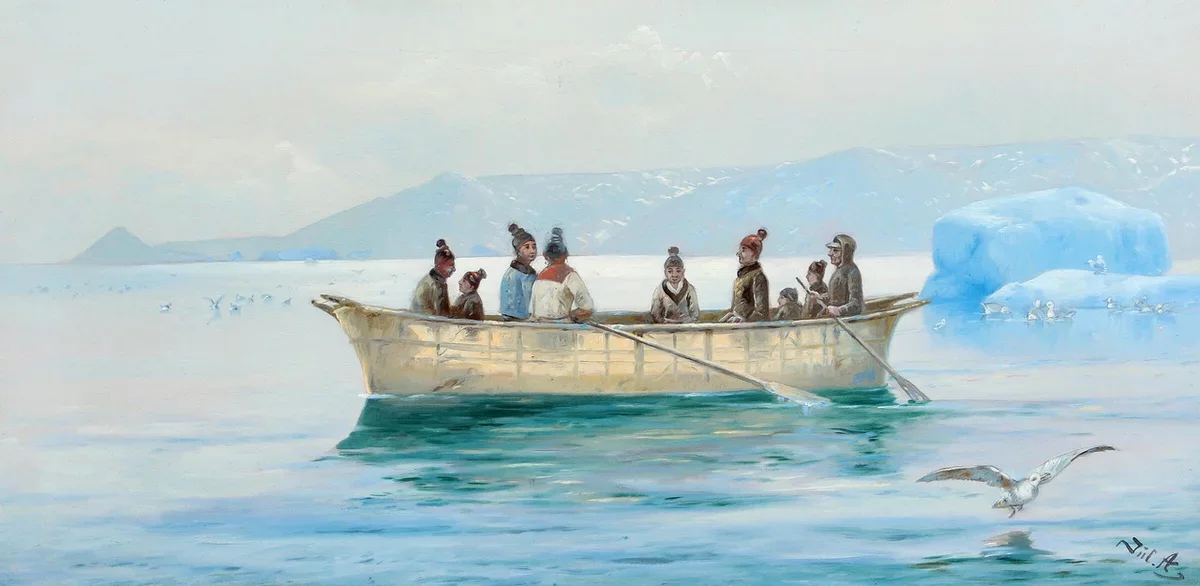
Recent archaeological findings published in the journal Antiquity indicate that these ancient inhabitants frequently navigated vast stretches of open sea between 3,900 and 4,500 years ago. The evidence includes stone tent rings and central hearths, demonstrating that the first settlers of the High Arctic were not merely land-based hunters but skilled mariners.
Trailblazers of the Arctic Seas
Kitsissut lies within the Pikialasorsuaq, a unique "polynya" where the ocean remains ice-free even during the harshest winters. This open-water area attracts a variety of life, including seabirds, fish, and marine mammals.
To reach this location, one must traverse 50 kilometers of unpredictable waters from mainland Greenland.
"This journey could take around 15 to 18 hours of challenging paddling in an environment where conditions can shift rapidly," explained archaeologist Matthew Walls, the lead author of the study. "The individuals who accomplished this feat possessed remarkable navigational skills."
The research team identified nearly 300 archaeological features on the islands, some of which were constructed by Early Paleo-Inuit communities, including circular tent rings and central hearths. Radiocarbon dating of seabird bones indicates that at least one settlement occurred between 4,400 and 3,900 years ago, affirming that these people successfully reached Kitsissut during the earliest known habitation of the High Arctic.
The arrangement and quantity of these structures suggest that the Paleo-Inuit made multiple trips rather than just one accidental landing.
These voyages likely took place during the brief Arctic summer, coinciding with the nesting season of thick-billed murres along the cliffs. Researchers discovered seabird bones near the dwellings, indicating seasonal harvesting of their meat and eggs.
Adapting to the Environment
For many years, researchers envisioned the earliest Arctic populations traversing the frozen landscape alongside land animals like musk oxen. However, new evidence illustrates that these communities were capable of sustained open-water travel--potentially among the longest crossings inferred for this era.
Upon arriving, these travelers engaged actively with their environment.
When the Paleo-Inuit settled in, the Pikialasorsuaq ecosystem was still developing after the glaciers retreated. By hunting, gathering food, and transporting materials, these travelers helped redistribute nutrients across the land and sea. Walls describes them as "ecological engineers," collaborating with seabirds to shape the Arctic ecosystem we recognize today.
This research challenges the notion that Arctic ecosystems existed in a pristine state before human influence, highlighting a rich history of Indigenous stewardship of the land.
According to Sofia Ribeiro, a geoscientist not involved in the study, this work could inform contemporary conservation efforts. "[The study] will significantly contribute to future measures," she remarked. "We need to view stewardship as an ongoing process intertwined with the evolution of this ecosystem."
The archaeological evidence from the Pikialasorsuaq region supports this narrative. Sites representing various Paleo-Inuit cultural traditions cluster around the polynya, indicating that generations returned to its bountiful waters over millennia.
For Walls, the overarching message is how science enhances our understanding of Arctic history. "Our findings enrich the Indigenous narrative of High Arctic environments," he stated. The journey to Kitsissut required knowledge and skills that were "passed down and refined as each generation ventured into the sea to travel and hunt."