Located along the banks of the Nile, Egypt's Valley of the Kings has long been a significant destination for travelers worldwide. Recent translations of graffiti have uncovered a fascinating testament to the historical presence of visitors from distant lands, who left their marks on the tombs of this iconic site.
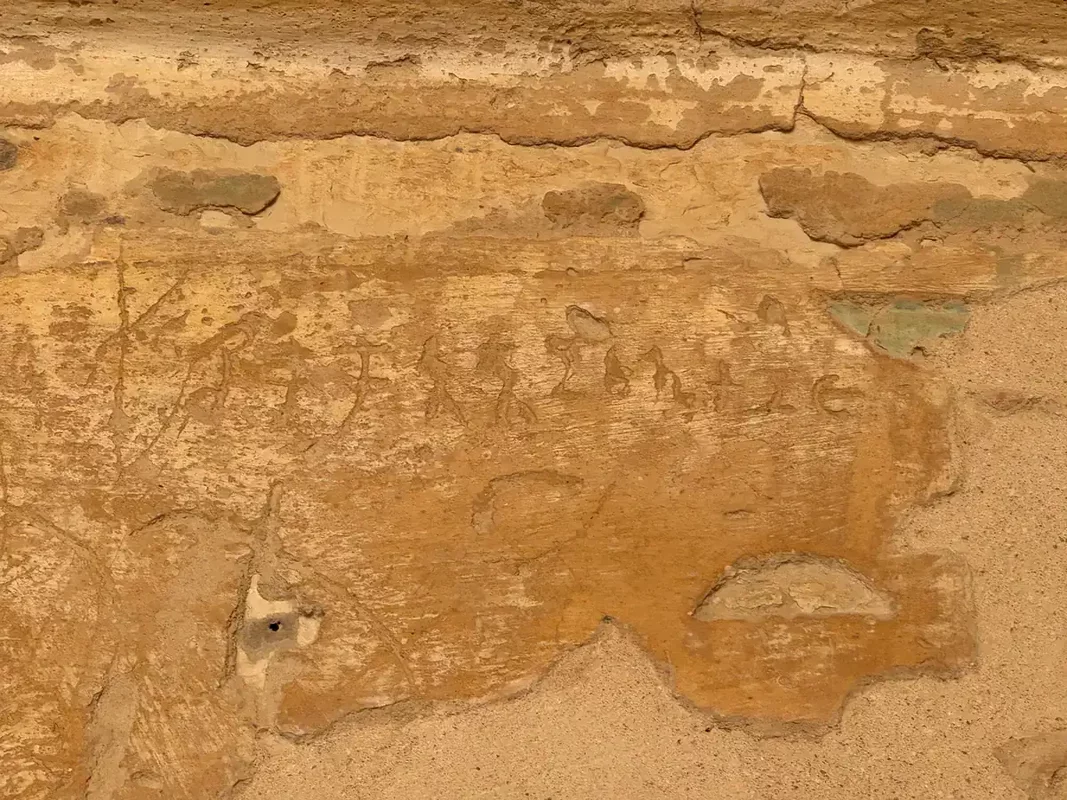
In a groundbreaking presentation at a conference in Chennai, India, several researchers unveiled translations of graffiti dating back 2,000 years, discovered on the walls of six tombs in the Valley. The translations, which include inscriptions in Old Tamil, Sanskrit, and Kharosti, provide insight into the cultural interactions that took place in ancient times.
Related Insights
These ancient texts, originating from the 1st to 3rd centuries CE, coexist alongside Greek and Roman inscriptions, highlighting the Valley's role as a crossroads of civilizations. The graffiti's presence had been acknowledged since the 19th century, but it is only recently that scholars have begun to decipher these historical messages.
Among the inscriptions, one name appears repeatedly: Cikai Korran, who boldly declared his visit by inscribing his name eight times across five tombs, stating, "Cikai Korran came here and saw." This suggests that Korran, possibly a chief or merchant from Southern India, had a profound appreciation for the Egyptian culture.
Charlotte Schmid, a researcher from the French School of the Far East, discussed the implications of these findings at the conference. She noted the unusual placement of the graffiti high on the tomb walls, prompting curiosity about the methods used by Cikai Korran to leave his mark. "It's quite peculiar," Schmid remarked, reflecting on both the frequency of Korran's inscriptions and their strategic locations.
Alexandra von Lieven, an Egyptology professor in Germany, emphasized the significance of these discoveries. She stated that the presence of Indian inscriptions not only confirms the existence of Indian visitors in Egypt but also indicates their active engagement with the local culture.
This revelation enriches our understanding of ancient cultural exchanges, illustrating how interconnected the world was even two millennia ago. As we continue to explore these historical narratives, the implications for future cultural studies are profound, suggesting that the threads of human connection have always transcended borders.