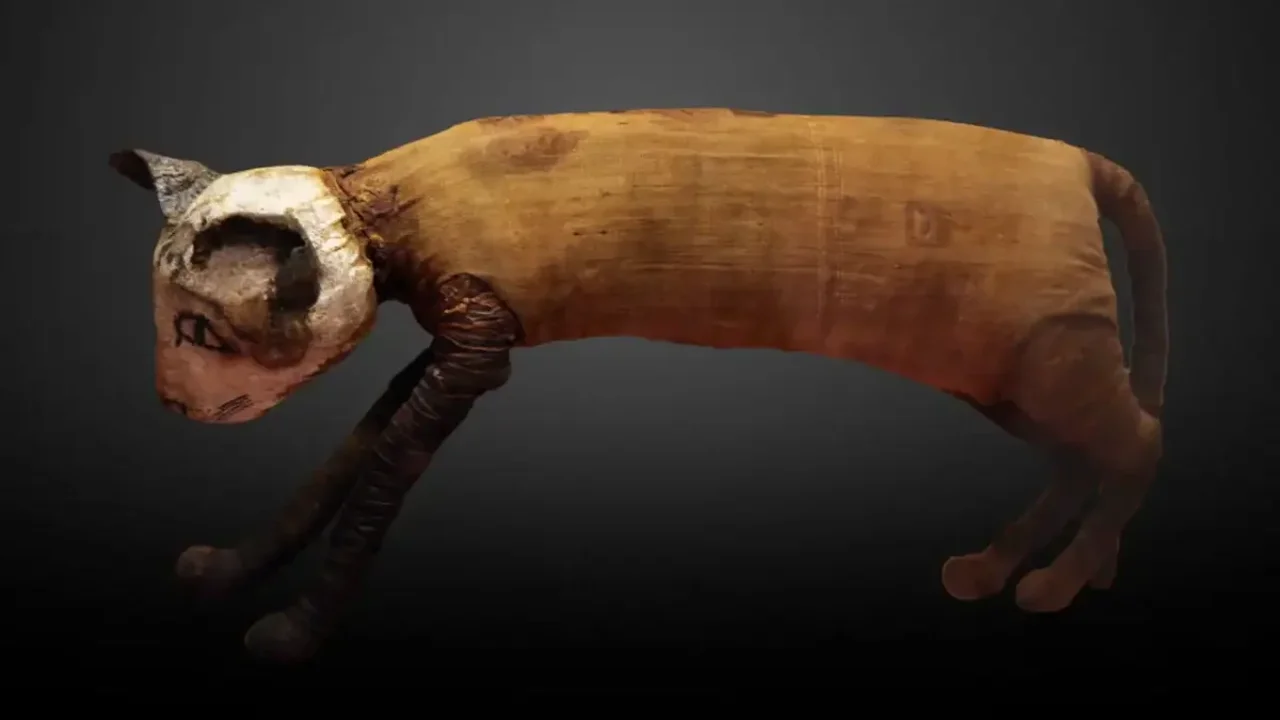
Ancient Egypt's cat mummies preserve more than evidence of religious devotion. A study of 131 cat skulls from Beni Hassan has found signs of disease and injury, suggesting that some animals lived in crowded and difficult conditions.
Researchers examined the collection, now held at the Natural History Museum in Vienna. Led by zooarchaeologist Wim Van Neer of the Royal Belgian Institute of Natural Sciences, the team assessed the skulls for age, illness and trauma, alongside radiocarbon dating and chemical analyses.
Signs of disease and injury
Eighty-one of the 131 skulls showed at least one pathological change. Researchers noted dental disease and missing teeth, as well as bone alterations that may be associated with infection, nutritional stress or other conditions. Because only the skulls were available, some diagnoses remain uncertain.
Fourteen skulls had signs of trauma, including fractures and puncture wounds. Some injuries had healed, while others had not. The marks point to a range of possible causes: some resemble bites from other cats, while others may have resulted from blows. The researchers caution that the evidence cannot always establish how or why an injury occurred.
A complex relationship with cats
Many cats were mummified as religious offerings, reflecting their association with deities such as Bastet. The large numbers of animal mummies found at sites including Beni Hassan suggest that demand for these offerings was substantial. Some animals may have been raised or kept in captivity for this purpose, though the skulls alone cannot reveal the precise conditions in which they lived.
The findings, published in the Journal of Archaeological Science, add nuance to the familiar image of cats as universally cherished in ancient Egypt. As researchers study preserved remains with modern methods, they can build a fuller picture of how people and animals shared the ancient world.