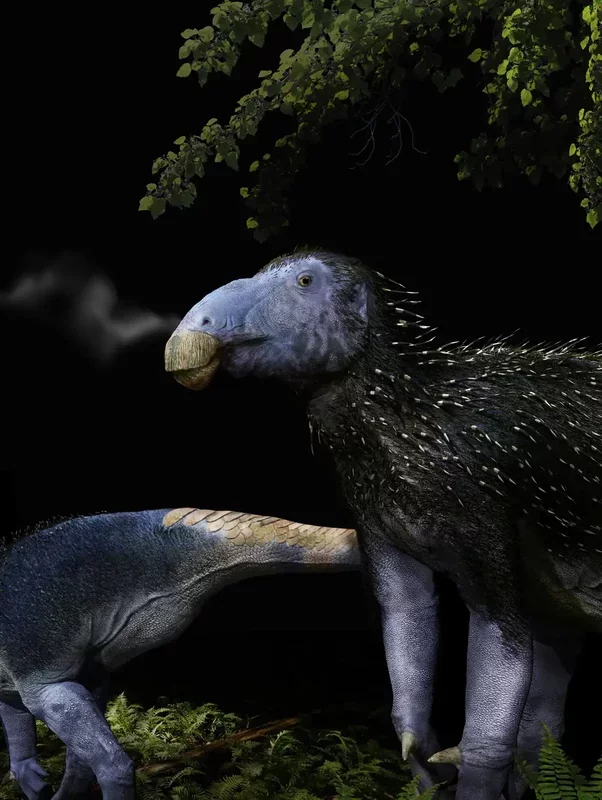
A remarkable fossil unearthed in northeastern China has brought to light extraordinary skin features of an ornithischian dinosaur that roamed the Earth approximately 125 million years ago. The specimen, now identified as Haolong dongi, showcases exceptionally preserved skin impressions, including small hollow spikes never before documented in dinosaurs.
Known as the "spiny dragon," Haolong dongi belongs to the Early Cretaceous iguanodontian group, typically recognized through their skeletal remains, as soft tissues seldom fossilize. This find, however, reveals "exquisitely fossilized skin" with overlapping scales on the tail, rounded scales across the body, and spikes embedded within the skin, all visible under microscopy.
Unique Skin Structures
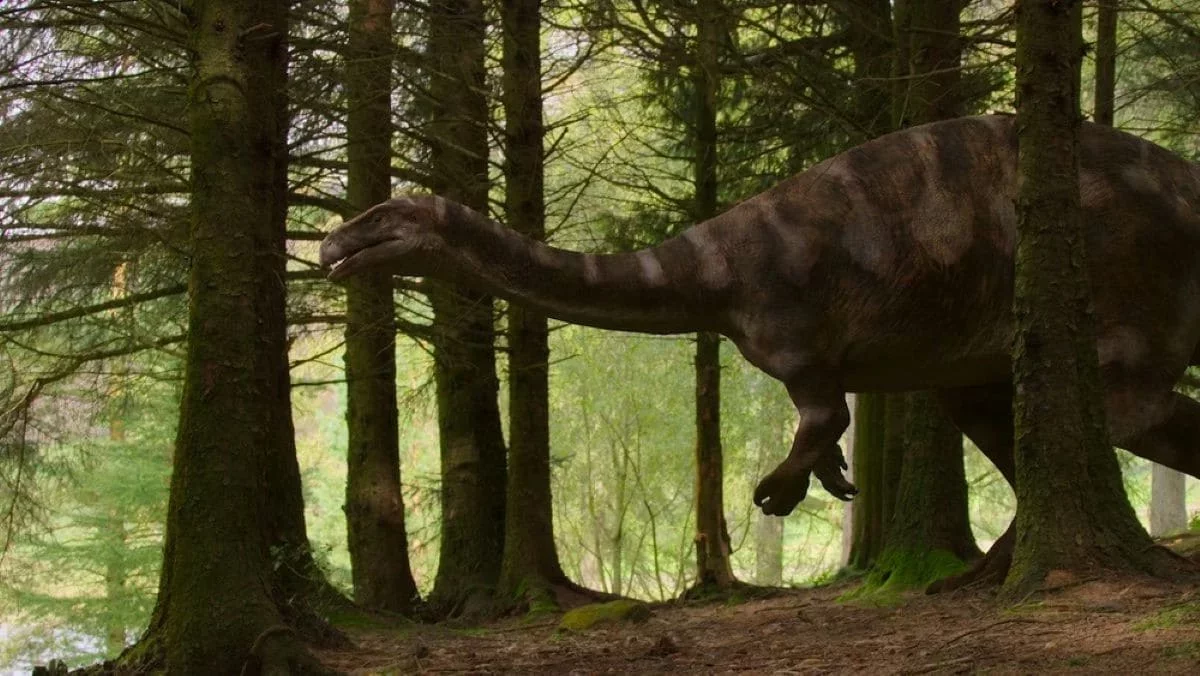
This dinosaur measured around 2.4 meters in length and exhibited unfused vertebrae, indicating it was still in a growth phase at the time of its demise. Related species could reach lengths of about 5 meters, with other larger iguanodontians existing concurrently. What distinguishes Haolong dongi is its distinctive skin: the neck, torso, and tail were covered with rounded, non-overlapping scales, while larger, shield-like scales adorned the tail, interspersed with spikes ranging from a few millimeters to over four centimeters.
Microscopic examinations revealed these spikes were hollow cylinders formed from layered, keratinized skin surrounding a porous core, rather than bone or protofeathers. This suggests a unique evolutionary adaptation in dinosaur anatomy, possibly indicating that such features were more common among dinosaurs than previously believed.
Such preservation is a rarity in paleontology. Utilizing advanced techniques like laser-stimulated fluorescence and X-ray imaging, scientists were able to observe cellular structures within the skin.
"This discovery suggests that the diversity of skin coverings in dinosaurs was astonishing, extending beyond mere scales and feathers," noted Pascal Godefroit, a paleontologist from the Royal Belgian Institute of Natural Sciences.
Function of the Spikes
Understanding the evolutionary purpose of these spikes poses an intriguing challenge. Researchers propose that these structures likely served as a form of defense. In the Early Cretaceous ecosystems of China's Yixian Formation, many predators were relatively small, and spines could complicate their ability to attack or consume prey.
While these spikes may not have provided complete protection against theropod predators, they could have made the process of hunting more difficult and time-consuming. Other hypotheses suggest the spikes might have played a role in thermoregulation or even sensory functions, although evidence for these theories remains inconclusive.
The discovery of Haolong dongi adds to the growing body of evidence that dinosaur skin was as varied as the species themselves, highlighting multiple evolutionary pathways for skin appendages across vertebrates. As the only known specimen is a juvenile, further discoveries will be essential to understand whether these spikes were retained into adulthood.
The findings have been published in the journal Nature Ecology & Evolution.