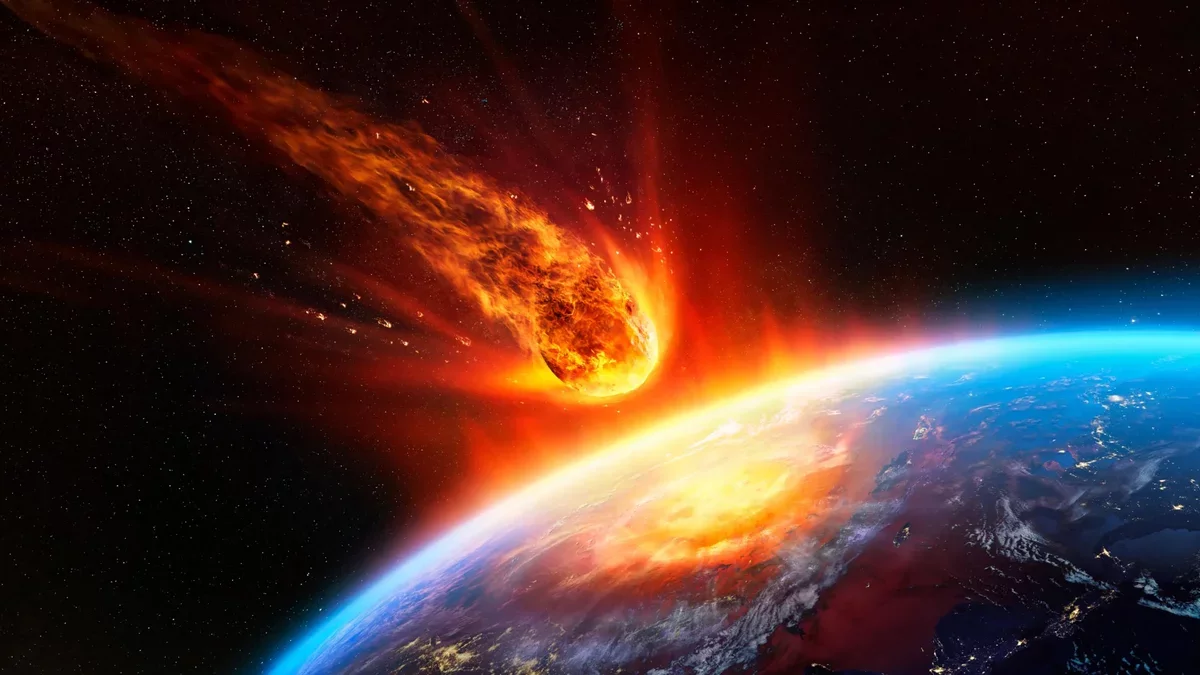
Recent research published in the journal Geology unveils a significant discovery led by geologist Álvaro Penteado Crósta from the Institute of Geosciences at the State University of Campinas. Collaborators from Brazil, Europe, the Middle East, and Australia contributed to this groundbreaking project.
Prior to this revelation, only five major tektite fields were recognized globally, located in regions such as Australasia, Central Europe, the Ivory Coast, North America, and Belize. The newly identified Brazilian field now joins this exclusive list.
A 900 Kilometer Field of Impact Glass
The geraisites were initially documented across three municipalities in northern Minas Gerais--Taiobeiras, Curral de Dentro, and São João do Paraíso--spanning approximately 90 kilometers. Subsequent discoveries in Bahia and Piauí have expanded the known distribution to over 900 kilometers.
Crósta noted, "The expansion of this area aligns with patterns observed in other global tektite fields, where the size correlates with the impact's energy and other factors."
As of July 2025, researchers had collected around 500 pieces, a number that has since surpassed 600. These fragments vary in weight from less than 1 gram to 85.4 grams and can reach up to 5 centimeters in their longest dimension, showcasing classic tektite aerodynamic shapes like spheres and ellipsoids.
Characteristics of the Geraisites
At first glance, the geraisites appear black and opaque, but under bright light, they reveal a translucent, grayish-green color. This hue is distinct from the vivid green moldavites found in Europe, which have a history of use in jewelry. The Brazilian specimens feature surfaces marked by small cavities.
Crósta explains, "These cavities are remnants of gas bubbles that escaped during the rapid cooling of molten material, a phenomenon seen in both volcanic lava and tektites."
Chemical Evidence of Impact
Laboratory analyses indicate that the geraisites possess high silica content (SiO2) ranging from 70.3% to 73.7%. The presence of sodium and potassium oxides slightly exceeds levels found in other tektite regions. Variations in trace elements suggest a non-uniform target rock, while rare silica inclusions further substantiate the impact origin.
"A key factor in classifying the material as tektite is its notably low water content, measured between 71 and 107 ppm," Crósta states, highlighting the contrast with volcanic glasses.
Dating the Impact
Dating through argon isotopes suggests that the asteroid impact occurred roughly 6.3 million years ago, at the close of the Miocene epoch. The consistent age results reinforce the idea of a singular event.
Searching for the Crater
While no impact crater has yet been located, Crósta notes that this is not uncommon, as only three of the six classical tektite fields have confirmed craters. Isotopic geochemistry indicates the molten material originated from ancient continental crust.
Future investigations using advanced techniques may uncover the remnants of a buried or eroded crater.
Estimating Impact Size
While the precise size of the impacting body remains undetermined, evidence suggests it was significant. The extensive distribution of debris points to a powerful event, though likely less intense than that which formed the Australasia field.
This discovery enriches South America's impact history, suggesting that tektites may be more prevalent than previously thought, often misidentified as ordinary glass.
Promoting Scientific Understanding
To counter exaggerated claims about asteroid threats, Crósta collaborates with students to manage an educational Instagram account focused on science communication, aiming to clarify genuine risks.
Understanding these celestial processes is vital for distinguishing scientific fact from speculation, as Crósta emphasizes.