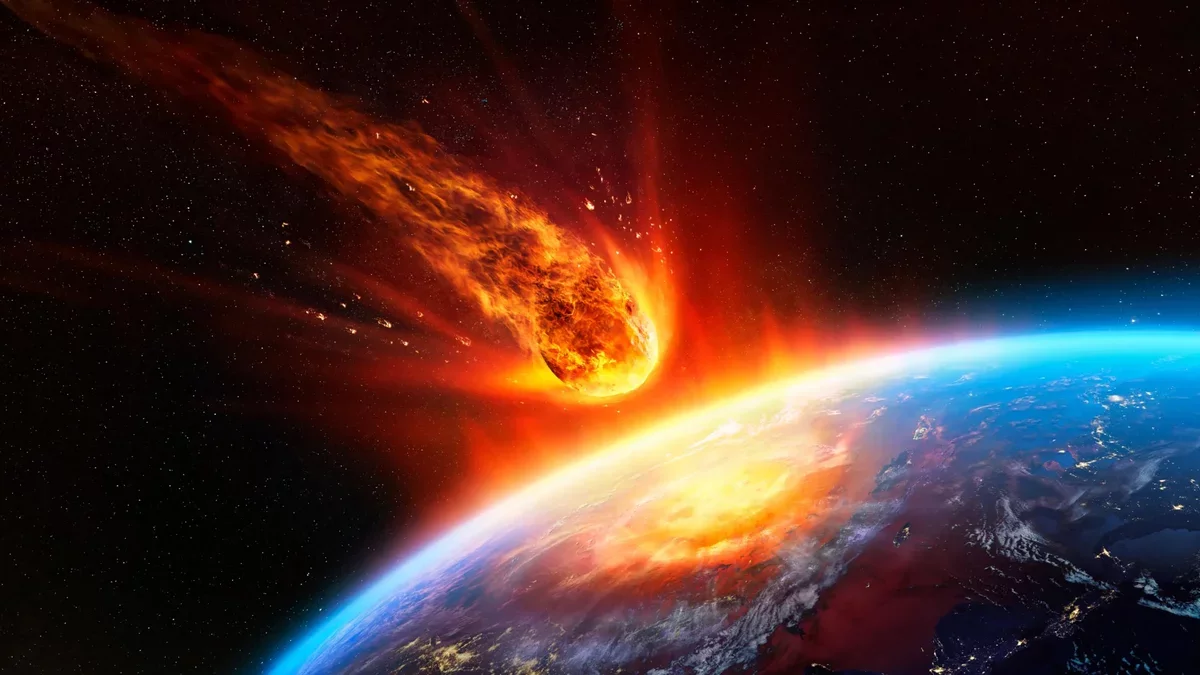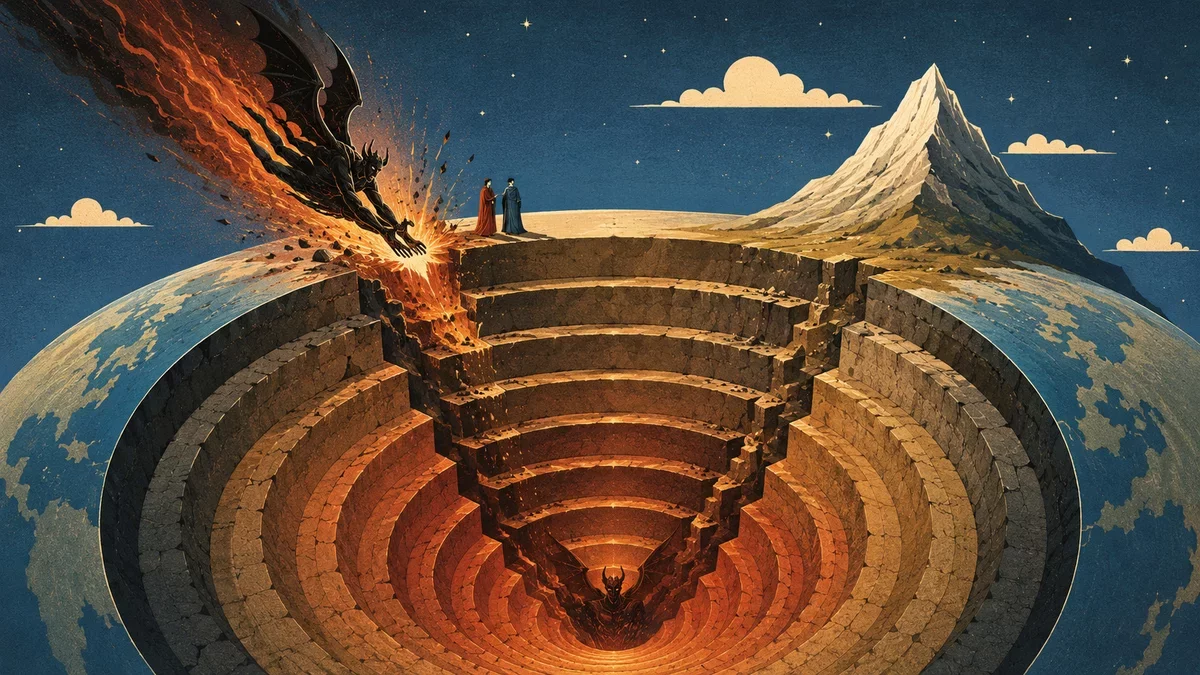
Long before the advent of telescopes and modern astronomy, Dante Alighieri envisioned a cataclysmic event descending from the heavens. In his 14th-century work, Inferno, he depicted Lucifer, the embodiment of darkness, as a celestial being cast down from heaven. English professor Timothy Burbery from Marshall University presents a compelling interpretation: Dante's portrayal may echo the physicality of an asteroid impact.
Rather than merely descending, Dante's Satan strikes the Earth, gouging out Hell and displacing enough material to form the Mountain of Purgatory on the opposite side of the globe. Burbery's assertion is not that Dante possessed scientific knowledge of asteroids; instead, he suggests that the poet's imaginative narrative might represent one of the earliest literary explorations of planetary impact physics.
Cosmic Descent
Dante's Inferno predates the scientific understanding of extraterrestrial rocks, a concept that gained traction only in the late 18th century with Ernst Chladni's theories. The first asteroid, Ceres, was discovered in 1801, and the field of meteoritics emerged as a legitimate science in the 19th century. In Dante's time, the cosmos was often seen as unchanging and perfect, making Burbery's interpretation particularly intriguing.
In Dante's narrative, Hell is not merely a moral construct but a physical void within the Earth. As Dante and Virgil navigate the nine circles of Hell, they reach Satan, who is frozen at the planet's core. The fall of Lucifer, in this context, becomes a metaphorical impact event, suggesting that the poet grasped the idea of a massive object creating a profound geological effect on Earth.
A Crater of Significance
Burbery posits that Dante's description aligns with modern understandings of impact craters. When celestial bodies collide with planets, they do not simply create holes; they generate shock waves, excavate basins, and form complex geological structures. This perspective allows readers to view Dante's circles of Hell not as arbitrary literary devices but as reflections of real planetary science.
Literary and Scientific Synergy
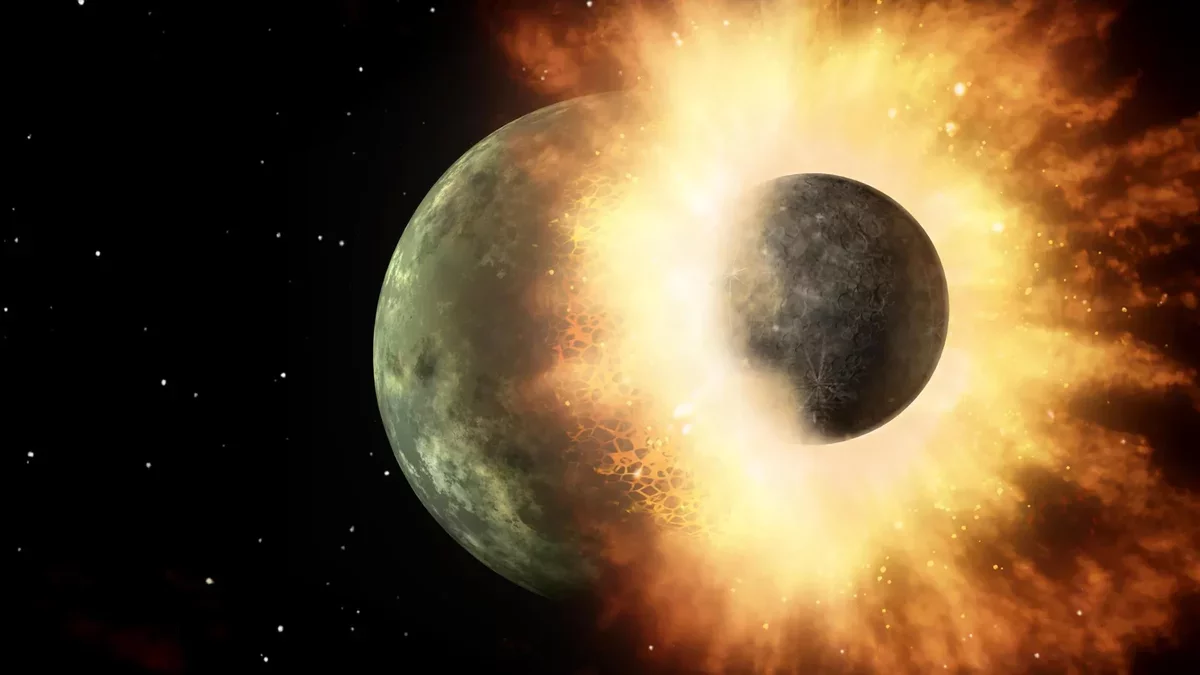
Burbery's research draws parallels between Dante's imaginative portrayal and significant historical events, such as the Chicxulub impact that led to the extinction of the dinosaurs. While Dante was not a scientist, his work hints at a profound understanding of catastrophic events that shape worlds.
These insights resonate today as planetary defense becomes a vital area of study. NASA's recent DART mission demonstrated humanity's ability to alter the trajectory of an asteroid, showcasing our growing understanding and preparedness for potential cosmic threats.
Dante's Inferno serves as a bridge between literature and planetary science, offering a unique lens through which to explore the physical consequences of celestial impacts. Burbery's findings suggest that even in the medieval era, there existed an intuition about the dangers posed by the cosmos, inviting a reevaluation of how we perceive ancient texts in light of modern science.