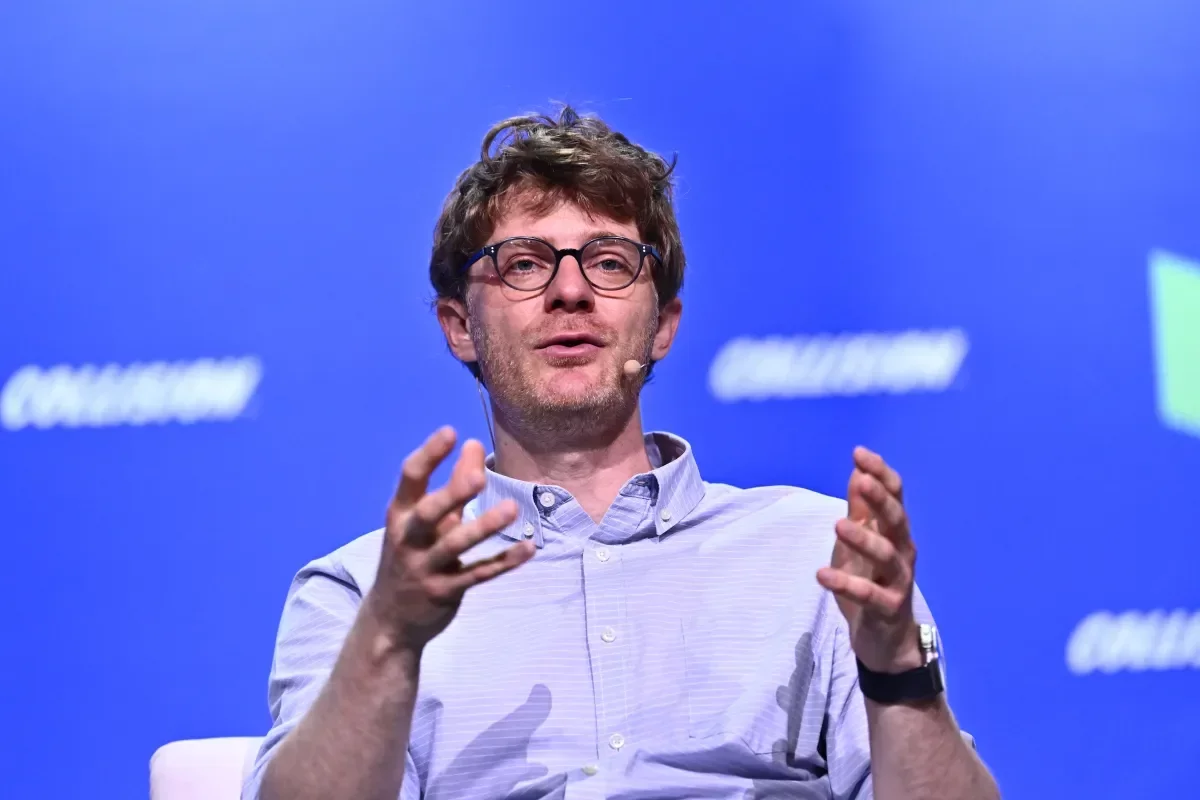
Richard Socher, a prominent figure in the AI landscape, is taking a bold step forward with his new venture, Recursive Superintelligence. This San Francisco-based startup recently emerged from stealth mode, securing an impressive $650 million in funding.
Socher is joined by a distinguished team of AI researchers, including Peter Norvig and Cresta co-founder Tim Shi. Together, they aim to develop a recursively self-improving AI model capable of autonomously identifying and rectifying its weaknesses, a long-sought goal in AI research.
In a recent Zoom interview, Socher elaborated on Recursive's distinctive technical approach, emphasizing that their focus is on achieving true recursive self-improvement through open-endedness, a concept yet to be fully realized in the field. While many researchers assume that auto-research leads to self-improvement, Socher clarifies that this is merely incremental improvement, not the recursive advancement they aspire to.
The vision is to automate the entire process of ideation, implementation, and validation of research ideas, eventually extending beyond AI to other domains. The potential is particularly profound when AI works on enhancing itself, fostering a new level of self-awareness regarding its limitations.
Socher explains that the term "open-ended" has a specific technical significance, drawing on the work of co-founder Tim Rocktäschel, who previously led open-endedness and self-improvement initiatives at Google DeepMind. This approach allows AI to create and interact with any concept or environment, similar to the evolutionary processes observed in nature.
He likens this to biological evolution, where species adapt and counter-adapt over time, leading to continuous innovation. In AI, this could manifest through techniques like "rainbow teaming," where two AIs challenge each other to identify and mitigate potential risks, enhancing safety and robustness.
While some aspects of AI development may never be fully complete, Socher acknowledges that the quest for intelligence and capability is limitless. His team is committed to pushing boundaries, aiming to create not only a research lab but a thriving company that produces impactful products.
As for product timelines, Socher is optimistic, suggesting that the team may expedite their plans. He anticipates that their first offerings will be available in quarters rather than years.
Looking ahead, Socher posits that the future of AI may hinge on computational resources, prompting critical discussions about how humanity allocates its computing power to tackle pressing global challenges. This paradigm shift could redefine how society approaches problem-solving in the years to come.