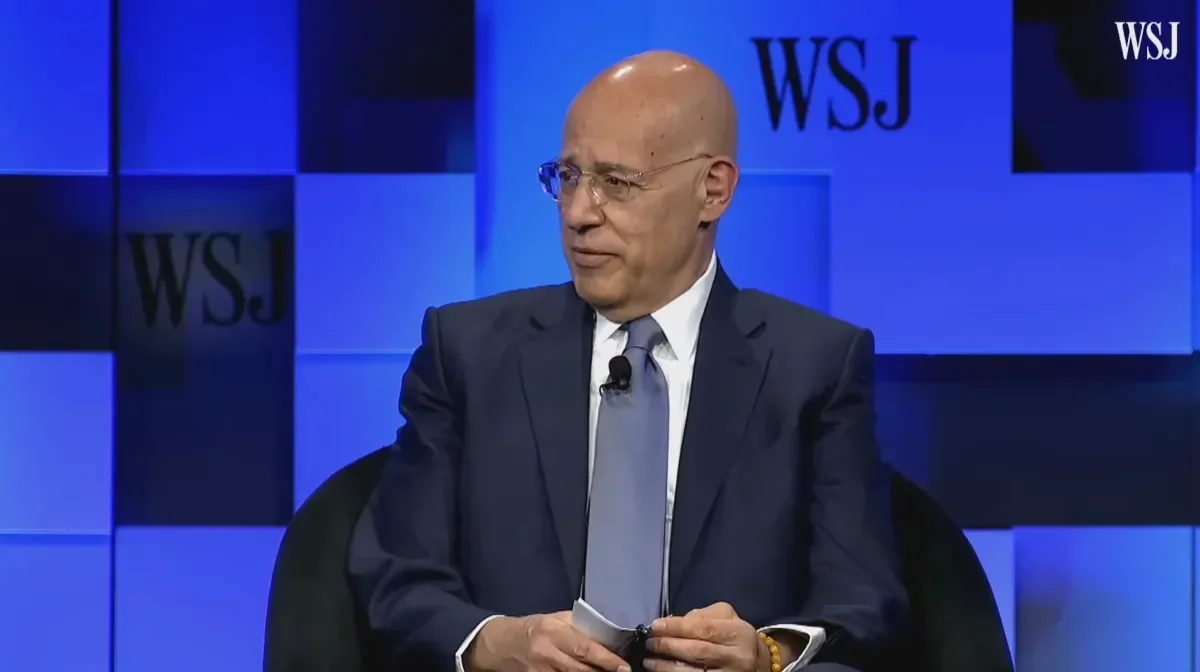
Joe Gebbia, co-founder of Airbnb, is expanding his team at the U.S. National Design Studio, a Trump-era initiative aimed at enhancing the government's digital presence. On Monday, during The Wall Street Journal's "Future of Everything" conference, Gebbia announced the appointment of renowned designer Peter Arnell as the first U.S. Chief Brand Architect.
Arnell joins a talented group of Silicon Valley designers and engineers dedicated to transforming the user experience of government online platforms. His impressive four-decade career includes collaborations with iconic brands such as Samsung, Unilever, and Pepsi, and he now aims to rebrand what he refers to as "the greatest brand in the world"--the United States.
At the WSJ event, Arnell clarified, "We're not rebranding this country; instead, we're striving for a consistent look and feel to foster trust in how citizens interact with their government." The task is ambitious, as the team will redesign an extensive network of 27,000 government websites, applying design principles that have proven successful in consumer applications like Airbnb.
Gebbia noted the parallels between their work and Airbnb's mission: simplifying complex processes to enhance user experience. "Just as we made finding a rental easier, we aim to streamline government interactions to be safer and more trustworthy," he stated.
The team has already made significant strides, including revamping the cumbersome retirement process into a swift, web-based system that employees can complete in minutes rather than months. Another initiative has reduced a common government workflow from 87 clicks to just 12, with plans to bring it down to 10.
This design initiative also seeks to tackle common frustrations associated with government websites, such as confusing navigation and session timeouts that result in lost data. Gebbia described the poor user experience of these sites as "one of the darkest UX patterns," emphasizing the need for a more accessible and user-friendly interface.
"The mere perception of difficulty discourages engagement," he remarked. "We are moving past that. Citizens should feel empowered to accomplish their tasks with the government efficiently."
As this initiative unfolds, it holds the potential to redefine how citizens interact with their government, paving the way for a future where digital accessibility and user experience are prioritized.