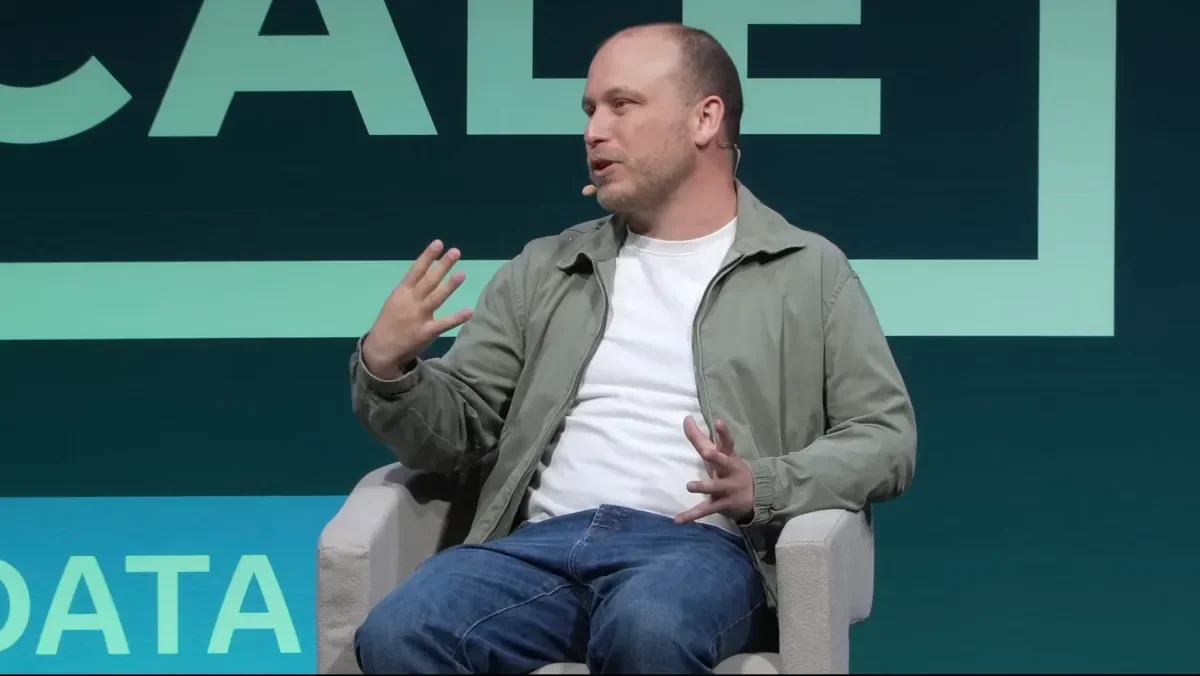
At Meta's @Scale conference, Claude Code creator Boris Cherny described a shift that is reshaping how software gets built: AI agents are no longer just assisting developers, they are increasingly managing other agents.
Asked whether "loops" are a passing trend or a lasting direction, Cherny said they are very much real. He framed the change as the next major step after hand-written code and then agent-assisted coding: systems that can keep iterating, reviewing, and improving work with minimal human interruption.
In his view, one agent can focus on architecture while another searches for repeated patterns that can be simplified. These agents can then file pull requests, evaluate progress, and continue operating as the codebase evolves. The result is a continuous workflow designed to keep improving software in the background.
The idea builds on familiar computer science concepts such as recursive loops, but with a modern twist: the stopping point is not always fixed in advance. Instead, an AI system can decide when a task is complete, making the process more flexible and more autonomous.
This approach also reflects the growing emphasis on test-time compute, where models are given more processing power to keep refining outputs until they reach a useful result. For complex coding tasks, that can mean incremental gains over time rather than a single one-shot answer.
Of course, always-on loops can consume significant resources, especially because they rely on repeated model calls. Still, for teams that can manage oversight and cost carefully, the potential payoff is a more adaptive and persistent form of software development.
As AI systems become better at coordinating with one another, continuous agent loops could become a defining pattern in the next generation of digital work.