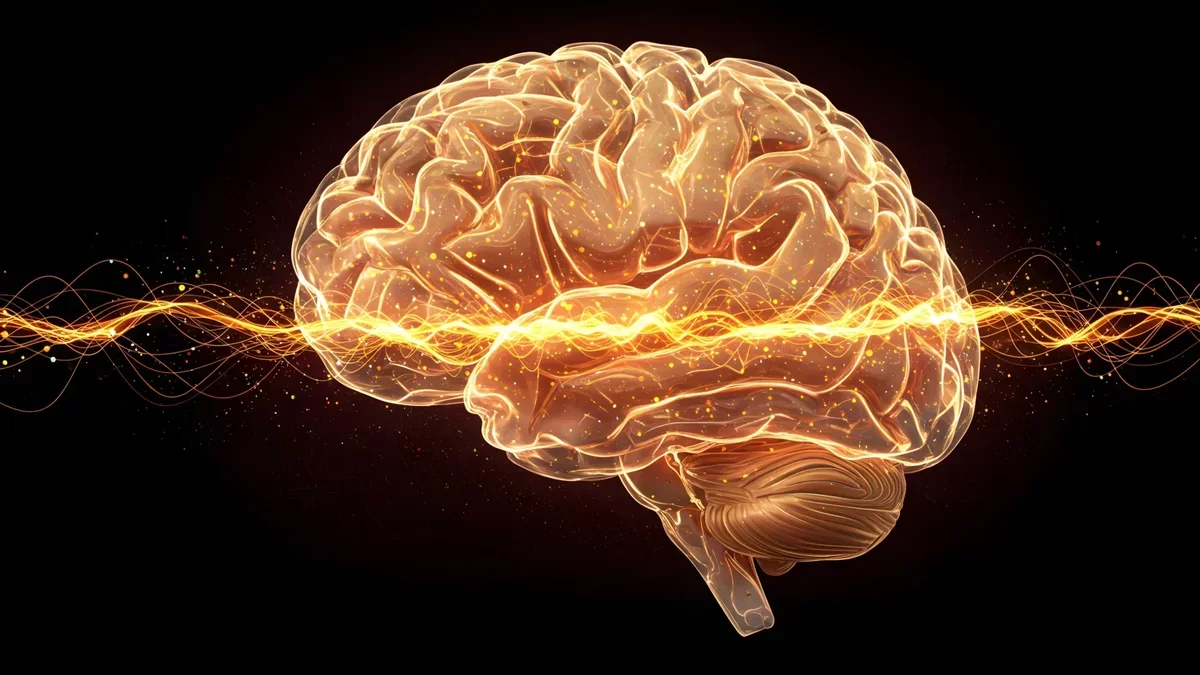
The age-old question of how individuals perceive color has intrigued philosophers for centuries. A groundbreaking study by neuroscientists Michael Bannert and Andreas Bartels from the University of Tübingen offers a scientific glimpse into this mystery, suggesting that our brains respond to colors in strikingly consistent ways.
Utilizing advanced brain imaging techniques and machine learning, the researchers discovered that it is possible to predict the color someone is viewing by analyzing their brain activity in relation to others. "While we cannot definitively state that one person's red appears the same as another's," Bannert noted, "the fact that some sensory aspects of subjective experiences are consistent across different brains is a significant finding."
Decoding Colors in the Brain
In this innovative study, 15 volunteers with normal color vision participated while their brain activity was monitored in an fMRI scanner. They observed color-shifting rings--red, green, and yellow--at varying brightness levels. The researchers also mapped the participants' retinotopy, which is how the visual cortex corresponds to the visual field, using flickering black-and-white checkerboards.
This mapping was crucial. By aligning participants' brain responses based on common spatial processing patterns, Bannert and Bartels could identify shared responses to color. They trained a machine learning algorithm on data from some participants and successfully predicted the colors seen by others based solely on their brain activity.
Remarkably, the study found that color and brightness could be decoded with high accuracy across various regions of the visual cortex, including V1, V2, V3, hV4, and LO1. "We demonstrated that brain activity could reveal what color someone perceives, using only knowledge from other observers' responses," the authors stated.
Unraveling the Mechanisms of Color Perception
This research goes beyond mere curiosity; it unveils large-scale "retinotopic color biases," indicating that certain brain areas consistently favor specific colors within particular visual fields. These biases, while area-specific, are preserved across individuals, hinting at a deeper evolutionary significance.
Jenny Bosten, a color-vision scientist from the University of Sussex, expressed her surprise at the findings, noting that the notion of certain brain cells favoring specific colors challenges existing theories of visual cortex processing. If validated, this could transform our understanding of color representation in the brain.
While color can be precisely defined as a wavelength of light--such as red ranging from 620 to 750 nm--its perception varies significantly among individuals. This study grounds color experience in shared neural patterns, offering a more universal framework for understanding how we perceive color.
Next time you enjoy a sunset with a friend, remember that your brains are likely synchronizing in their response to the vibrant colors lighting up the sky. Although we may never fully grasp each other's subjective experiences of color, neuroscience has revealed that our minds share a surprisingly common palette.
The findings of this research were published in the Journal of Neuroscience.