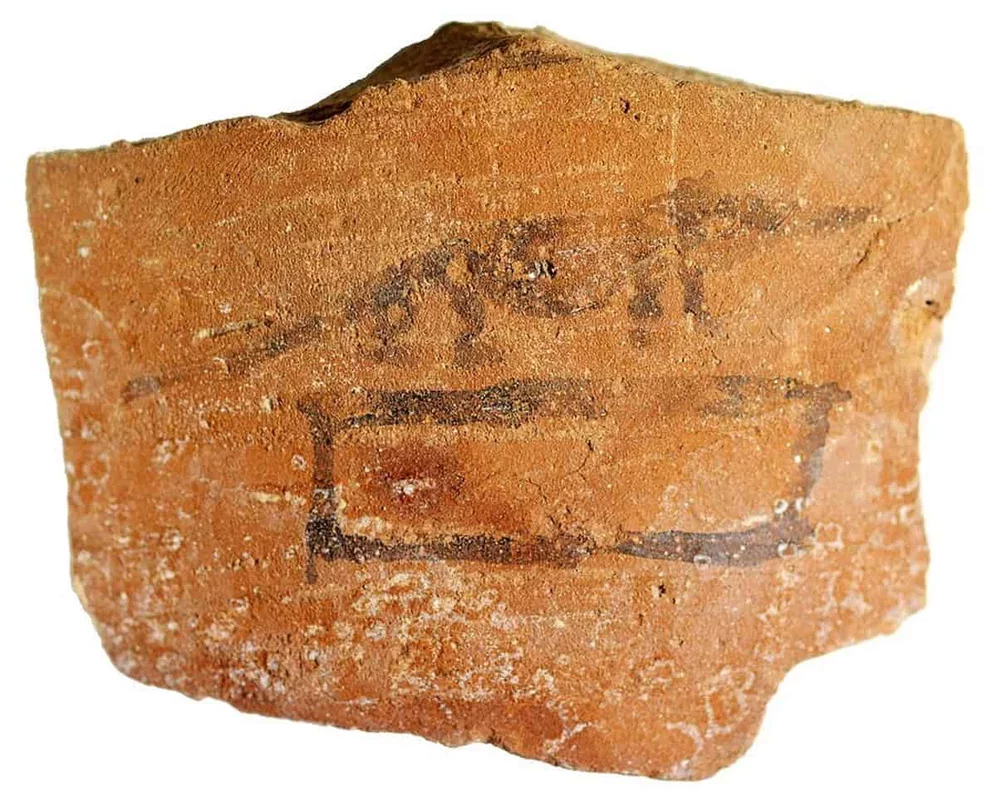
Throughout history, humans have sought ways to document their daily lives. In ancient Egypt, before the advent of sticky notes or digital reminders, people utilized fragments of pottery to write down everything from shopping lists to tax receipts. A remarkable discovery by a collaborative effort between the University of Tübingen and the Egyptian Ministry of Tourism and Antiquities has unveiled an astonishing collection of 43,000 inscribed pottery shards, known as ostraca, from the ancient settlement of Athribis.
This extensive collection, excavated between 2005 and 2026, positions Athribis as the most prolific site for ostraca, surpassing notable finds at Deir el-Medina, a well-known working-class village in the Valley of the Kings.
Everyday Writing in Ancient Times
The excavation team has meticulously unearthed layers of history over the past two decades, initially aiming to reveal the grand temple built for Ptolemy XII, Cleopatra's father. Instead, they uncovered the written voices of ordinary citizens.
Ostraca, derived from the Greek word for shell, served as practical writing surfaces before the invention of paper. Ancient scribes often repurposed cheap materials like pottery, using them as informal writing tools. These fragments have become vital records of daily life, as about one-third of all ancient Egyptian documents are preserved on such durable materials.
"The ostraca reveal a fascinating variety of everyday scenarios," states Christian Leitz, director of Egyptology at the University of Tübingen.
Insights into Daily Life
The artifacts from Athribis document a wide array of daily activities. They include tax records, delivery notes, school exercises, religious texts, and certificates of sacrificial animals. The oldest pieces date back to the third century B.C.E., featuring tax receipts written in Demotic script, the common administrative language of the time.
Further discoveries include inscriptions in Arabic from the 9th to 11th centuries C.E., alongside Greek and hieratic texts, reflecting Egypt's rich cultural tapestry. Many pottery shards showcase intricate designs, illustrating local deities, animals, and various geometric patterns.
Notably, the site has yielded over 130 demotic-hieratic horoscopes, indicating the importance of astrology in daily life.
Future of Archaeological Discoveries
The excavation's scale became evident in 2018 when archaeologists uncovered a vast deposit of ceramics. As they continued to dig, they began recovering between 50 to 100 inscribed shards daily, alongside ancient living quarters and storage structures.
"We anticipate finding even more ostraca," Leitz remarks. However, this growing collection poses logistical challenges, requiring the creation of comprehensive three-dimensional digital models of all artifacts.
While integrating AI could potentially expedite this process, the current focus remains on meticulous manual work, echoing the hands that crafted these texts thousands of years ago.
"This project exemplifies the power of collaborative, long-term research. By combining expertise and passion, we can transform seemingly mundane pottery shards into a vibrant narrative of ancient life," concludes Professor Karla Pollmann, President of the University of Tübingen.