The history of life on Earth predates the age of dinosaurs by hundreds of millions of years. In ancient oceans and rivers, unique fish species thrived, exhibiting remarkable adaptations such as armor, fins, and even lungs. While many of these ancient species have vanished due to mass extinctions, a select few have remarkably endured.
These extraordinary fish are often referred to as "living fossils," a term that, while catchy, can be misleading. Although they have evolved over time, their fundamental body structures and genetic traits trace back to distant evolutionary ancestors, making them invaluable to science.
Recent genomic research and anatomical studies have unveiled insights into how these ancient fish survived dramatic environmental changes. Their existence may hold clues to understanding our own biology, including the evolution of limbs and lungs. The earliest dinosaurs appeared around 230 million years ago, but the lineages of these ancient fish extend far deeper into the past.
1. Coelacanth
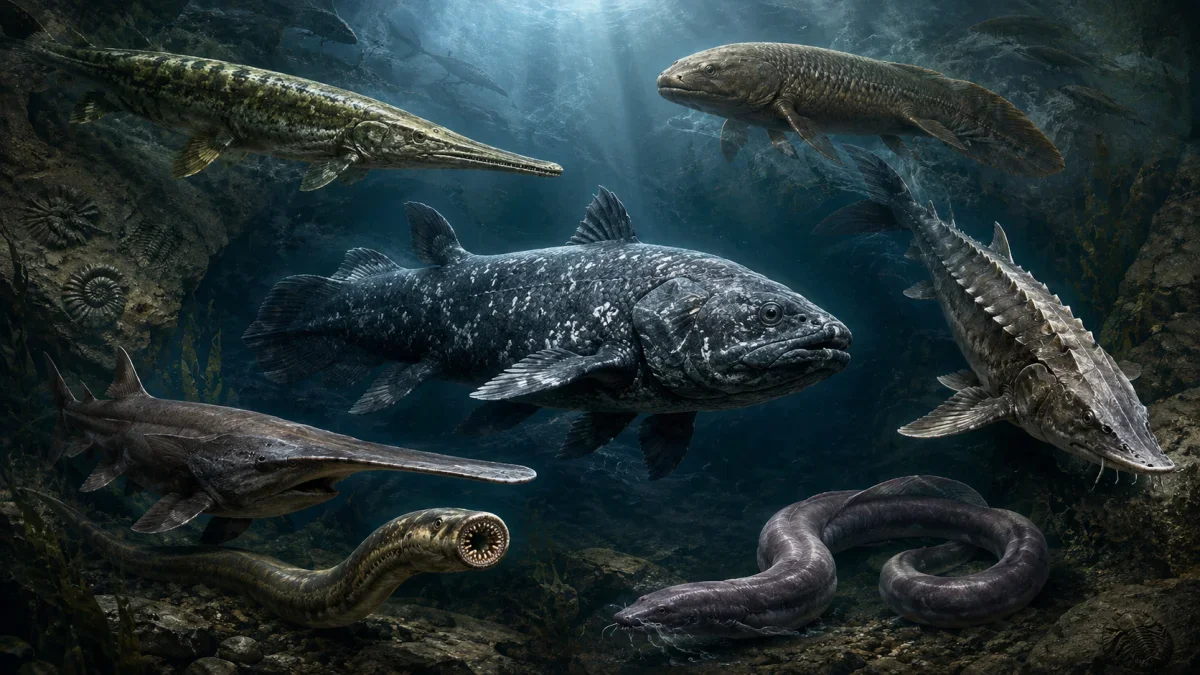
Perhaps the most iconic living fossil, the coelacanth was believed extinct for 65 million years until a specimen was discovered off the coast of South Africa in 1938. This ancient fish, which has existed for roughly 400 million years, showcases slow evolutionary changes and has been found to possess genes that evolve at a slower rate than those of other vertebrates.
2. Sturgeon
Sturgeons are massive, bottom-dwelling fish with a lineage that dates back over 200 million years. Known as the "Methuselah of freshwater fish," their minimal evolutionary changes allow them to resemble their ancient ancestors. Recent genomic studies have revealed that sturgeons underwent significant genome duplications, providing insights into vertebrate ancestry.
3. Lungfish
Lungfish are fascinating for their ability to breathe air and their close genetic relationship to four-limbed vertebrates. They can survive in low-oxygen environments and endure droughts by entering a dormant state. A recent study unveiled their extraordinarily large genomes, which help geneticists understand the evolutionary steps that enabled ancestors to transition to land.
4. Lamprey
These jawless fish have existed for over 340 million years and possess unique anatomical features, such as circular mouths lined with teeth. Lampreys play a significant role in modern medicine due to their genetic similarities to humans, providing valuable insights into human development and evolution.
5. Hagfish
Known for their slime production, hagfish are among the earliest vertebrates, originating around 500 million years ago. Recent genomic studies have helped clarify their complex evolutionary history, revealing significant changes over time, including gene losses associated with eyes and cartilage.
6. Paddlefish
Paddlefish, with their distinctive shark-like appearance, have a lineage that dates back 300 to 350 million years. Recent studies have shown that paddlefish share an ancient genome duplication event with sturgeons, further linking their evolutionary paths.
While these remarkable fish have survived numerous environmental upheavals throughout history, they now face unprecedented challenges due to rapid climate change and habitat destruction. Understanding their adaptations may provide crucial insights into the resilience of life on Earth and the future of biodiversity.