Centuries after the Lighthouse of Alexandria vanished beneath the Mediterranean, researchers have brought a remarkable part of it back into view. Off the coast of modern Alexandria, an international team has recovered 22 massive stone blocks from the seafloor, with some pieces weighing between 70 and 80 metric tons.
The stones once belonged to the ancient monument's doorway, threshold, and foundation, while one newly identified element appears to be part of an Egyptian-style pylon built with Greek construction methods. The discovery adds a fresh layer to the story of a structure that was both a navigational tool and a symbol of ancient innovation.
A Monument Rebuilt Through Data
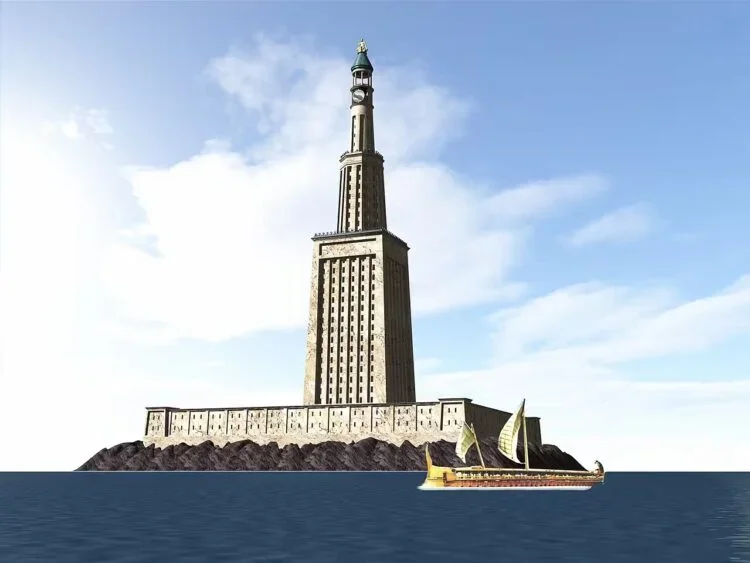
Known in antiquity as the Pharos, the lighthouse was erected around 280 B.C. during the reign of Ptolemy II Philadelphus. Rising more than 100 meters, it guided ships into Alexandria's harbor and stood among the most impressive engineering achievements of the ancient world.
After earthquakes damaged it over time, the tower gradually disappeared, and its stones were later reused in nearby construction. Today, the PHAROS project is changing how the monument is studied. Led by France's CNRS, Egypt's Ministry of Tourism and Antiquities, and the Dassault Systèmes Foundation, the initiative combines underwater archaeology with advanced 3D scanning.
Each recovered block is being digitally captured to build a virtual reconstruction, or "digital twin," of the lighthouse. Researchers hope this model will help test how the tower was designed, how its light system may have worked, and why the structure eventually failed.
Historians are also comparing ancient texts, coins, and inscriptions with the underwater remains to build a more precise timeline of the monument's life. The result could offer one of the clearest scientific views yet of a lost wonder that once defined Alexandria's skyline.
As the project expands, the Lighthouse of Alexandria is moving from legend into measurable history, showing how archaeology and digital tools can restore the architecture of the ancient world for future generations.