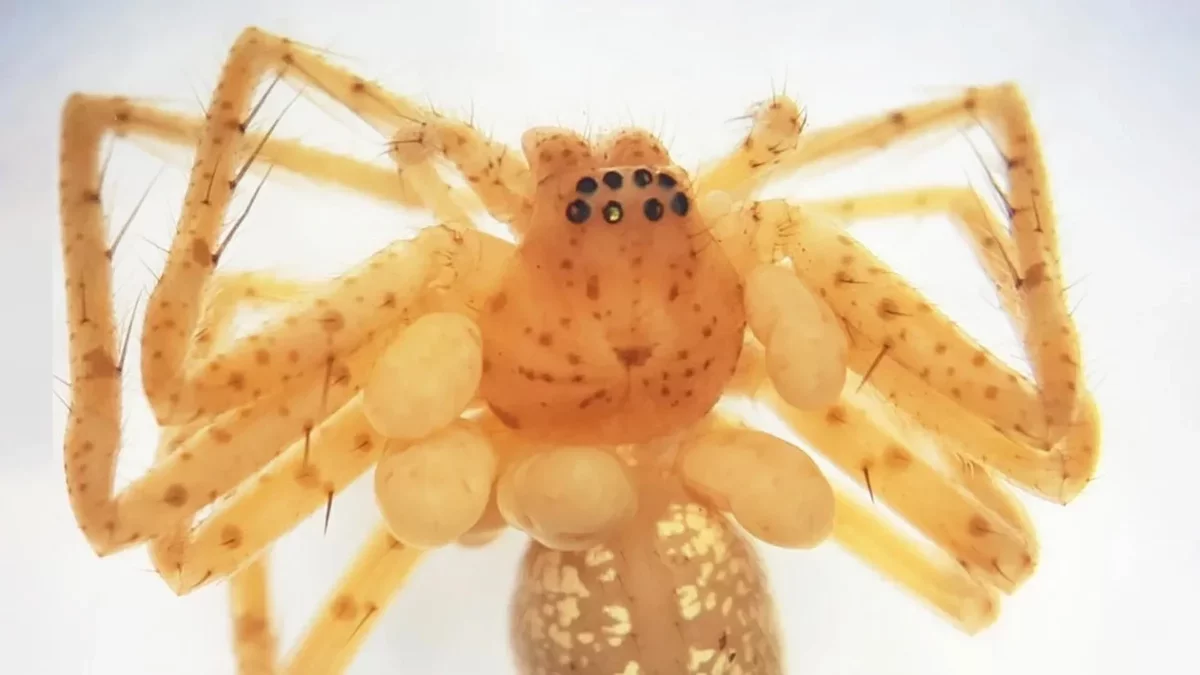
Ricardo Bassini-Silva, a dedicated researcher and curator of the Acarological Collection, quickly identified that the bead-like formations on the spider were actually mite larvae. Prior to this discovery, Brazil had documented only one instance of mites that parasitize spiders, belonging to a different family altogether.
Identification of a New Parasitic Mite
Following a thorough examination of both the spider and its tiny companions, researchers utilized light microscopy, scanning techniques, and various morphological analyses to confirm the existence of a new species. This finding marks the second instance of a spider-parasitic mite described in Brazil and the first from its specific family within the country.
The research received support from FAPESP and was published in the International Journal of Acarology. It involved collaboration between two projects funded by FAPESP, one led by Bassini-Silva and the other coordinated by Fernando de Castro Jacinavicius, a co-author and professor at the Institute of Biology at the University of São Paulo (IB-USP).
Expanding Knowledge of a Rare Genus
The newly discovered species, named Araneothrombium brasiliensis, belongs to a genus first identified in Costa Rica in 2017. Its presence in Brazil indicates that this group may have a broader distribution than previously recognized and could be found in other neotropical areas.
The larvae of each mite measure approximately 500 micrometers, or half a millimeter, while the spiders they inhabit are only a few millimeters in size. Currently, scientists have only identified the larval phase of the mite. These larvae were discovered attached to juvenile spiders from three distinct families. All specimens collected were engorged, indicating they had fed sufficiently to significantly increase in size.
"For this group of mites, it is common to identify many parasitic species solely through their larvae, as in adulthood they become free-living predators, residing in soil and preying on small insects and other mites, making them elusive," explains Bassini-Silva.
Collection Locations of the Parasitized Spiders
The spiders that carried the newly identified mites were collected in Pinheiral, a municipality in Rio de Janeiro state. This area is situated near caves and grottos, resembling the habitat where Brazil's first known spider-parasitic mite species, Charletonia rocciai, was discovered.
In a separate study published in 2022, researchers revisited this earlier species, originally described in 1979, providing updated insights into its physical characteristics, biology, geographic distribution, and host organisms, including spiders.
Understanding Mite Behavior
Spider-parasitic mites feed on lymph, a fluid circulating within the bodies of certain arthropods. They extract this fluid through the pedicel, the slender section connecting the spider's cephalothorax to its abdomen.
"This region is the spider's most vulnerable area, as other parts are reinforced with chitin, forming a tough exoskeleton that is challenging for the mites' fangs to penetrate," the researcher elaborates.
The mites' preference for juvenile spiders suggests a strategic approach, as younger spiders are more susceptible to parasites and predators. Researchers also propose that this species may not be exclusively parasitic to spiders, as it could potentially target other arthropods, including insects. This broader behavior has already been noted in Charletonia rocciai, which feeds on at least two different insect orders.
Unveiling Hidden Biodiversity
"With over 3,000 spider species alone, Brazil holds immense potential for discovering new parasitic mites," asserts Bassini-Silva.
This discovery highlights the importance of zoological collections for biodiversity research. The spiders studied had been preserved for years, and the mites remained unnoticed until now. According to Bassini-Silva, collaborations with field researchers and environmental consulting firms may soon yield additional samples, paving the way for the identification of more mite species associated with a diverse array of animals.