Scientists studying fossils from northwestern China have identified a new feathered dinosaur that may help explain a long-standing puzzle in the fossil record: why so many early bird bones were found in compact, pellet-like clusters.
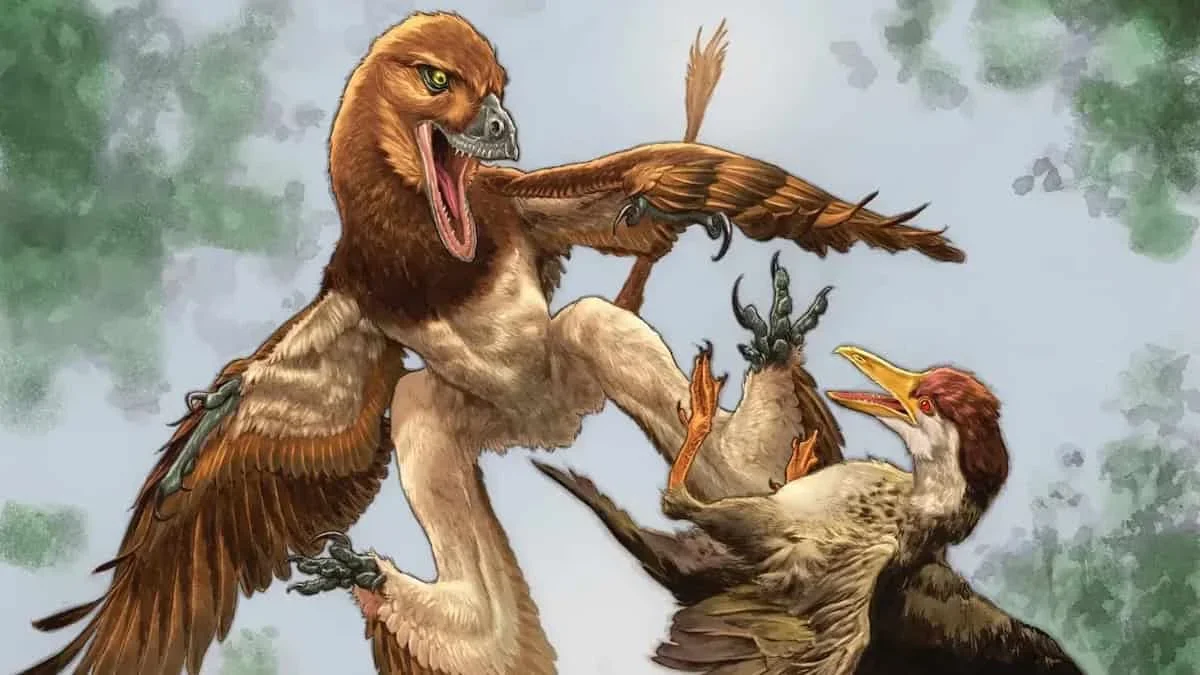
The newly named Jian changmaensis lived about 120 million years ago in the Changma Basin, an ancient lake environment in Gansu Province. Researchers believe the animal belonged to the microraptor group, a small, birdlike raptor with feathers on both its forelimbs and hind limbs.
A Closer Look at One Fossil Limb
The key evidence comes from a partial shoulder and forelimb fossil that had been collected years earlier. When reexamined, the bones did not match the birds abundant in the site. Instead, they pointed to a larger carnivorous dinosaur related to dromaeosaurs, the family that includes Velociraptor.
According to the study, published in Annals of Carnegie Museum, the animal likely had a wingspan of about 1.2 meters. It probably could not sustain powered flight, but may have climbed trees and glided between them, much like a flying squirrel. That movement style would have made it well suited to ambush small prey.
Why the Site Matters
The Changma Basin has yielded more than 100 partial bird skeletons, many preserving feathers and soft tissue. It is especially known for Gansus yumenensis, one of China's earliest fossil birds. Until now, however, the site had offered almost no clear remains of larger non-bird dinosaurs.
Researchers say Jian changmaensis may be the first strong clue that the lake ecosystem also included a feathered predator moving through the surrounding trees. While the team cannot prove what it ate, the combination of bird-rich deposits, bone clusters, and a sizable microraptor makes the hypothesis compelling.
The discovery adds a vivid new layer to the story of early avian evolution, showing how birds and close dinosaur relatives shared the same landscapes while aerial behavior was still taking shape. In the future, finds like this may help scientists map the transition from gliding dinosaurs to modern flight with greater precision.