A remarkable fossil discovery unfolded on a beach in South Wales when a curious 10-year-old girl, Tegan, spotted unusual impressions in the rock. These marks, too large and systematically placed to be random, were soon identified as dinosaur footprints that have been preserved for over 200 million years.
Experts from the National Museum of Wales confirmed the authenticity of the footprints after Tegan's mother shared photographs of the discovery. Tegan recounted the moment, stating, "We found these were big holes that looked like dinosaur footprints, so mum took some pictures, emailed the museum, and it was from a long-necked dinosaur."
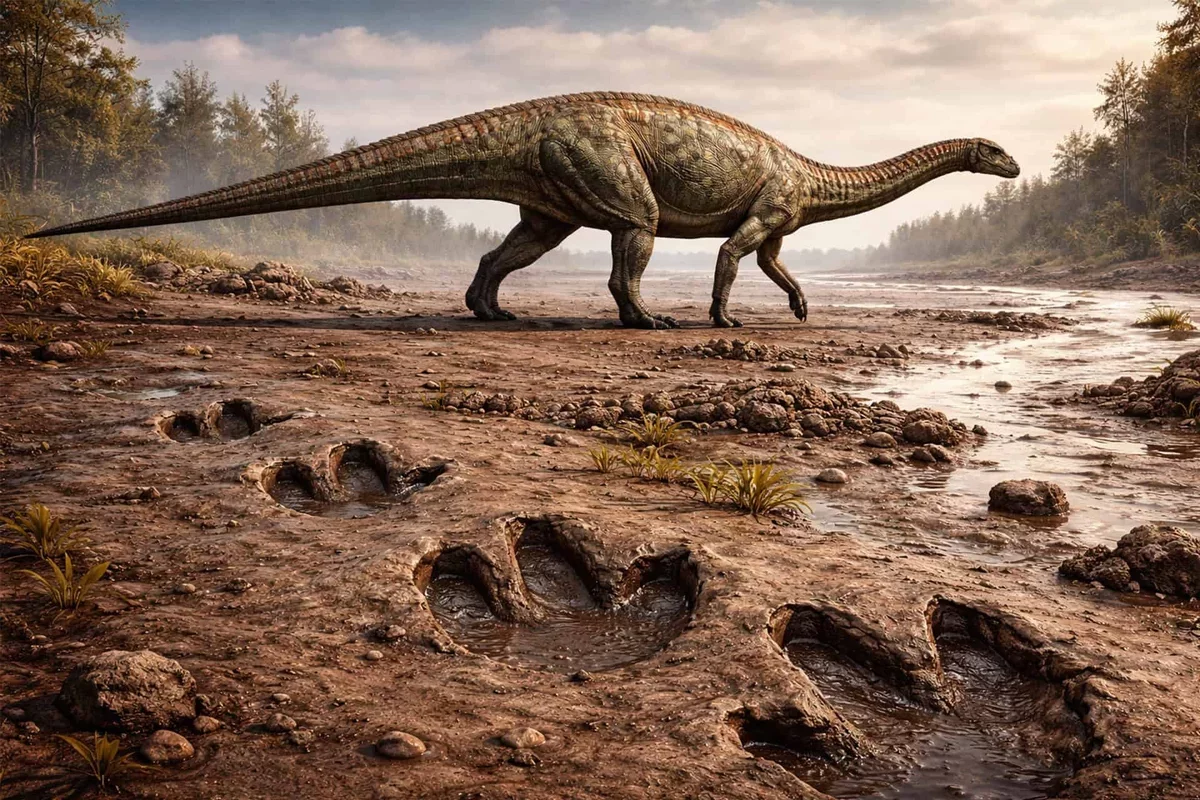
The fossilized tracks consist of five distinct footprints arranged in a clear sequence. Paleontologists recognized that the impressions displayed a left-right walking pattern, indicating they were not random but part of a genuine trackway from a moving creature. The spacing of approximately 75 centimeters between the prints suggested a natural walking pace.
Based on the size and form of the footprints, researchers believe they likely belonged to a sauropodomorph, an early group of long-necked dinosaurs. One strong candidate is Camelotia, a plant-eating dinosaur from the Late Triassic period, which existed over 200 million years ago.
"A Camelotia would have stood about 3m (10ft) tall and 4-5m (13-16ft) long, characterized by its long neck and tail, and it could walk on two legs or all fours while grazing," explained Cindy Howells, a curator at the National Museum Wales.
However, scientists remain cautious, noting that without fossilized bones, the exact species cannot be definitively identified. Cindy Howells added, "While we haven't found any bones here, similar dinosaurs' remains have been discovered across the Bristol Channel."
Why Are Dinosaur Footprints So Rare?
Dinosaur footprints are less frequently found than bones due to the specific conditions required for their preservation. The animal must step into soft ground, like mud, that maintains the shape of the impression. This mark must then be buried quickly, preserving its structure for millions of years as it mineralizes into rock. Natural forces, such as coastal erosion, must later expose these tracks without destroying them.
At Lavernock Point, the sea has gradually revealed these ancient tracks, balancing exposure and erosion, which makes such discoveries both rare and fleeting. Although only five footprints were found, paleontologists are thrilled, as Wales has seen limited dinosaur discoveries in the past. "It's amazing, as up until recently, we had so few dinosaur finds in Wales we didn't think we had much in the way of dinosaurs here," Cindy noted.
This discovery not only deepens our understanding of the prehistoric past but also highlights the potential for more significant finds in regions previously thought barren of such history. As curiosity and exploration continue, who knows what else the sands of time may reveal?