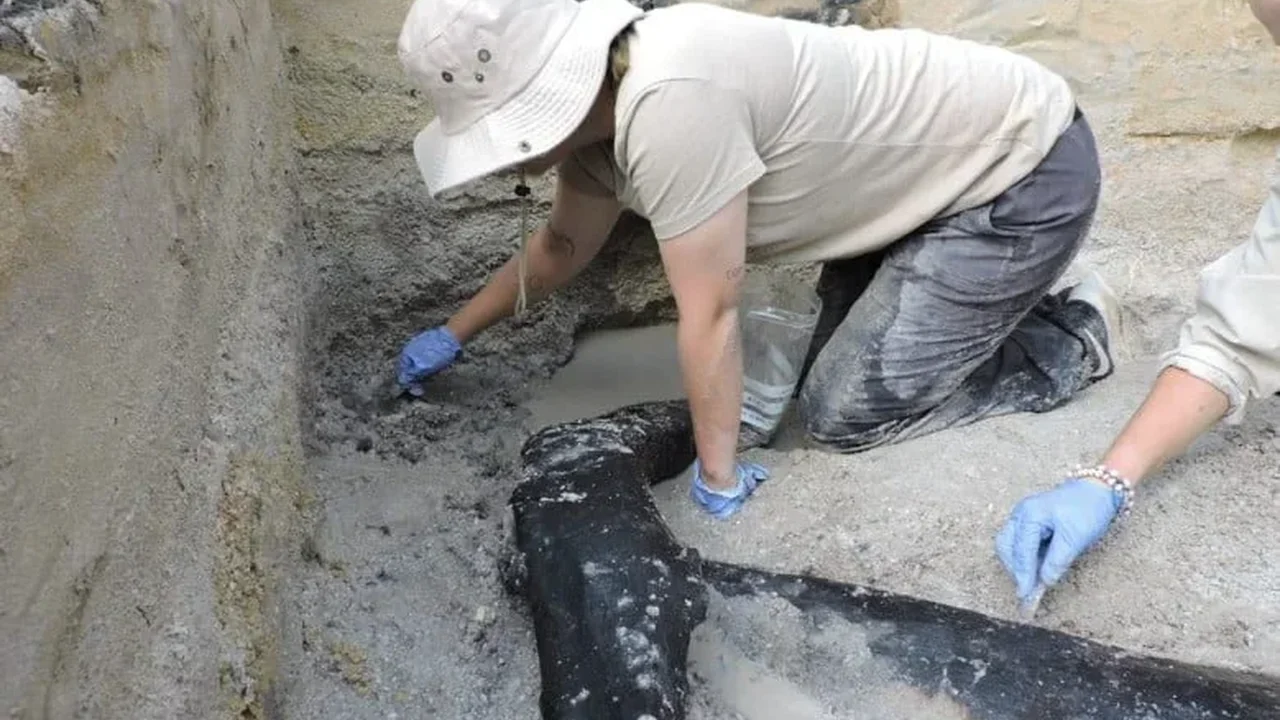
Archaeologists working at Kalambo Falls in Zambia have uncovered a wooden structure dated to at least 476,000 years ago, making it the earliest known example of humans fitting timber together for construction. The discovery predates Homo sapiens and points to a far more advanced early technological landscape than once assumed.
A rare glimpse into prehistoric craftsmanship
Researchers identified stone-tool cut marks on two large logs, showing that ancient hominins deliberately shaped and joined them. The exact purpose is still uncertain, but the structure may have formed part of a platform, walkway, or raised work area. What is clear is that the builders selected materials carefully and engineered them to fit.
Because wood usually decays over time, such evidence is exceptionally rare. At Kalambo Falls, however, waterlogged conditions helped preserve the logs. That preservation has offered scientists a unique window into early human behavior, suggesting these communities planned ahead, used tools with precision, and invested effort in shaping their surroundings.
Dating methods reveal deep time
Since the wood was too old for radiocarbon dating, the team used luminescence dating, a method that measures when nearby minerals last saw sunlight. The analysis placed the structure at 476,000 years old. The same research also dated other wooden tools from the site, including a wedge, to around 324,000 years ago.
The findings, published in Nature, add to a growing body of evidence that early humans relied on wood far more than the archaeological record usually shows. Similar discoveries in China and Greece have strengthened the idea that prehistoric life included a rich wooden-tool tradition alongside stone technology.
Kalambo Falls gains global attention
Located on the border of Zambia and Tanzania near Lake Tanganyika, Kalambo Falls has long been recognized as a major prehistoric site. In 2026, Zambia added Kalambo Falls National Monument to UNESCO's World Heritage Tentative List, a key step toward possible full recognition.
Together, these discoveries suggest that early human innovation was broader, more adaptable, and more ambitious than the label "Stone Age" implies. The future of archaeology may increasingly reveal a world shaped not only by stone, but also by wood.