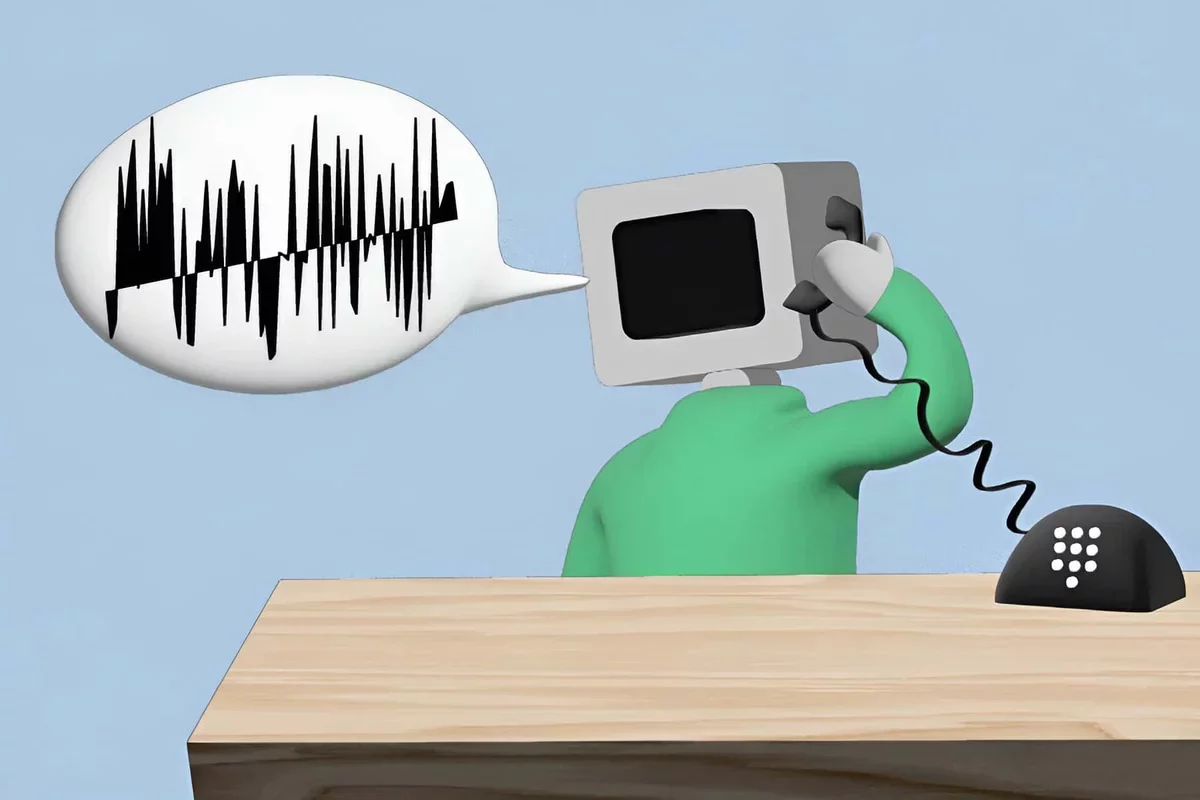
We've all faced that moment of uncertainty when answering a call from an unknown number. The voice might sound familiar, perhaps mimicking a loved one or a bank representative warning of fraud. But is it genuine?
"In our area, phone scams are alarmingly prevalent. Almost daily, we receive one or two scam calls," explained Xiangbin Teng, a cognitive neuroscientist at The Chinese University of Hong Kong, in an interview.
Teng, motivated by the rise of convincing AI-generated spam calls, decided to transform this annoyance into an intriguing scientific investigation. He, along with a team from Tianjin University and his own institution, aimed to explore whether the human brain can differentiate between authentic human voices and their AI counterparts.
The findings unveiled a fascinating aspect of human perception: while our conscious minds struggle to identify deepfakes, our brains subconsciously recognize the artificiality. The challenge lies in bridging this gap.
The Study That Followed a Scam Call
Today's AI voice synthesizers are remarkably advanced, producing sounds far more natural than the robotic tones of past technologies. They can imitate pitch, breathing, and the subtle pauses of real speech. A high-quality deepfake voice requires only 10 to 30 minutes of clear audio for training, while even one minute can suffice for a basic yet convincing imitation.
"Our inquiry began with a straightforward question: Can listeners discern real speech from AI-generated voices?" Teng noted.
The research team enlisted 30 participants, using an open-source AI tool called GPT-SOVITS to create deepfake audio. Participants listened to classic fairy tales and casual conversations, attempting to identify which voices were human and which were AI-generated.
Initially, participants struggled to distinguish between the two, and even a brief training session did not significantly enhance their performance. Interestingly, while their accuracy did not improve, their approach shifted. Post-training, they tended to label any voice as AI, indicating increased skepticism but not necessarily better judgment.
So, does this imply a future where we can't trust audio? Not quite. The real story unfolded within the participants' brains.
Understanding Neural Responses
While participants guessed the origins of the voices, they wore EEG caps to monitor their brain activity. This aspect of the study proved particularly intriguing.
"We observed a neural-behavioral dissociation," Teng explained.
Before training, the brain activity showed no significant differences in processing human versus AI speech. However, after just 12 minutes of training, the EEG data revealed clear distinctions in how the brain responded to both types of voices.
These neural differences appeared remarkably quickly, with spikes in brain activity occurring within milliseconds after sound onset. This indicates that while our conscious minds may be fooled by deepfakes, our auditory systems are already detecting discrepancies.
As Teng aptly put it, "Our brains are finely tuned to extract nuanced information from sound waves, honed over millennia to recognize human voices."
The Future of Voice Recognition
What are these subtle differences that our brains can detect? The researchers found that the modulation frequencies of human and AI speech differ in a specific range, particularly between 5.4 to 11.7 Hz. This relates to the rapid transitions in speech, which AI struggles to replicate accurately.
"Although we are currently navigating a transitional phase with synthetic voices, our brains have the potential to adapt," Teng remarked. The ability to detect these nuances suggests that with more exposure and training, we can enhance our capacity to discern between real and artificial voices.
As we continue to encounter AI-generated content in our daily lives, this research highlights the importance of developing new listening skills. The journey to mastering the detection of deepfakes is just beginning, and as technology evolves, so too will our ability to navigate this new auditory landscape.