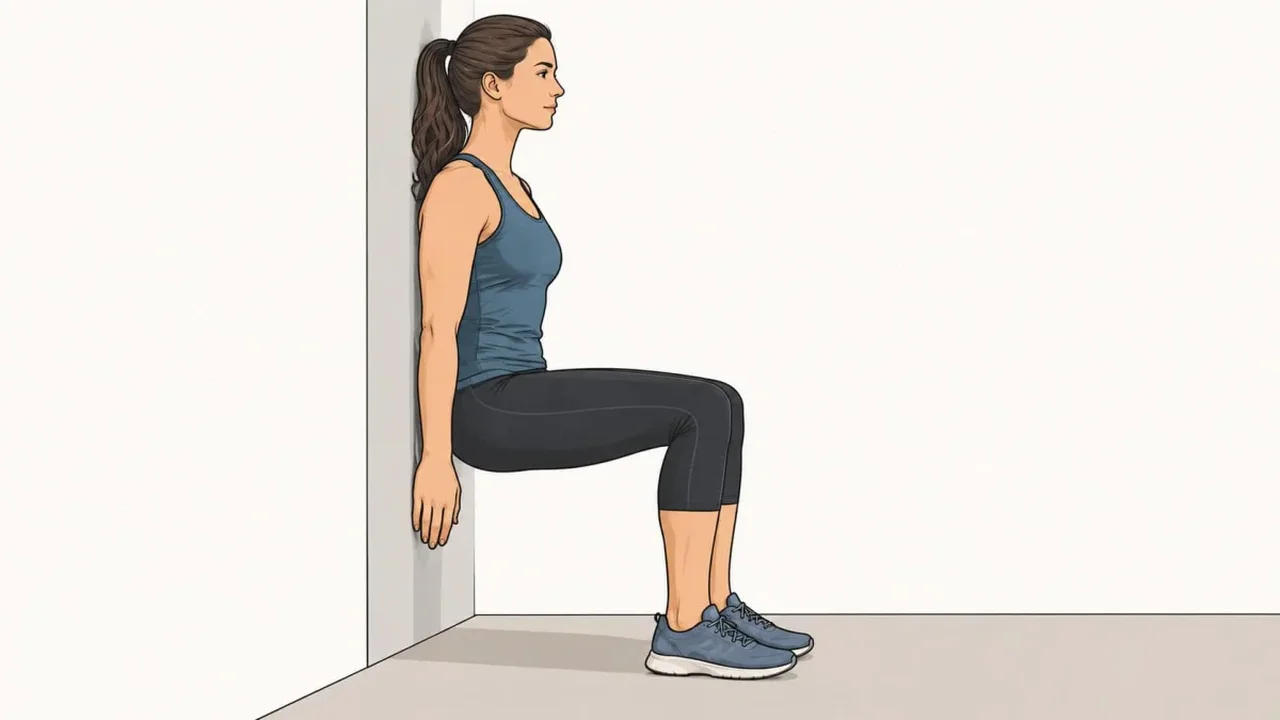
A wall sit needs no gym equipment or much space, and a new clinical trial suggests that doing it regularly may help lower resting blood pressure. The key appears to be consistency: three sessions a week produced the strongest results, while reducing the frequency preserved some--but not all--of the improvement.
Testing different weekly routines
Researchers led by Harry Swift of Canterbury Christ Church University studied 100 adults who were not meeting recommended activity levels. Participants began with four weeks of wall-squat training, with three sessions each week. Each session included four sustained holds, separated by two-minute rests.
After the first four weeks, average systolic blood pressure had fallen by about 9.5 mmHg, and diastolic pressure by about 5.5 mmHg, compared with the control group. For the next four weeks, participants either continued three weekly sessions, cut back to two or one, or stopped.
Consistency helped maintain the gains
By the end of the study, the group that continued three times weekly recorded the largest change: systolic pressure was about 13.7 mmHg below its starting average. Those who trained once or twice a week retained smaller improvements, of roughly 6.6 and 7 mmHg. Among participants who stopped, the earlier gains faded, and their readings were no longer statistically different from the control group.
The study, published in BMJ Open Sport & Exercise Medicine on September 29, 2026, examined adults with normal to high-normal blood pressure who were not taking blood-pressure medication. Its results show how a simple strength exercise may fit into a regular activity plan, though wall sits are not a substitute for broader physical activity or professional medical advice.
As research clarifies how exercise routines can be adapted to everyday life, accessible practices such as wall sits may help make preventive movement easier to sustain.