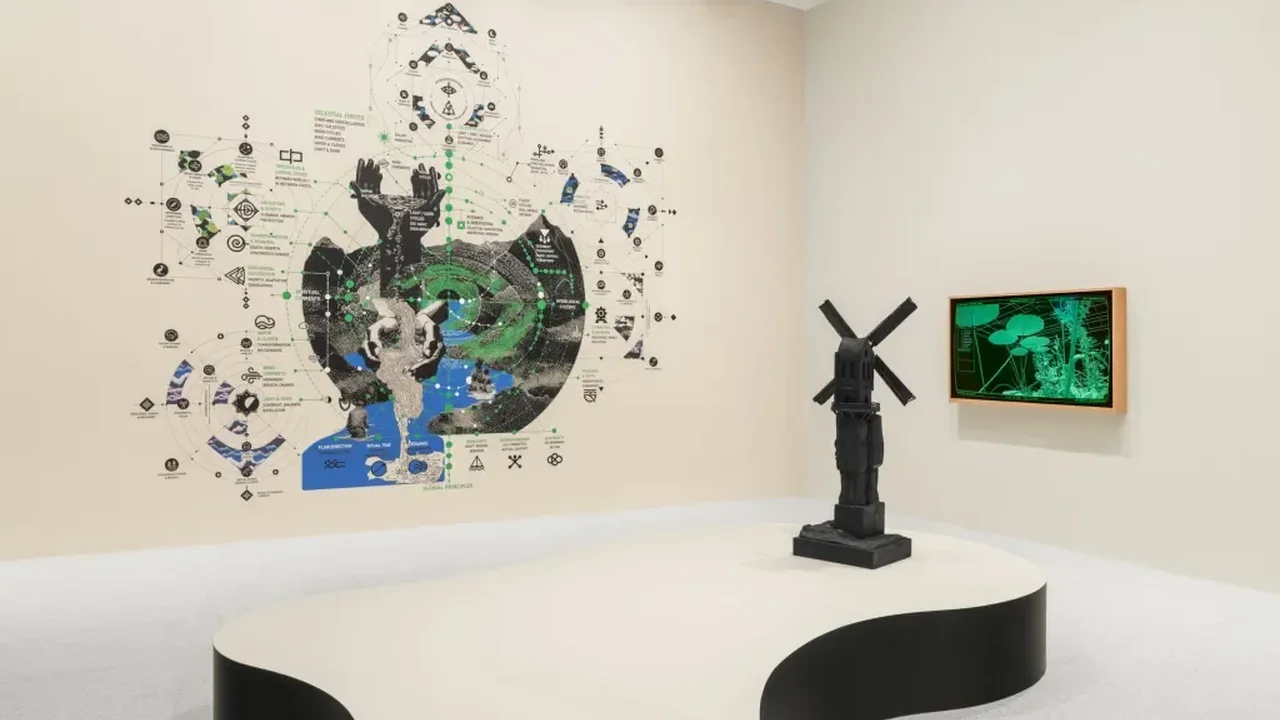
Minneapolis's Walker Art Center is clarifying the role of digital tools in Olalekan Jeyifous's first museum solo exhibition, after some visitors mistakenly described the work as generative AI output. The show, titled "Hydricosmic Litanies," brings together video, sculpture, and sound to explore environmental change, African diasporic cosmologies, and the shifting relationship between technology and landscape.
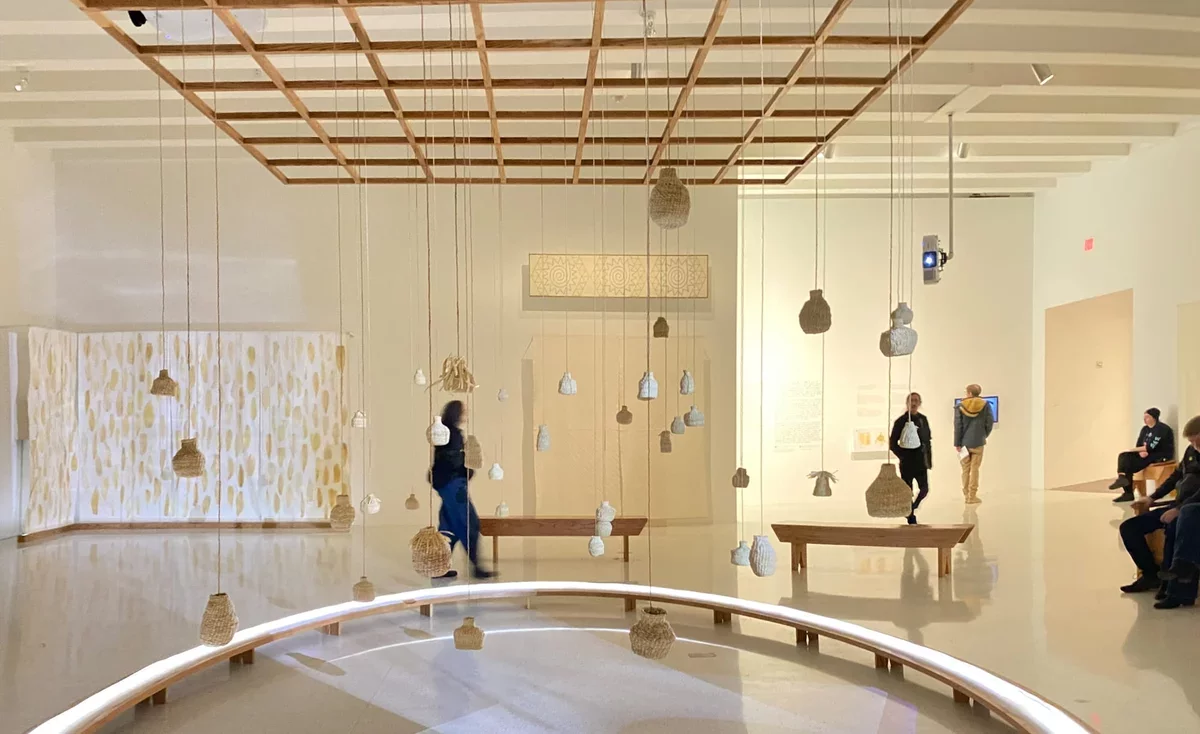
Jeyifous, who was born in Nigeria and lives in New York, works across architecture and design, often using advanced software common in those fields. The exhibition draws inspiration from Ben Okri's The Famished Road and imagines river-centered communities shaped by the Mississippi's presence in Minneapolis. Its installation language echoes a riverbed, with platforms arranged like islands.
The artist has emphasized that his process is not based on simple prompts or instant image generation. Instead, he describes a layered method of sketching, modeling, rendering, and revising. Walker curator Taylor Jasper and chief curator Henriette Huldisch say the museum is preparing added wall text to better explain that the work uses sophisticated tools, some of which may include AI features, but only as part of a broader creative workflow.
Jeyifous's practice has already been shown at major institutions including the Studio Museum in Harlem, the Vitra Design Museum, and Guggenheim Bilbao, and his work is held by the Museum of Modern Art, the Art Institute of Chicago, and the San Francisco Museum of Modern Art. The conversation around this exhibition highlights how digital art is evolving beyond labels and into more nuanced forms of authorship, suggesting a future where viewers engage more deeply with the making of images as well as their meaning.