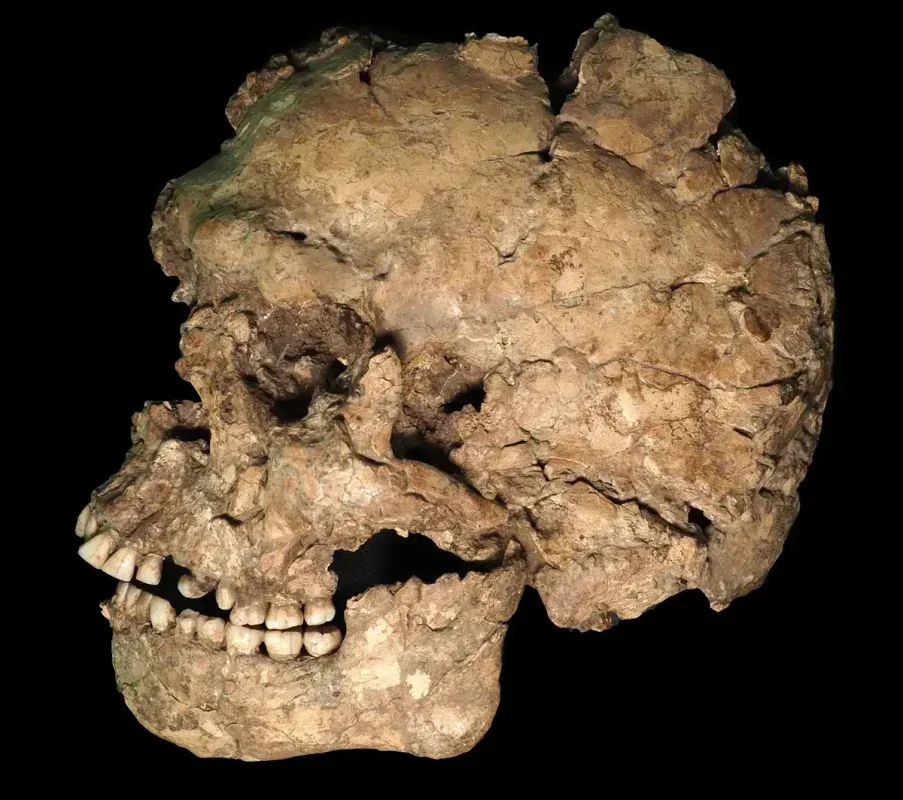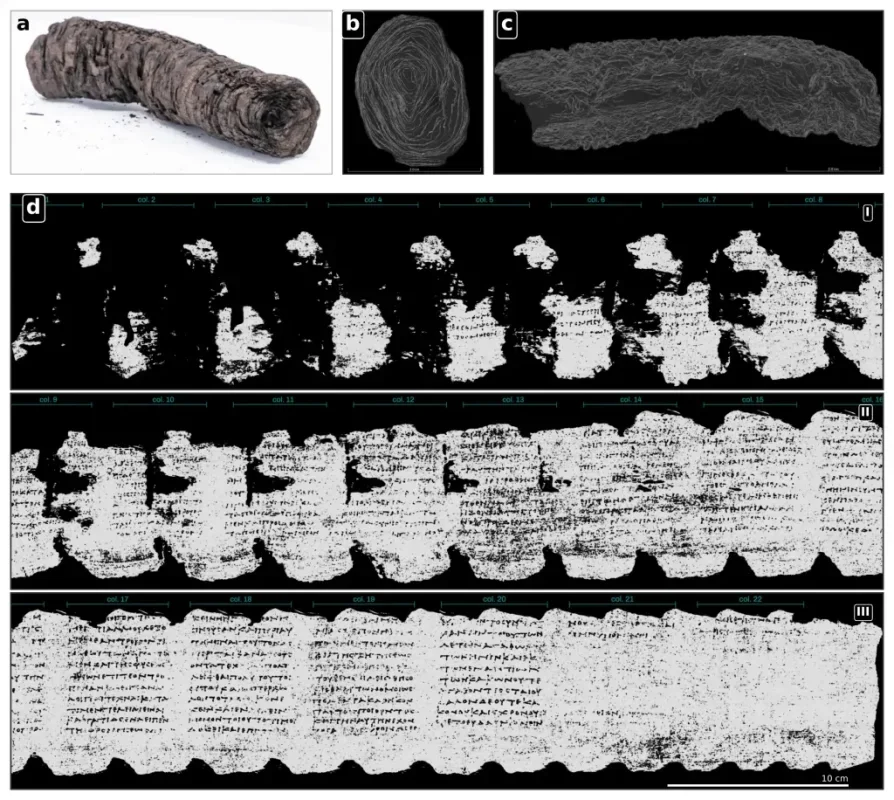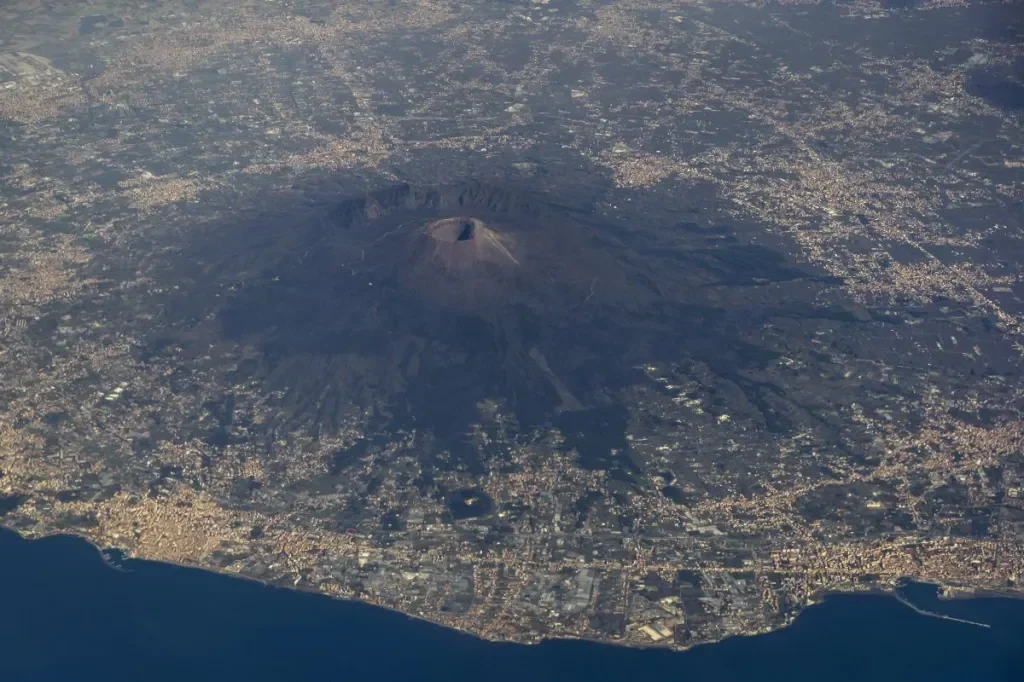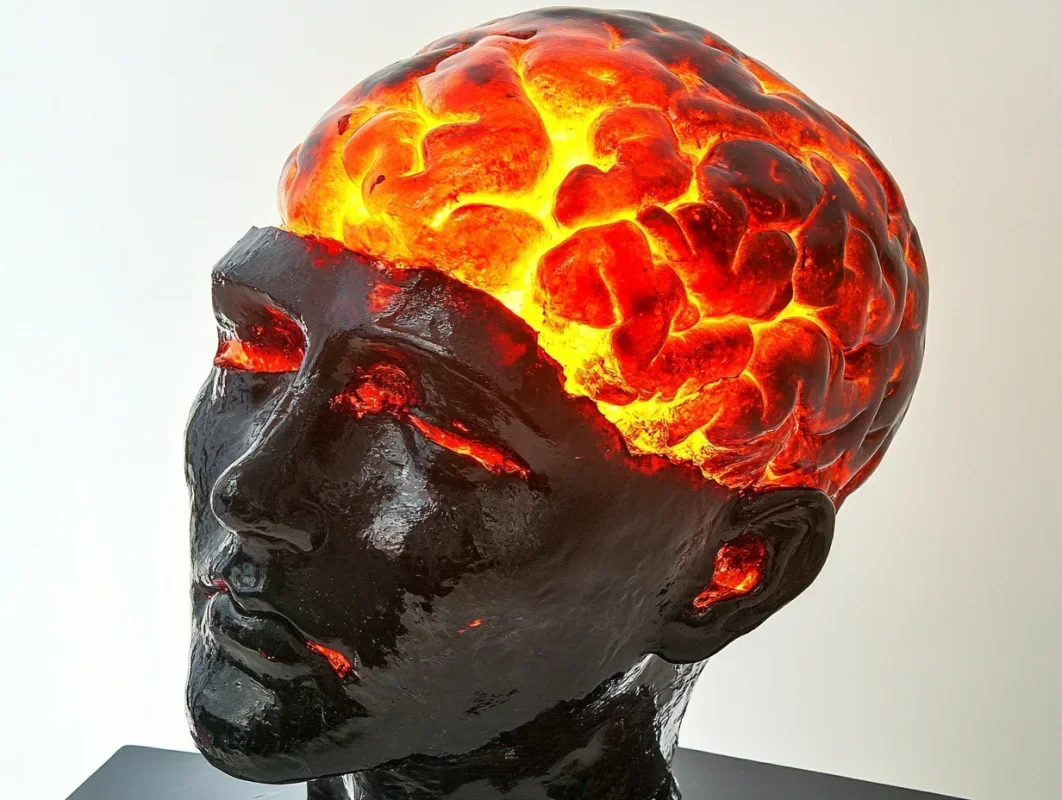
New research is offering a striking look at what happened during the AD 79 eruption of Mount Vesuvius. Scientists examining the remains of a young man found in Herculaneum believe his brain was transformed into glass by an intense burst of heat followed by rapid cooling.
A rare form of preservation
The man was discovered lying face down on a bed inside the Collegium Augustalium, a building in the ancient coastal town. According to the study, led by volcanologist Guido Giordano of Roma Tre University, fragments inside the skull and spinal cord showed a black, glass-like material that appears to be fossilized brain tissue.
Researchers estimate the tissue reached at least 510 degrees Celsius before cooling so quickly that it vitrified, or turned into glass. That process is unusual in organic material, but it can happen when extreme heat is followed by an abrupt drop in temperature.
The team argues that a superheated ash cloud, rather than the slower-moving pyroclastic deposits, may have been the first deadly event to reach Herculaneum. Unlike ground-hugging flows, an airborne ash cloud could have spread across the town in seconds, delivering enough heat to liquefy soft tissue before dissipating rapidly.
The idea builds on earlier research suggesting the city was first struck by a brief, intensely hot surge before later volcanic material buried it. The man's skull and spine may have helped protect part of the brain long enough for the glassy fragments to form.
Not all specialists agree with the interpretation, and some have called for further independent confirmation. Even so, previous analyses have identified preserved proteins and neurons in the material, supporting its organic origin.
Published in Scientific Reports, the study adds a remarkable chapter to the science of ancient preservation. It shows how modern research can still uncover new details about life, death, and environmental extremes in the ancient world. In the future, findings like this may deepen our understanding of how sudden natural events can preserve biological traces in unexpected ways.