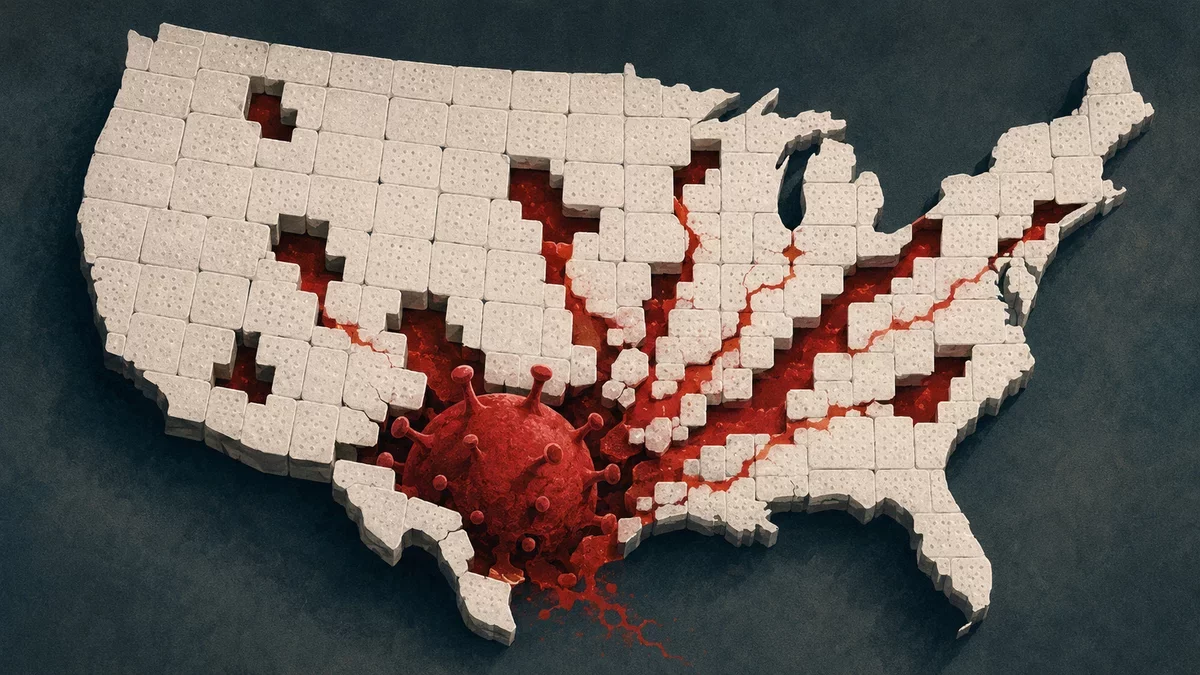
In January 2025, two imported measles cases in Texas marked the beginning of a concerning trend for the United States. Despite achieving measles elimination status in 2000, recent findings from researchers at Boston Children's Hospital and Harvard Medical School indicate that the nation is at risk of losing this significant public health milestone.
The analysis revealed alarming statistics: by February 2026, the U.S. recorded 93.2 measles cases per 10 million people, exceeding the recommended threshold of fewer than one case per 10 million. Furthermore, only 6.3% of these cases were imported, highlighting a troubling shift towards local transmission.
Measles: A Highly Contagious Virus
Measles is not just a common childhood illness; it is one of the most contagious viruses known. It can spread through the air and persist long after an infected person leaves a space, targeting unvaccinated individuals with alarming efficiency. Although the U.S. has previously managed to contain outbreaks, the current situation suggests a significant change.
Historically, public health authorities monitored specific indicators to assess measles transmission. These included the rarity of cases, the proportion of imported cases, and the number of outbreaks. Until recently, the U.S. met these criteria successfully. However, the latest data shows that the nation has missed four out of seven critical benchmarks.
Indicators of Concern
The research team identified four key indicators that have failed. The incidence of measles has risen, with the majority of cases now locally transmitted rather than imported. Outbreak control has also deteriorated, with 48 outbreaks reported in 2025 alone. Additionally, the effective reproduction number, which measures transmission intensity, has frequently exceeded one, indicating that the virus is spreading.
Anne Bischops, a pediatrician and co-author of the study, expressed concern over declining vaccination rates, stating that losing elimination status would be a troubling indicator for public health. The U.S. achieved its measles elimination status through robust vaccination efforts, primarily the two-dose measles, mumps, and rubella (MMR) vaccine. However, current vaccination rates have fallen below the herd immunity threshold of 95%, with some communities reporting coverage as low as 79.2%.
The Path Forward
While the U.S. has not officially lost its measles elimination status yet, the evidence suggests a worrying trend. A formal review will assess the epidemiological data and genetic sequencing of the virus. The implications of losing this status could be profound, as it would signal a significant public health setback.
Ultimately, the lesson is clear: maintaining public health achievements like measles elimination requires continuous commitment to vaccination and community awareness. As the landscape of public health evolves, proactive measures and education will be vital in safeguarding future generations from preventable diseases.