The University of North Texas (UNT) has unexpectedly closed an exhibition showcasing the works of Victor "Marka27" Quiñonez, an artist whose creations explore the experiences of immigrants in the U.S. and the harsh treatment they face from federal authorities.
The exhibit, titled Ni de Aquí, Ni de Allá -- which translates to "neither from here nor from there" -- was launched on February 3 and was scheduled to continue until May 1 at the College of Visual Arts and Design (CVAD) Galleries located within the UNT Art Building.
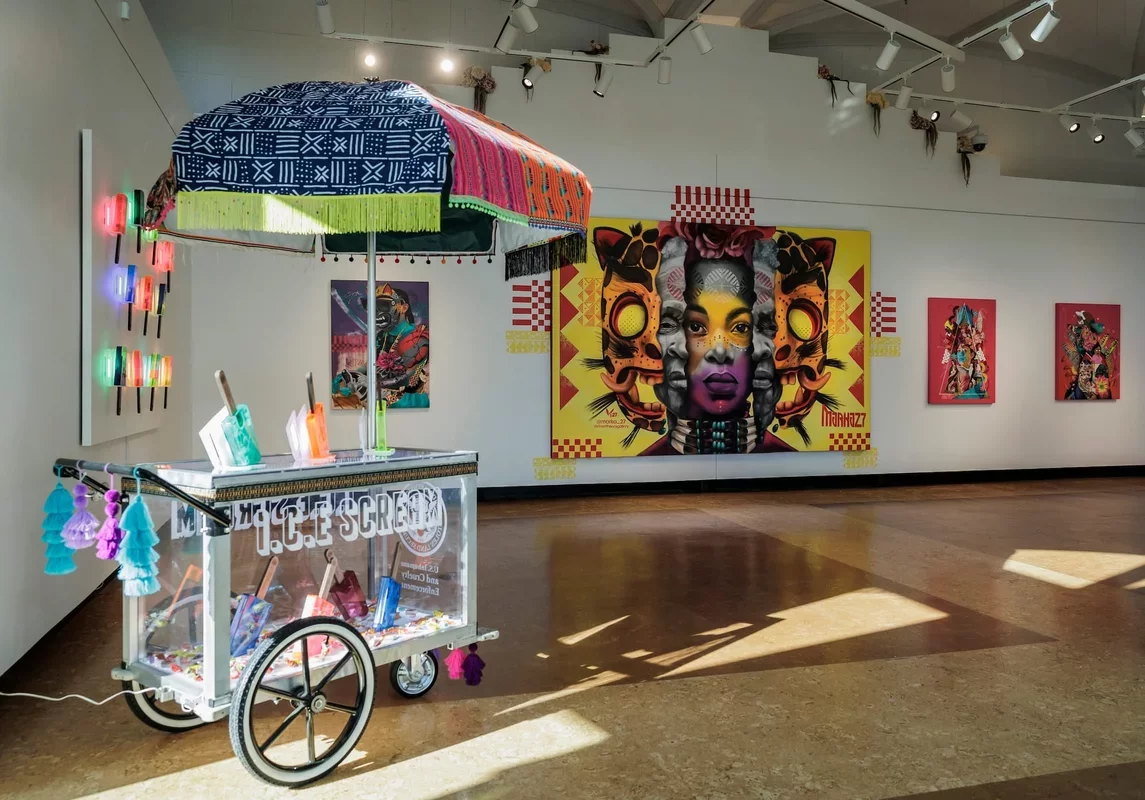
Originally curated by Kate Fowle for Boston University Art Galleries, where it was displayed for three months last year, the exhibition featured several notable pieces from Quiñonez's acclaimed I.C.E. Scream series. This series includes life-sized sculptures of paletas, or ice pops, that serve as both a celebration of Latine immigrant culture and a poignant critique of the violence perpetrated by Immigration and Customs Enforcement (ICE). Some artworks incorporate handcuffs or weapons encased in clear resin, while others, such as graffiti and paintings, reflect Quiñonez's Indigenous heritage and street art influences.
Quiñonez learned of the exhibition's sudden closure through social media messages from students, who shared images of the gallery's glass windows covered with brown paper, obscuring the view inside. References to the exhibition were removed from the university's website.
A few days later, on February 11, Quiñonez received a brief email from Stefanie Dlugosz-Acton, the director of the CVAD Galleries, informing him that the university had terminated the art loan agreement with Boston University Art Galleries for Ni de Aquí, Ni de Allá. The email indicated that arrangements were being made to return the exhibit.
Dlugosz-Acton also mentioned that "any activities associated with the exhibition are no longer necessary" and offered to reimburse Quiñonez for any travel costs incurred.
UNT has not publicly commented on the closure of the exhibition, nor has it responded to inquiries from media outlets.
Located in Denton, approximately 40 miles from Dallas, UNT prides itself on being "one of the nation's most diverse universities," with around 11,000 students, a quarter of whom identify as Hispanic.
In a phone conversation from Brooklyn, where he currently lives, Quiñonez expressed that the cancellation impacted him deeply, especially given his own immigrant background and the rise of hostility during the Trump administration.
"I witnessed my father being deported," he shared. "I have seen families and children torn apart right in front of me, in New York, in Texas. It's heartbreaking."
He emphasized that the exhibition was intended to address themes of dual identity and the complexities of growing up in the U.S. while having roots in another country.
Since the beginning of Trump's second term, the administration has deported over half a million individuals within the country and at the border. At mid-January, a record 73,000 individuals were reported to be held in detention, often in perilous and inhumane conditions.
Although Quiñonez was not provided with a specific reason for the exhibition's cancellation, he speculated that it might be part of a broader trend of censorship against artists who critique governmental policies.
"There seems to be a pattern in this country of suppressing any form of expression that opposes the actions of this administration toward civilians," Quiñonez remarked.
He added, "They claim ICE is meant to assist people, but detention centers are essentially privatized prisons. My work addresses the vulnerabilities of the communities affected by these policies."
As the administration escalates its actions against immigrants and civilians, including violent incidents involving ICE, there has been a notable trend of repression within the cultural sector. For instance, artist Amy Sherald withdrew an exhibition from the Smithsonian Institution due to concerns over potential censorship of her work.
"What we need now more than ever is for galleries, museums, and institutions to step up and showcase significant works that reflect the challenges facing our country," Quiñonez concluded. "They must have the courage to exhibit these works and support the artists who create them."