Astronomers have identified a candidate pair of enormous quasars that existed when the universe was only about 900 million years old. Their discovery could offer a rare opportunity to study how supermassive black holes formed so early in cosmic history.
Known as Nāpōwawāʻenakaulua and formally designated J1602+4228AB, the objects appear separated by just 18,100 light-years. One has an estimated mass of 1.5 billion Suns; the other, nearly 400 million. Quasars shine as gas heats up while spiralling into the supermassive black holes at their centres.
A close pair in the cosmic dawn
The brighter quasar had been known for more than two decades. Researchers spotted its faint neighbour while examining observations from the James Webb Space Telescope's Aether survey. Follow-up observations with the Gemini North telescope on Maunakea revealed two quasar spectra at nearly the same distance.
The research, led by Silvia Onorato of NSF NOIRLab and published in The Astrophysical Journal Letters, describes the pair as the most compact known candidate of its kind from this early era. The name Nāpōwawāʻenakaulua roughly means "two celestial bodies of unfathomable darkness" surrounded by brilliant energy.
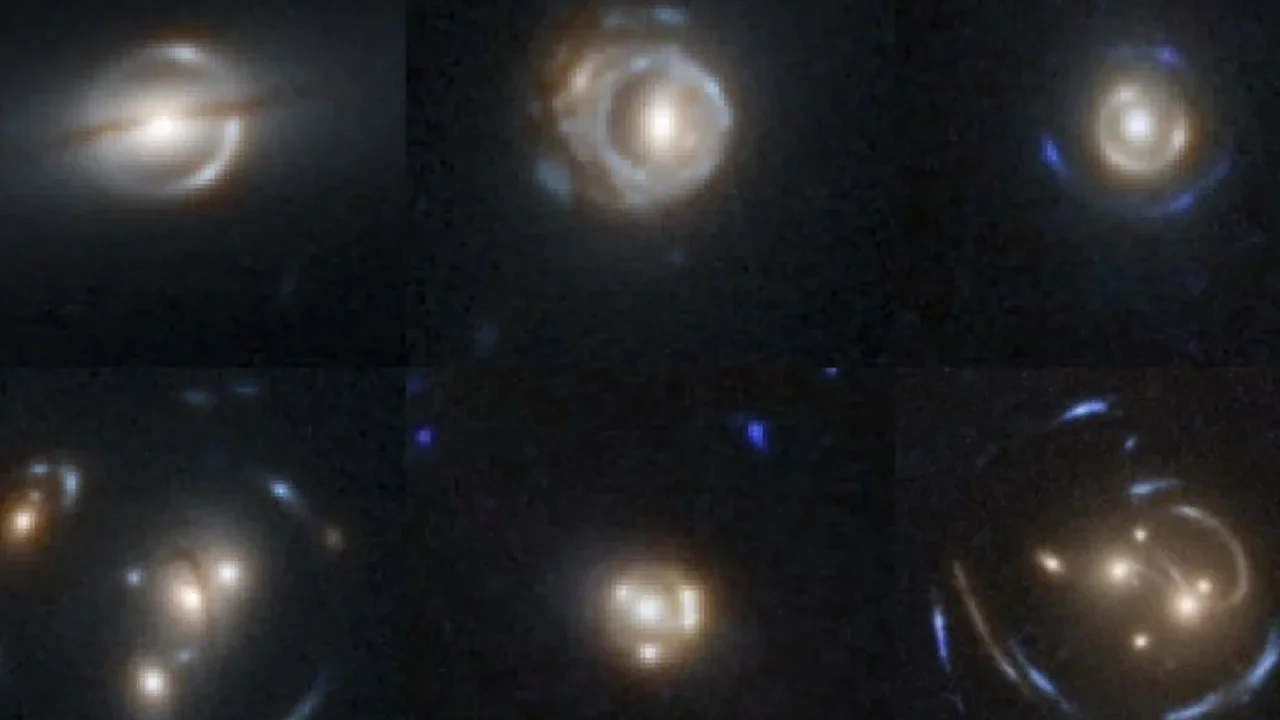
The interpretation is not yet conclusive. Although differences in the spectra support the idea that these are two distinct quasars, astronomers cannot fully rule out gravitational lensing, which can make one distant object appear as two. Further analysis is needed to confirm the pair.
Clues to how early black holes grew
Both objects appear to be consuming matter at around the Eddington limit--the approximate maximum rate at which radiation pressure and gravity balance in the infalling gas. Their great masses so early in the universe challenge models of black-hole growth, which may involve unusually massive starting seeds or sustained rapid feeding.
If confirmed, the pair may also point to unexpectedly dense quasar environments, offering clues about where some of the earliest giant galaxies took shape. Continued observations could help refine our understanding of how black holes and galaxies evolved together in the young universe.