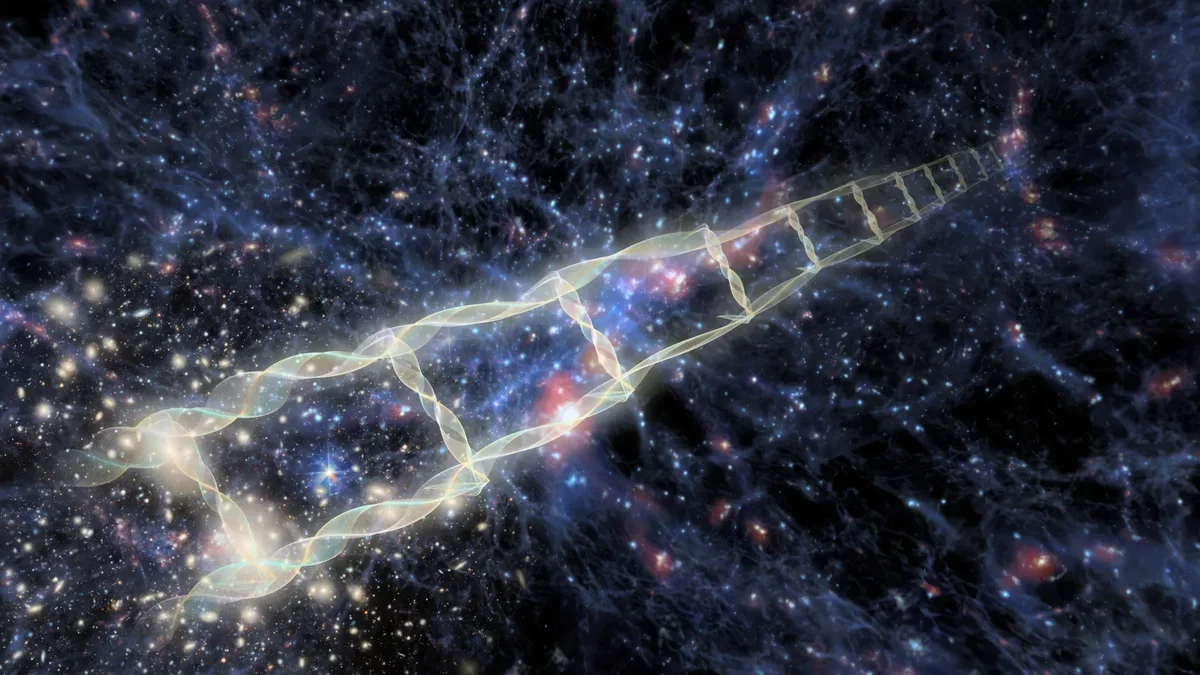
For years, scientists have employed two primary strategies to assess the expansion rate of the Universe. The first method involves measuring distances to nearby stars and galaxies to determine how quickly they are moving apart. The second method looks back in time, utilizing the cosmic microwave background to estimate the expected expansion rate based on established cosmological models.
While both approaches theoretically should yield the same results, discrepancies have emerged. Observations of the local Universe indicate a faster expansion rate of approximately 73 kilometers per second per megaparsec. In contrast, calculations from the early Universe suggest a slower rate, around 67 to 68 kilometers per second per megaparsec. This inconsistency, termed the Hubble tension, has been documented across various independent studies.
A Unified Approach Enhances Precision
To address this issue, researchers have amalgamated decades of observations into a cohesive framework. Spearheaded by the H0 Distance Network (H0DN) Collaboration, this initiative has yielded the most precise direct measurement of the local expansion rate to date. Their findings, published in Astronomy & Astrophysics, report the Hubble constant as 73.50 ± 0.81 kilometers per second per megaparsec, achieving an accuracy exceeding 1%.
The study, titled "The Local Distance Network: a community consensus report on the measurement of the Hubble constant at ∼1% precision," emerged from a collaborative effort initiated during the International Space Science Institute (ISSI) Breakthrough Workshop held in Bern, Switzerland, in March 2025.
"This isn't merely a new value for the Hubble constant," the collaboration emphasizes. "It represents a community-driven framework that integrates decades of independent distance measurements in a transparent and accessible manner."
Data From Ground and Space Observatories
Contributions from NSF NOIRLab have been pivotal, providing both scientific expertise and essential observations. John Blakeslee, Director of Research and Science Services at NSF NOIRLab, is a key member of the collaboration. The analysis incorporates data from the NSF Cerro Tololo Inter-American Observatory (CTIO) in Chile and the NSF Kitt Peak National Observatory (KPNO) in Arizona, enhancing the reliability of the findings.
Rather than relying on a single measurement technique, the team established a "distance network" that interlinks various methods for measuring cosmic distances. This includes methods involving Cepheid variable stars, red giant stars with known brightness, Type Ia supernovae, and specific galaxy types.
This multi-faceted approach allows for cross-verification of results. If any method were flawed, its removal would impact the overall outcome, which did not occur. The consistency across different techniques reinforces confidence in the measured expansion rate.
"This work effectively rules out explanations of the Hubble tension that depend on a single overlooked error in local distance measurements," the authors conclude. "If the tension is genuine, as increasing evidence suggests, it could indicate new physics beyond the standard cosmological model."
Future Implications
The ramifications of the Hubble tension extend beyond measurement techniques. The slower expansion rate inferred from the early Universe relies on the standard cosmological model, which outlines the Universe's evolution since the Big Bang. If this model lacks crucial elements, such as insights into dark energy or unknown particles, its predictions could be inaccurate.
Thus, the Hubble tension may signify a more profound issue rather than a mere measurement error, potentially prompting a reevaluation of our understanding of the Universe.
Looking Ahead
The newly established distance network also sets the stage for future research. By making their methodologies and data publicly accessible, the team has laid the groundwork for ongoing refinement as new observations arise. Upcoming observatories are poised to provide even more accurate measurements, which may clarify whether this discrepancy will be resolved or continue to hint at new physics.