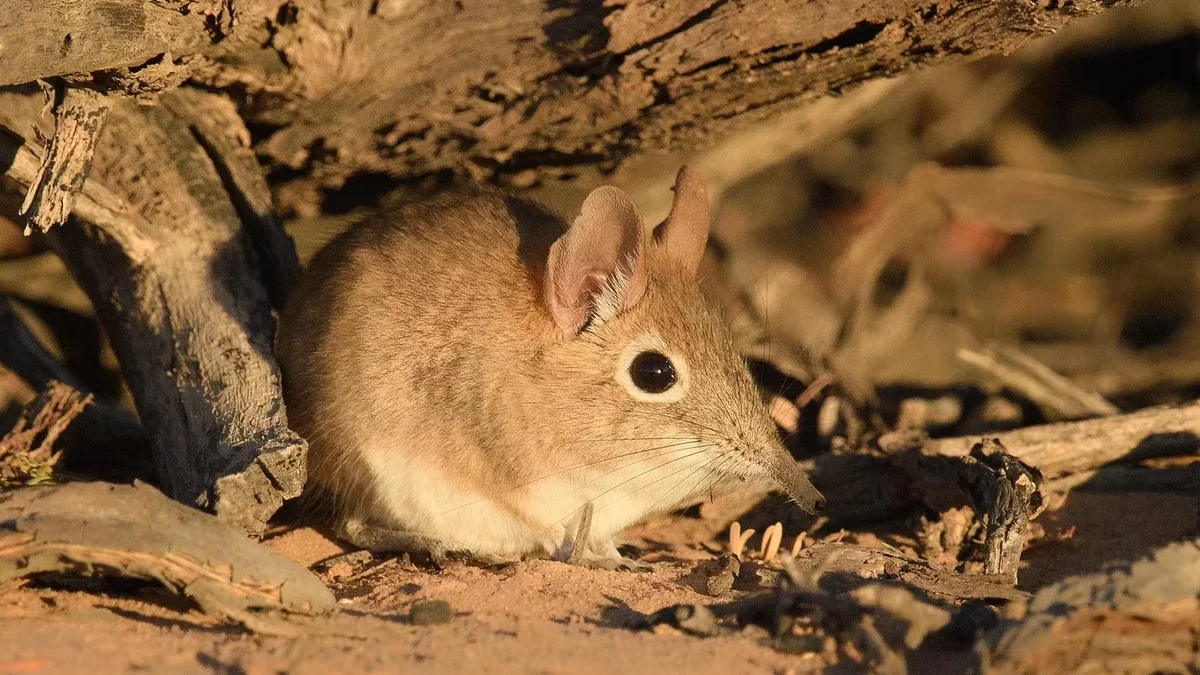
Scientists have introduced an innovative technique to monitor small mammals by analyzing their footprints. This method was successfully applied to two closely related species of sengi, achieving an impressive accuracy rate of up to 96 percent, marking a significant advancement in conservation efforts.
Dr. Zoë Jewell from Duke University's Nicholas School of the Environment, who co-authored the study published in Frontiers in Ecology and Evolution, shared, "Our study was driven by two main goals: to establish a more ethical and scientifically sound way to observe even the smallest species, and to create a reliable metric for assessing ecosystem health that can be used regularly--essentially a new heartbeat for our planet."
The Importance of Small Mammals
Despite their diminutive size, small mammals are crucial to ecosystem functionality and are quick to respond to environmental changes. Their population fluctuations can serve as early indicators of ecological disturbances. However, accurately monitoring these creatures is challenging due to many being classified as cryptic species, which are often indistinguishable to the naked eye.
This difficulty is exemplified by the two species used in the footprint study: Eastern Rock sengis and Bushveld sengis. Although they appear nearly the same, they inhabit different environments and confront varying ecological threats.
"Distinguishing cryptic species typically requires DNA analysis, which can be invasive, time-consuming, and costly," Jewell explained. "Understanding the differences is vital, as despite their similar appearances, these species face unique environmental challenges and fulfill distinct ecological roles. For instance, one species thrives in rocky areas while the other prefers sandy habitats, each serving as an independent environmental indicator."
Decoding Footprints for Species Identification
While the two sengi species may look alike, their footprints reveal unique characteristics. Subtle variations in foot structure create distinct track patterns. The research team concentrated on identifying these differences, training a computer model to classify the footprints accurately.
By approaching footprint identification as a digital tracking challenge, the researchers aimed to replace traditional invasive monitoring methods with a quicker and more efficient solution.
Field Research in South Africa
The research was conducted in two South African locations: Telperion Nature Reserve and Tswalu Kalahari Reserve. All 18 Bushveld sengis were located at Tswalu, while 19 Eastern Rock sengis were identified across both sites. Notably, some Eastern Rock sengis were found in close proximity to Bushveld sengis, a surprising discovery given that Tswalu Kalahari Reserve is outside the expected range for this species.
This unexpected overlap highlights the necessity for enhanced monitoring tools, as species may be adapting or changing their habitats without being noticed.
The animals were captured using specially designed traps containing soft bedding and food, including oats, peanut butter, and Marmite--foods they particularly enjoy--before being placed in a footprint collection box. Inside, special paper and charcoal dust encouraged the sengis to walk across the surface, leaving clear tracks. Each animal was then safely released at its original capture site.
Transforming Tracks into Valuable Data
High-resolution images of the footprints were analyzed using morphometry software to assess shape and size characteristics. The focus was on front footprints, which consistently displayed the most distinct features. Initially, over 100 potential measurements were identified.
Statistical analysis was employed to determine the most effective combination of features for distinguishing the two species.
Non-Invasive Accuracy
From this analysis, nine critical footprint features were selected and tested against previously unseen images and tracks. The system demonstrated an impressive accuracy rate of 94 to 96 percent in identifying the species across all trials.
The findings indicate that footprint analysis offers a straightforward, cost-effective, and non-invasive method for confirming species presence and tracking changes in population dynamics and geographical distribution. The research team intends to extend this approach to other species by training new models with additional data sets. They also aim to compare footprint analysis with other non-invasive monitoring techniques to explore how various tools can complement each other.
"Small mammals inhabit nearly every ecosystem on Earth, and our technology is adaptable enough to cater to all of them," Jewell concluded.