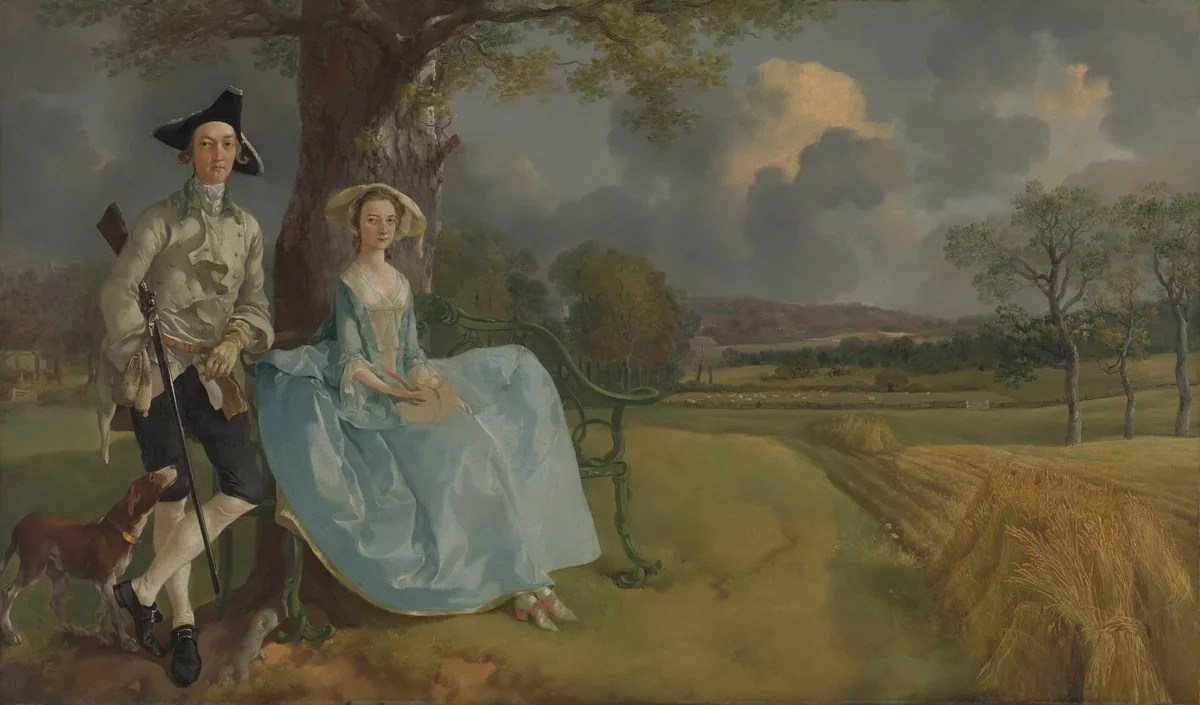
The exhibition Gainsborough: The Fashion of Portraiture at the Frick Collection unveils a fascinating exploration of 18th-century British portraiture, highlighting the intricate relationship between fashion and identity. This showcase features "conversation pieces," a genre that, by Gainsborough's time, was losing favor among the London elite. Originating from the Suffolk countryside, Gainsborough's early works, such as "The Gravenor Family" (1754), reflect a formal stiffness, while "Mr. and Mrs. Andrews" (1750) exemplifies his unique ability to intertwine landscape and attire as symbols of ownership and social status.
Upon relocating to Bath in 1759, Gainsborough evolved his style, influenced by the dramatic techniques of Flemish painter Anthony van Dyck. This shift allowed him to redefine Georgian self-fashioning, where taste became a moral compass. Philosopher Anthony Ashley Cooper, Third Earl of Shaftesbury, posited that beauty and virtue were interconnected, suggesting that aesthetic discernment was essential for moral cultivation. In a rapidly changing society, the challenge of distinguishing virtuous consumption from mere extravagance became paramount for both critics and patrons.
The exhibition also addresses the evolving perception of British portraiture, a topic curator Aimee Ng tackled during the press preview. While acknowledging the complexities surrounding Gainsborough's subjects--many of whom benefited from colonialism and slavery--the exhibition emphasizes that his work encapsulates deeper social negotiations. In 18th-century Britain, taste was a reflection of moral standing, and Gainsborough's artistry effectively communicated this idea.
Notable portraits include "Sarah Hodges, Later Lady Innes" (c. 1759), where the subject is depicted with a rosebud, symbolizing her emerging status, and "Mary, Countess Howe" (1763-64), showcasing her in a lavish pink silk gown that embodies the height of fashion. These works illustrate how Gainsborough's subjects navigated societal expectations, embodying a status that transcended mere wealth.
Gainsborough's adaptability is evident in his revisions of commissioned works to align with changing fashions. For instance, "Mrs. Sheridan" (c. 1783) was altered as societal tastes shifted, demonstrating the artist's keen awareness of the evolving landscape of status and identity.
The exhibition's most poignant moments arise when it challenges the moral underpinnings of Georgian taste. A striking juxtaposition between "Mary, Duchess of Montagu" (1768) and "Ignatius Sancho" (1768) reveals the complexities of representation. While Sancho, a former enslaved individual, is depicted with dignity, the painting's execution subtly underscores the limitations of taste as a vehicle for social change.
Ultimately, this exhibition invites viewers to reflect on how these portraits not only encapsulate beauty and status but also reveal the underlying structures of power and identity. As we consider the implications of Gainsborough's work today, it becomes clear that the dialogue between art and social hierarchy continues to evolve, offering insights into our own perceptions of taste and morality.
Gainsborough: The Fashion of Portraiture will be on display at the Frick Collection until May 25, 2026, curated by Aimee Ng.