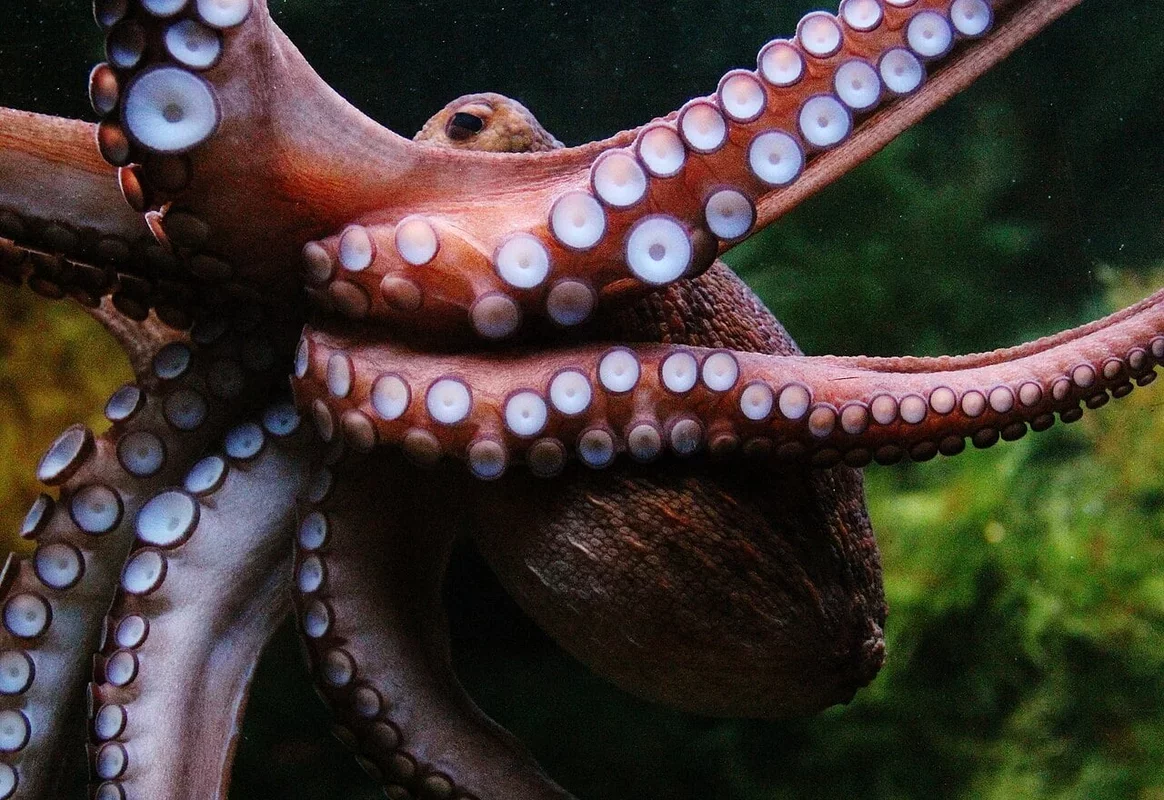
Exploring the depths of the ocean, octopuses utilize their eight sensitive arms for various tasks, from tasting their environment to capturing prey. However, these limbs are often at risk, leading to the loss of appendages to predators. Fortunately, octopuses possess an extraordinary ability to regenerate lost arms over time.
Recent research has unveiled a fascinating aspect of male octopus behavior regarding their right third arm, known as the hectocotylus. This specialized limb is crucial for reproduction, and males exhibit remarkable caution to protect it from harm.
A Delicate Balance
Male octopuses have a single testis located within their mantle, the muscular cavity that houses vital organs. This testis produces sperm, which is stored in bundles called spermatophores. However, the male's anatomical limitation is that his penis is too small to reach the female for direct mating.
The hectocotylus serves as a modified arm that facilitates the transfer of these sperm packets into the female's mantle cavity, showcasing a unique evolutionary adaptation. Keijiro Haruki, a researcher from Nagasaki University, observed that male octopuses display a strong instinct to protect this specific arm. "He would strongly resist when I touched one particular arm and pull it back towards his body," Haruki noted, indicating the arm's significance.
Protective Instincts in Action
To investigate how far males would go to safeguard their hectocotylus, Haruki and his team studied the Japanese pygmy octopus (Octopus parvus). From their observations, they found that while many octopuses had lost limbs to predators, only one male was missing his hectocotylus, contrasting with the higher number of females that had lost theirs.
In controlled experiments, male octopuses exhibited a distinct behavior when confronted with risky situations. When a heavy object was introduced to their environment, females readily used their right third arm to explore it, whereas males refrained from using their hectocotylus at all.
In another experiment involving food placed in a narrow, dark space, females quickly reached in without hesitation, while males cautiously probed the area with their other arms before finally using their mating arm to retrieve the food.
Specialization Among Arms
This behavior raises questions about whether octopuses generally prefer specific limbs for different tasks. Studies indicate that while octopuses are adaptable, they do tend to organize their actions based on the limbs they use. Front arms are primarily utilized for reaching and grabbing, while back arms assist in locomotion.
An Evolutionary Perspective
The findings suggest that male Japanese pygmy octopuses prioritize the protection of their hectocotylus to ensure reproductive success. Given their short lifespan of about a year, losing this limb could significantly impact their ability to breed, emphasizing the evolutionary advantage of safeguarding it over developing a larger reproductive organ.
Published in the journal Ethology, this research illuminates the intricate behaviors of octopuses and their evolutionary strategies, hinting at the complex interplay between survival and reproductive success in the animal kingdom.