Recent research published in Nature has unveiled groundbreaking insights regarding the thymus gland, challenging long-held beliefs about its role in adult health. This organ, often overlooked, may be crucial in understanding individual aging processes and the effectiveness of cancer treatments.
Hugo Aerts, PhD, the lead researcher and director of the Artificial Intelligence in Medicine (AIM) Program at Mass General Brigham, emphasized, "The thymus has been neglected for years and could be vital in explaining variations in aging and cancer treatment responses. Our findings indicate that maintaining thymic health is essential for immune system protection as we age."
The Role of the Thymus
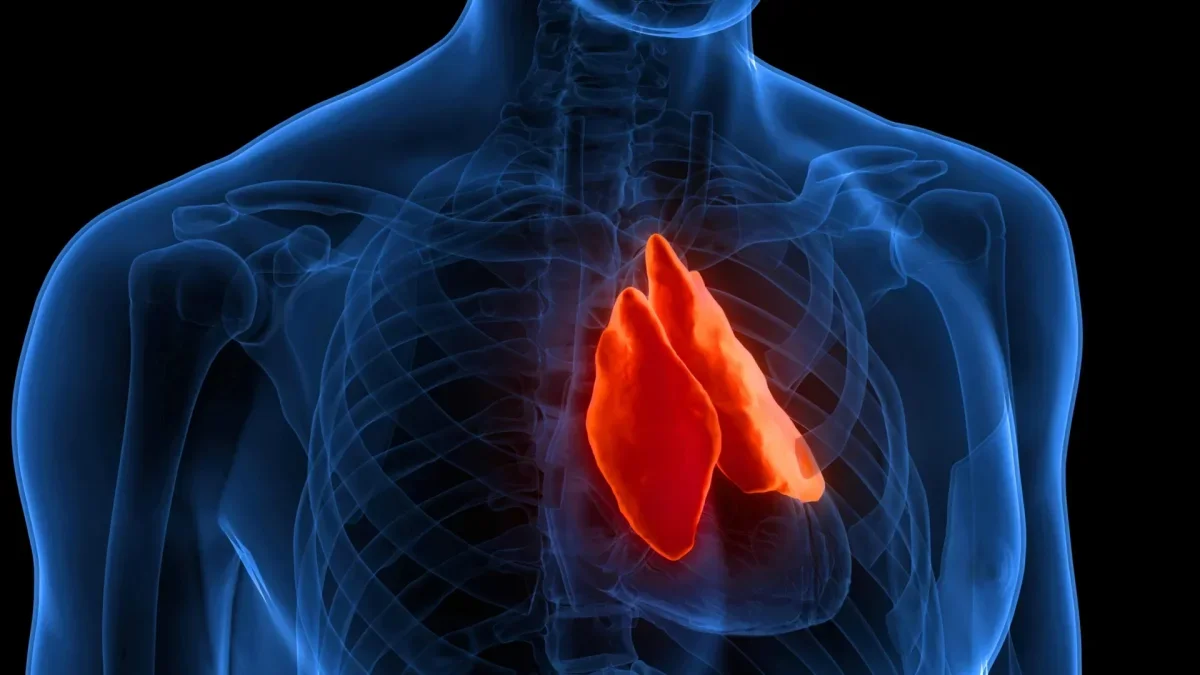
Situated in the chest, the thymus is responsible for training T cells, which are essential for the immune system's defense against diseases. Traditionally, it was believed that the thymus's diminishing size after puberty limited its importance in adult health, leading to minimal focus in large-scale studies. While previous research hinted at a connection between T cell diversity and aging, these studies were often constrained by their small sample sizes.
The current study, however, analyzed data from over 25,000 adults in a national lung cancer screening trial and more than 2,500 participants from the Framingham Heart Study, providing a comprehensive view of thymic health.
AI's Insight into Longevity
Utilizing artificial intelligence to assess routine CT scans, researchers evaluated the thymus's size, structure, and composition, creating a "thymic health" score. Individuals with higher scores exhibited significantly improved health outcomes, including a 50% lower risk of death from any cause, a 63% reduced risk of cardiovascular mortality, and a 36% decreased likelihood of developing lung cancer. These findings remained robust even when accounting for factors like age and overall health.
The study suggests that declines in thymic health may lead to reduced T cell diversity, hindering the immune system's ability to tackle new threats like cancer.
Moreover, several lifestyle factors, such as chronic inflammation, smoking, and increased body weight, were linked to poorer thymic health, indicating that lifestyle choices could influence long-term immune resilience.
Thymus and Cancer Treatment
In a related investigation, the team analyzed data from over 1,200 cancer patients undergoing immunotherapy. The results indicated that those with healthier thymuses had improved responses to treatment, facing a 37% lower risk of cancer progression and a 44% reduced risk of mortality, even after adjusting for various patient and treatment differences.
These findings underscore the thymus's previously underestimated role in the effectiveness of modern cancer therapies.
Future Directions
While these findings are promising, further research is essential to validate the results. Additionally, the imaging techniques used to assess thymic health are not yet ready for widespread clinical application. The research team is also investigating whether lifestyle modifications can enhance thymus function. A current study is exploring the potential impacts of radiation exposure during lung cancer treatment on thymic health.
Aerts concluded, "Enhancing our understanding of thymic health could significantly improve how physicians assess disease risks and make treatment decisions."