In the ongoing exploration of life's beginnings, scientists have delved into the primordial conditions of Earth to tackle a fundamental question: Did the genetic code emerge before the proteins that execute its instructions? In contemporary biology, DNA serves as the blueprint while proteins facilitate essential chemical reactions. However, around 4 billion years ago, some researchers propose that the first forms of life arose in an "RNA World."
During this theoretical epoch, RNA, a single-stranded counterpart of DNA, was believed to perform all necessary functions. It not only stored genetic information but also folded into intricate structures to act as catalysts, known as ribozymes.
This theory, while captivating, faced a significant paradox. Until recently, the only self-replicating RNA molecules identified were large and complex, making their spontaneous emergence in prebiotic environments highly improbable.
Recent breakthroughs have changed this narrative. A team at the MRC Laboratory of Molecular Biology in Cambridge has unveiled a remarkably small ribozyme capable of self-replication, aptly named QT45, which stands for "Quite Tiny 45."
The Complexity Paradox of RNA
The RNA World hypothesis suggests that life began with an RNA molecule capable of self-replication, acting as a polymerase to construct RNA strands. Previous laboratory attempts to evolve such molecules yielded large, structurally intricate ribozymes. While these were impressive, their complexity hindered effective self-replication, creating a paradox: the first replicator needed to be complex yet was unlikely to form spontaneously.
Philipp Holliger and Edoardo Gianniand from the MRC Laboratory challenged conventional wisdom, pondering if a simpler, smaller molecule could fulfill this role. Their search led to the discovery of QT45.
Searching Through Trillions of Sequences
The researchers generated a vast pool of approximately one trillion unique RNA sequences, focusing on shorter strands of 20 to 40 nucleotides. Through an in vitro evolution process, they isolated a successful ribozyme after 11 rounds of selection.
Ultimately, they identified three small, unrelated RNA motifs, with QT45 being the standout at just 45 nucleotides long, significantly smaller than previous polymerase ribozymes. Zachary Adam, a researcher not involved in the study, emphasized the remarkable odds of finding a functional sequence among such vast possibilities.
Mechanism of QT45: Ice and Triplet Building Blocks
QT45 operates differently from modern polymerase enzymes, relying on two unique prebiotic conditions: sub-zero temperatures and "triplet" building blocks. The ribozyme functions optimally in environments akin to present-day Iceland, where ice and hydrothermal activity coexist. The ice helps concentrate the RNA, while freeze-thaw cycles facilitate the reaction.
Rather than adding single nucleotides, QT45 assembles them in groups of three, known as trinucleotide triphosphates or "triplets." This approach addresses challenges faced by shorter molecules, allowing the ribozyme to replicate complex RNA templates effectively.
Self-Replication: Closing the Loop
A critical criterion for any candidate as the "first spark of life" is its ability to replicate itself. This process involves two key steps: the ribozyme must use itself as a template to create a complementary strand and then utilize that strand to recreate the original ribozyme. QT45 appears capable of performing both tasks.
Holliger stated, "This is the first RNA that can synthesize itself and its encoding strand, representing the two essential reactions of self-replication."
However, challenges remain. Currently, the team has not achieved simultaneous execution of both reactions. QT45 can synthesize its complementary strand from a mix of triplets, but to replicate itself from that strand, it requires a specific set of triplets.
Evolution in Icy Conditions?
Interestingly, QT45 is not a flawless copying mechanism, operating with an average fidelity of about 93%. While errors in replication are often viewed negatively, they may have been crucial for evolution at the origins of life. A perfect copying system would hinder variability, while a too-error-prone system would lose essential genetic information.
Holliger noted that once self-replication begins, the system should evolve and optimize itself through natural selection.
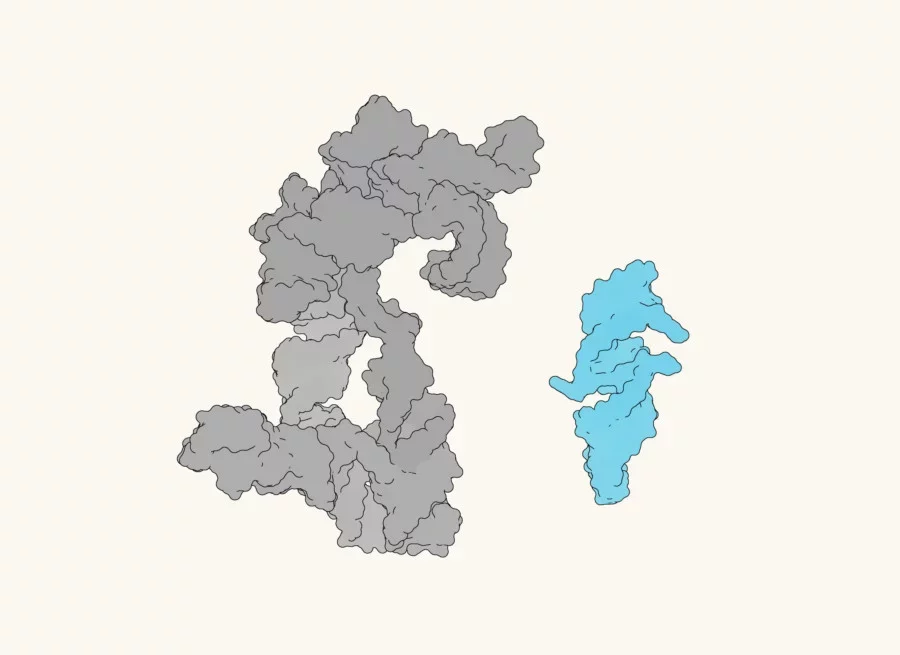
Despite having identified the sequence, the exact three-dimensional structure of QT45 remains unknown. The researchers are eager to explore its shape, as understanding how this small RNA molecule can fold into a functional structure is vital for unraveling the mysteries of life's origins.
This discovery illustrates that the mechanisms of life can be simple and derived from random processes, making the transition from non-living chemistry to living biology seem less miraculous and more inevitable. Holliger remarked, "It's been a long quest to reach a point where we can believe RNA can self-replicate under the right conditions. This shows it is indeed possible."