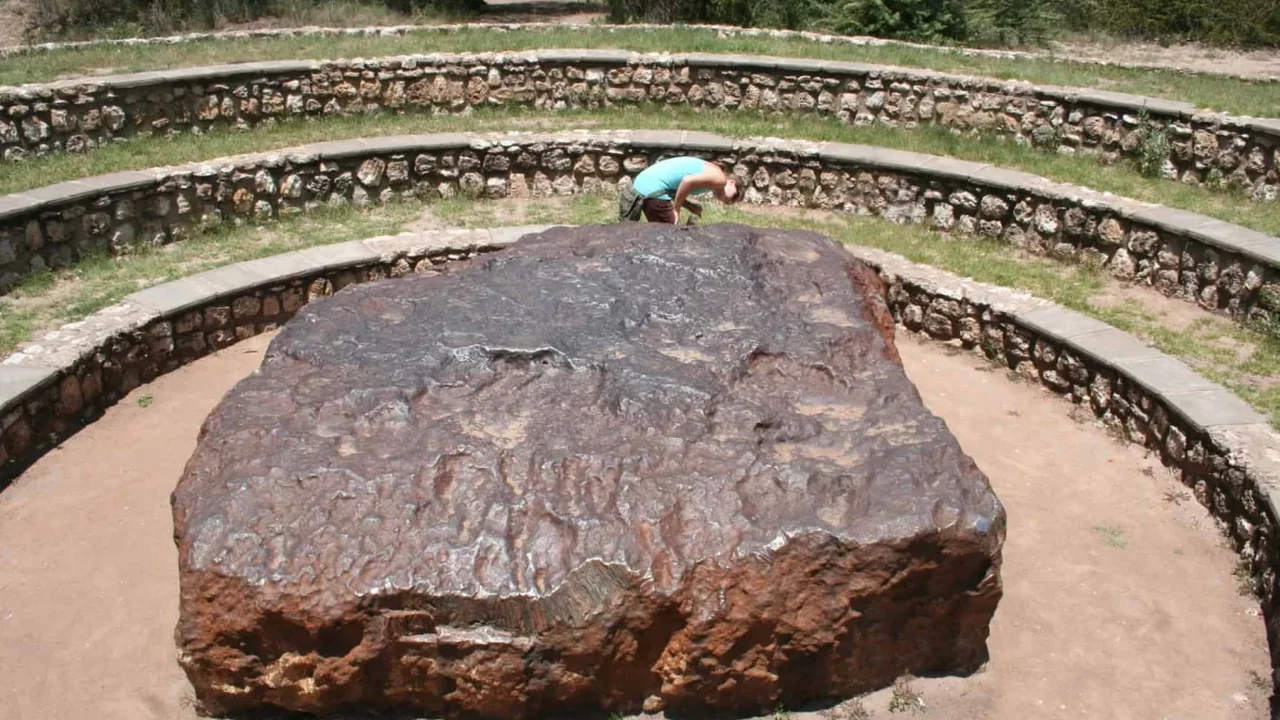
The Hoba meteorite, located in Namibia, holds the title of the largest known natural iron mass on Earth, weighing approximately 60 metric tons. Given its immense size, one would expect it to have created a significant crater upon impact. Surprisingly, this is not the case. Around 80,000 years ago, Hoba entered Earth's atmosphere, but instead of crashing down with destructive force, it experienced a remarkable deceleration due to a unique combination of factors, including its nickel-rich composition, flat shape, shallow entry angle, and atmospheric braking.
An Imposing Presence
Situated on a farm near Grootfontein, Namibia, the Hoba meteorite remains in place, too heavy to relocate. Initially discovered in 1920 by landowner Jacobus Hermanus Brits, it was unearthed accidentally when his plow struck the metallic mass while working the field.
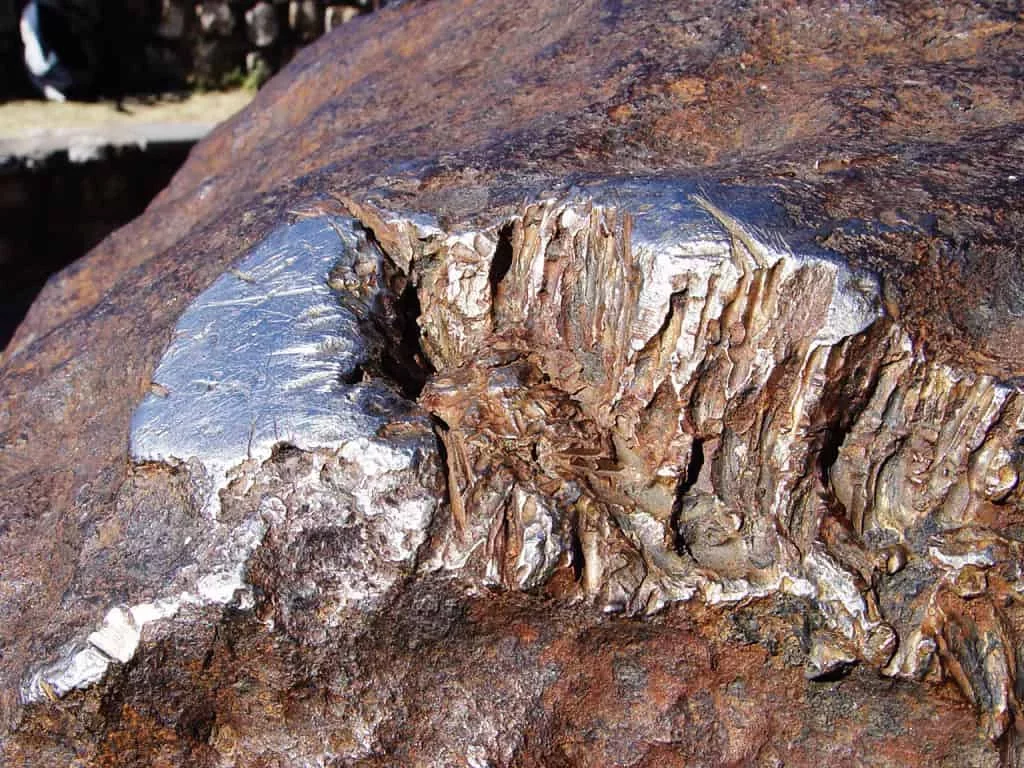
At the time of its discovery, only a small part of the meteorite was visible above ground. Further excavation revealed a massive rectangular slab buried under a thin layer of soil. Scientists have classified Hoba as an ataxite, a rare type of iron meteorite characterized by its high nickel content and lack of the typical crystalline structure found in many other meteorites.
A Unique Structure
Most meteorites do not survive their entry into the atmosphere intact; they often disintegrate due to frictional heating. However, Hoba's solid structure, combined with its flat shape and shallow entry angle, allowed it to withstand the intense conditions of atmospheric entry. This unique shape increased drag, significantly slowing its descent compared to more spherical meteorites.
The Role of Shape and Angle
Contrary to the typical round shape of many meteorites, Hoba's slab-like form contributed to its unique impact behavior. Its dimensions--approximately 2.95 by 2.84 meters--allowed it to experience substantial atmospheric drag, which reduced its speed dramatically as it approached the ground. Researchers suggest that Hoba likely entered the atmosphere at a shallow angle, which further facilitated its slow descent.
The Erosion Factor
While Hoba did not leave a visible crater, it is believed that it originally created a small impact scar that has since been eroded and covered by sediment over thousands of years. The combination of wind-blown sand and seasonal moisture likely contributed to the gradual filling and hardening of the area around it.
Today, Hoba continues to face challenges. The meteorite has been subjected to chemical weathering and human interference, leading to a reduction in its mass over the decades. Legal protections were established in 1955, designating Hoba as a national monument, but enforcing these protections remains a challenge.
Hoba teaches us valuable lessons about the dynamics of meteorite impacts. Its story invites a re-examination of how we perceive such events and emphasizes the importance of understanding various factors that influence a meteorite's behavior upon entering Earth's atmosphere.
As we continue to explore and learn from celestial objects like Hoba, we gain insights that could inform future planetary defense strategies and enhance our understanding of the universe.