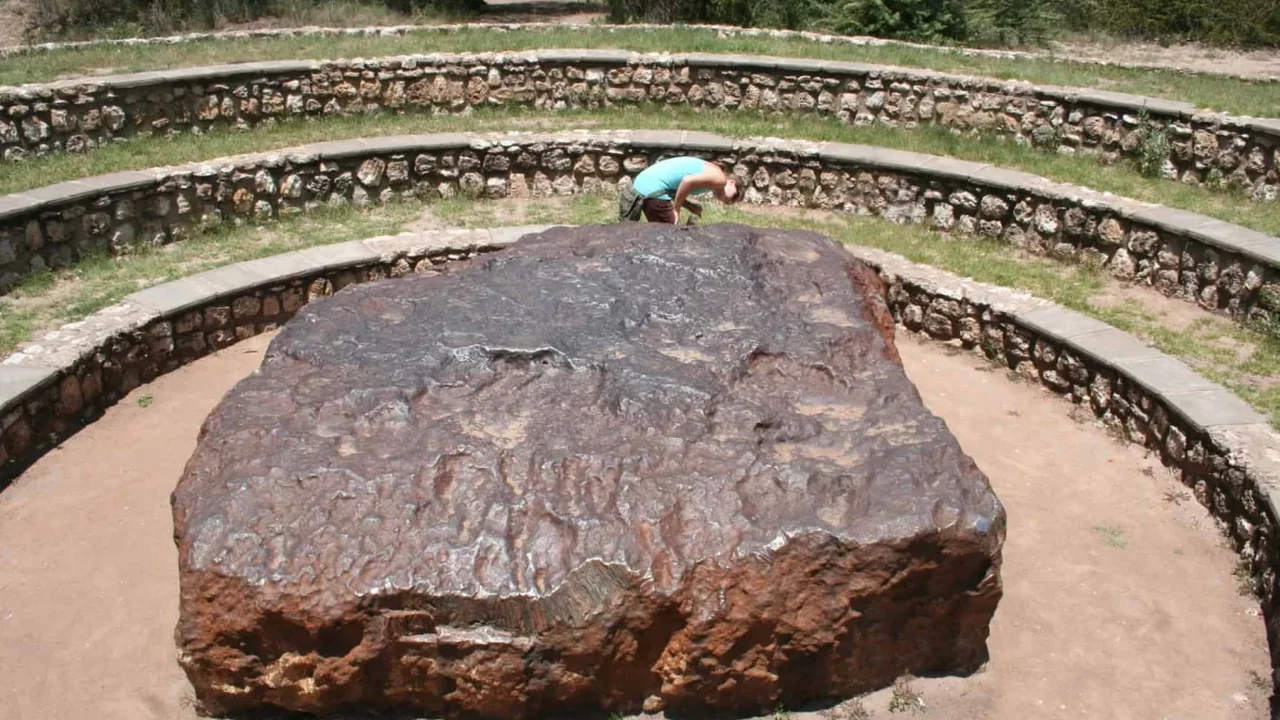
The Hoba meteorite in Namibia remains one of the most remarkable objects ever found on Earth: the largest known intact piece of natural iron, with a mass of about 60 metric tons today. Its presence raises an obvious question -- how could something so massive land without leaving a dramatic crater?
Scientists say the answer lies in a rare combination of factors. Hoba belongs to a nickel-rich class of iron meteorites known as ataxites, which are especially dense and resistant to fragmentation. Its broad, slab-like shape also increased drag as it moved through the atmosphere, while a shallow entry angle likely gave air resistance more time to slow it down.
A Fall That Lost Most of Its Energy in the Air
Models suggest the original body may have been far larger before atmospheric braking stripped away most of its mass. By the time it reached the ground, it likely descended much more slowly than a typical cosmic impactor. Instead of punching deep into bedrock, it appears to have settled into surface soil and the layer beneath it.
That is why no obvious crater is visible today. Over tens of thousands of years, wind-blown dust, sediment, and carbonate-rich material likely filled the original depression. In Namibia's dry environment, those deposits could harden into calcrete, gradually blending the impact mark into the landscape.
Discovered in 1920 by farmer Jacobus Hermanus Brits near Grootfontein, the meteorite was found just below the surface after a plough struck metal. Since then, it has become a landmark of planetary science and a rare natural archive of the early solar system.
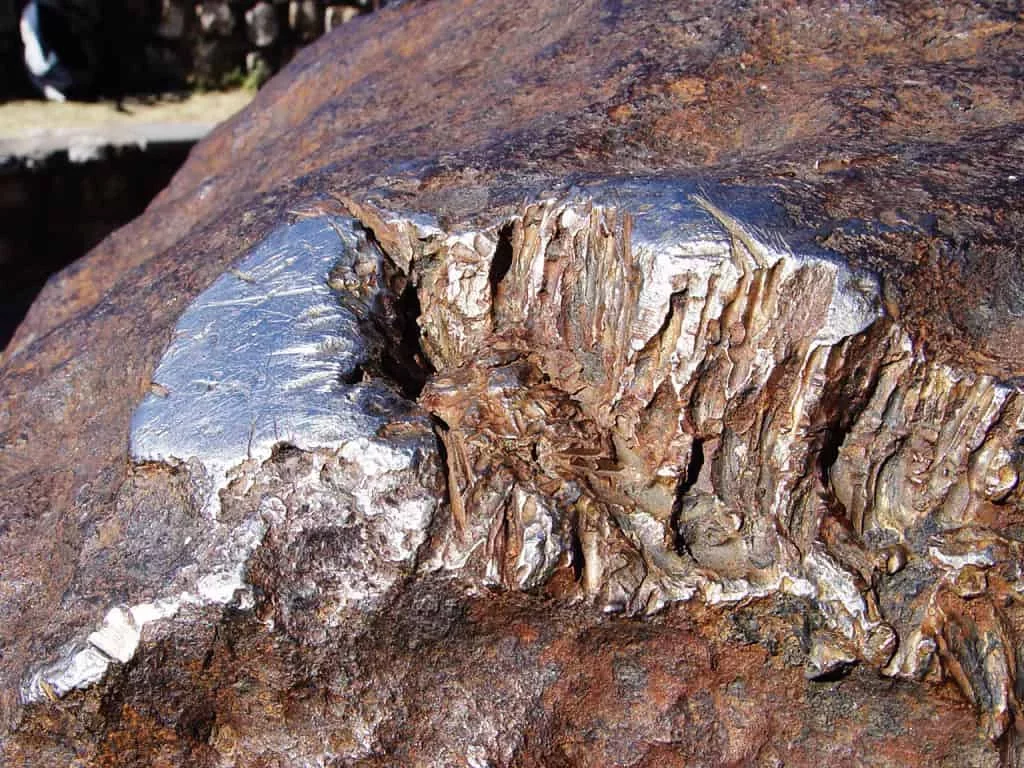
Hoba also shows how fragile such treasures can be over time. Weathering slowly alters the exposed metal, and human contact has reduced its mass from an estimated 66 tons to roughly 60 tons. Protected status helped preserve it, but the site remains a reminder that scientific heritage needs careful stewardship.
Beyond its size, Hoba offers a deeper lesson: impact outcomes depend not only on mass, but also on composition, shape, and entry angle. As planetary science advances, discoveries like this may sharpen how we understand meteorites, Earth's atmosphere, and future space-risk models.