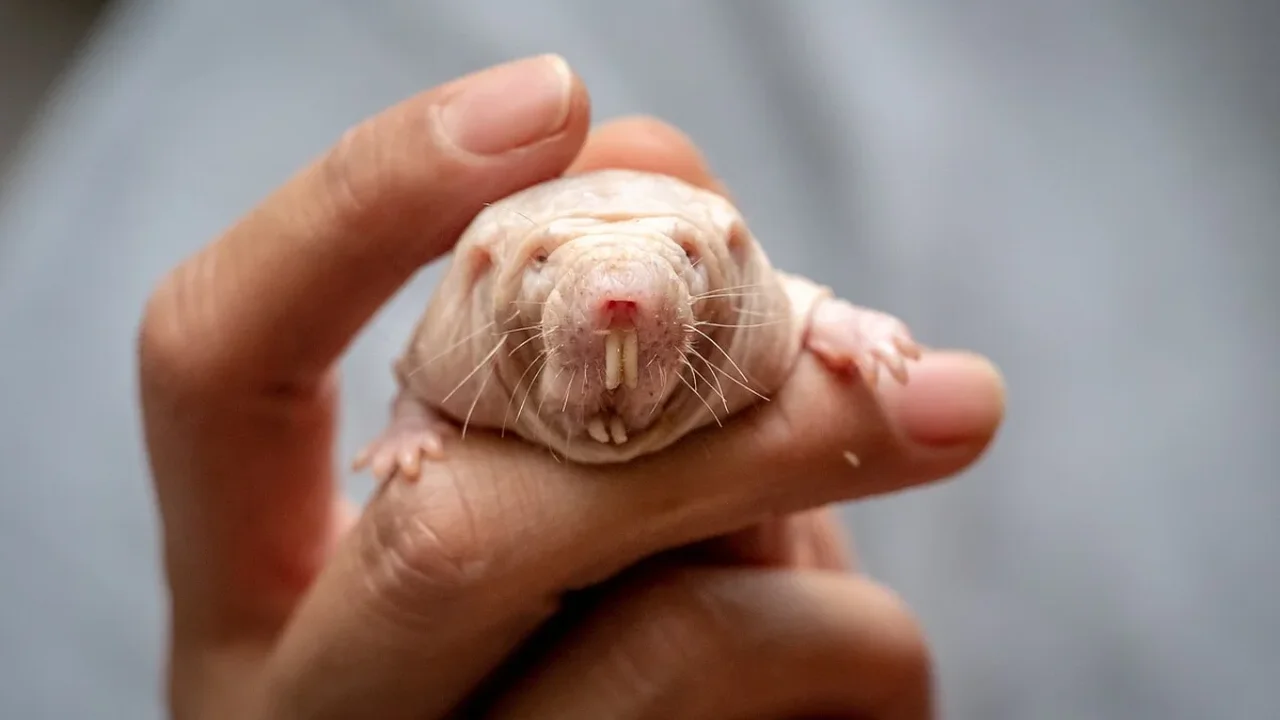
Scientists have uncovered a striking chemical strategy behind naked mole-rat society: the queen appears to use a scent signal to keep rival females from reproducing and to preserve order underground.
A Chemical Form of Leadership
In a study published in Nature, researchers identified a molecule called isopropyl myristate (IPM) as a key signal linked to queen status in naked mole-rat colonies. The compound was found in high amounts around queens and was largely absent in nonbreeding animals.
The finding helps explain how these unusual mammals maintain a highly organized social structure. Naked mole-rats live in large tunnel systems in East Africa, where one breeding female leads the colony while others take on roles such as digging, guarding, and caring for the young.
How the Signal Works
To trace the chemical pattern, the team analyzed odor samples from 351 animals across different ranks and reproductive states. IPM stood out in secretions from the mouth, vagina, and anus, and its levels shifted with reproductive cycles.
When nonbreeding pairs were kept away from queen-related odor, most females became pregnant. But when they were exposed to colony bedding or treated with IPM, reproduction stayed suppressed. The molecule also appeared to influence prolactin and progesterone, two hormones tied to fertility.
In a further test, scientists removed a queen from a colony and added IPM to the bedding each day. For 12 weeks, no new queen emerged and the group remained stable. Once the treatment stopped, competition returned and a new queen eventually took over.
Why It Matters
IPM is not unusual in human products, where it is used in cosmetics, but naked mole-rats seem to detect it with remarkable sensitivity. The study suggests the queen may spread the oily compound through the colony as she moves, leaving a lasting chemical signature on walls, bedding, and bodies.
The discovery offers a fresh window into one of nature's most unusual mammal societies and shows that social control can be written in chemistry as much as behavior. It may also inspire new ideas in biology about how scent, hormones, and cooperation shape complex living systems in the future.