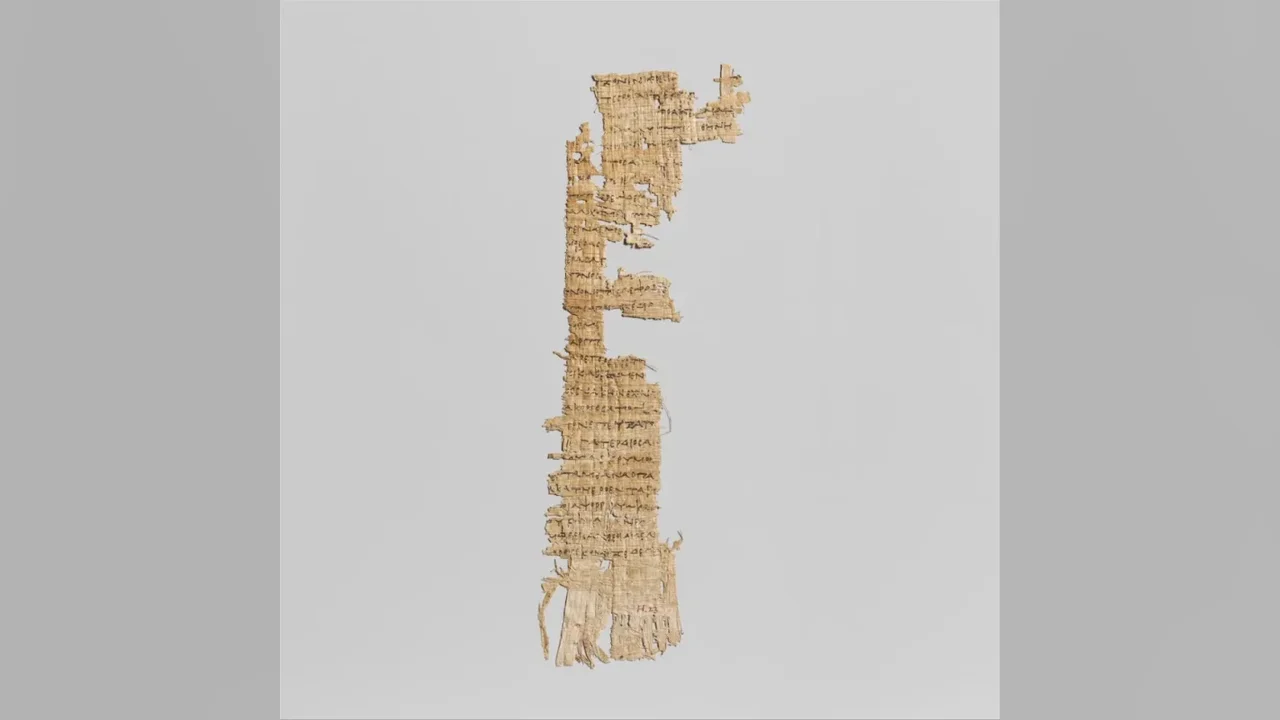
The Metropolitan Museum of Art has brought a remarkable piece of literary history back into view: the oldest preserved fragment of The Odyssey, now on display in Gallery 162 in its Greek and Roman Art section.
Dating to roughly 285-250 BCE and created in Egypt, the papyrus is considered the earliest known early Ptolemaic fragment of the epic ever found. Written with charcoal and water using a stylus, it preserves three lines that do not appear in the standard version read today.
According to the museum, the fragment reflects the long, evolving life of Homer's epic across centuries. Sean Hemmingway, curator of the Met's Department of Greek and Roman Art, notes that ancient storytellers often adapted tales as they were passed along, which helps explain the text's variations.
The display also highlights the object from multiple angles, offering visitors a closer look at its surface and structure. As a rare witness to the transmission of classical literature, the fragment connects scholarship, craftsmanship, and storytelling in a single artifact.
This presentation may inspire renewed interest in how ancient texts survive, change, and continue to shape cultural memory in the future.