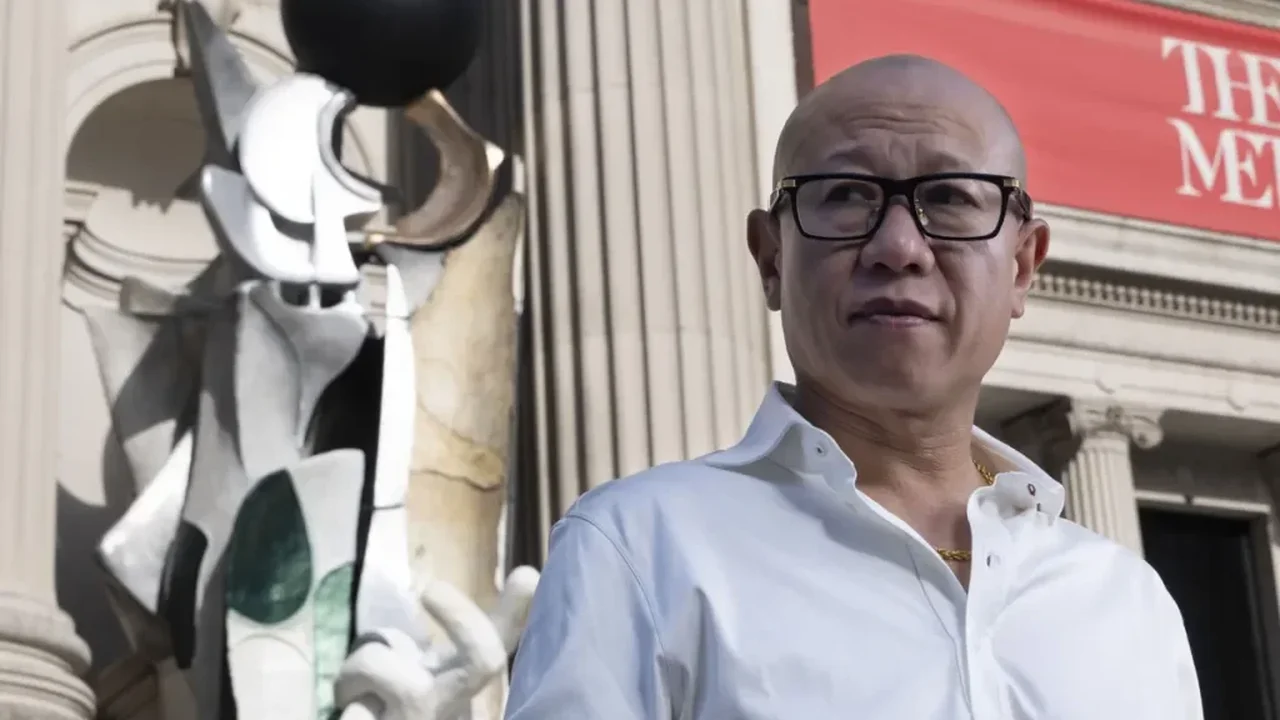
Chinese artist Liu Wei has unveiled a new series of monumental sculptures across the façade of the Metropolitan Museum of Art in New York. Titled Speculation, the 2026 commission transforms the museum's architectural niches into a stage for forms that merge the organic, industrial and digital.
Ranging from nearly nine to more than 16 feet in height, the works combine hands, spheres, geometric structures and layered surfaces. Rawhide, resin, fiberglass composite, bronze, aluminum alloy and steel come together in sculptural compositions that resist a single identity.
A Process of Assembly and Transformation
Liu Wei developed the project through digital collage, first arranging images over a model of the museum façade before translating the compositions into small three-dimensional studies. Rather than treating the initial design as fixed, he refined the pieces throughout production with a team of assistants and specialists.
This approach reflects a long-standing element of Liu's practice: cutting, reconfiguring and reconnecting familiar forms. The sculptures carry traces of biology, engineering and urban construction, inviting viewers to consider how contemporary life is shaped through constant adaptation.
Hands appear repeatedly throughout the installation, serving as symbols of making, touch and human agency. Spheres introduce another visual language: forms without a prescribed direction, open to changing interpretations. Each work was created for the narrow spaces between the museum's columns, turning architectural limits into a defining creative force.
Contemporary Art Meets Historic Architecture
By placing these experimental forms on one of the world's most recognizable museum façades, Liu Wei creates a dialogue between historical permanence and evolving materials. The project brings a new visual rhythm to the building while preserving its architectural presence.
Speculation points toward a future in which public art can turn established cultural spaces into platforms for new conversations about creativity, technology and the changing relationship between people and their environments.