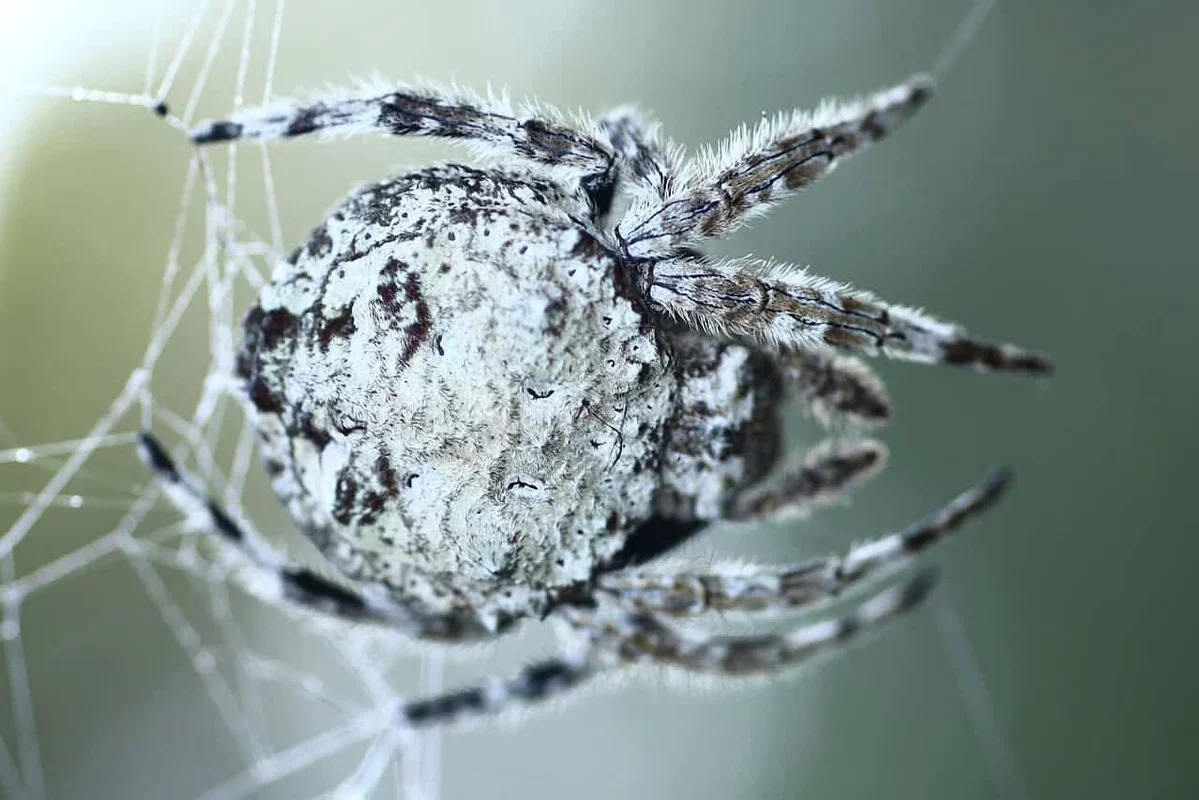
In the lush forests of Madagascar, a remarkable arachnid known as Darwin's bark spider (Caerostris darwini) defies expectations with its extraordinary web-spinning abilities. This small spider, no larger than a human thumb, constructs webs that can stretch an impressive 25 meters (82 feet) in length, capable of spanning across rivers and streams.
Not only does this spider hold the record for the strongest spider silk in the world, but it also creates some of the largest webs known to science. Its unique silk is tougher than many synthetic materials, showcasing nature's engineering prowess.
A Fascinating Species
Discovered in Madagascar's Andasibe - Mantadia National Park, Caerostris darwini pays homage to Charles Darwin, being identified nearly 150 years after the release of The Origin of Species. This orb-weaver spider exhibits remarkable camouflage, blending seamlessly into tree bark with its mottled coloration, making it nearly invisible to potential threats.
One of the most intriguing aspects of this species is the stark difference between males and females. Females can weigh up to 14 times more and are significantly larger than males. Their mating rituals can be quite dramatic, often involving complex behaviors that include cannibalism.
Interestingly, male Darwin's bark spiders have been observed engaging in a rare behavior: they perform oral sexual acts on females. This behavior, seldom seen outside the mammal kingdom, is believed to enhance their chances of reproductive success, though the specific evolutionary advantages are still under investigation.
Webs Over Water
Unlike most spiders that avoid water, C. darwini thrives in aquatic environments. It constructs large wheel-shaped webs over water bodies, effectively creating a unique ecological niche with little competition. These webs are not only impressive in size but also serve as efficient traps, capturing numerous insects at once and fostering a micro-economy where smaller creatures often steal leftovers.
Researchers have long been fascinated by the exceptional strength of this spider's silk. Traditional spider silk is already known for its toughness, but Darwin's bark spider takes it to new heights. Studies suggest that the silk's remarkable strength is due to high levels of the amino acid proline, which comes with a metabolic cost. Recent findings indicate that as females mature and target larger prey, their silk-producing glands adapt to produce stronger fibers.
The Future of Materials
The implications of this spider's silk extend beyond the natural world; engineers are keenly interested in its potential applications. With a tensile strength of approximately 1.6 gigapascals, this silk outperforms many conventional materials, making it an ideal candidate for innovative composite materials.
Current applications include synthetic spider silk proteins being integrated into surgical sutures that combine flexibility with unparalleled strength. This silk is also being used in the development of scaffolds for artificial ligaments, assisting in the natural healing processes of human tissue.
In summary, the Darwin's bark spider exemplifies how even the smallest creatures can inspire groundbreaking advancements in science and technology.