The bacterium known as SAR11 holds the title of the most prevalent life form in the surface waters of the world's oceans. In certain areas, these microorganisms represent as much as 40% of all marine bacterial cells. Their widespread presence is attributed to a process called genome streamlining, where organisms shed unnecessary genes to conserve energy in nutrient-scarce environments.
Recent research published in Nature Microbiology reveals that this remarkable efficiency may also lead to significant drawbacks.
"SAR11's remarkable evolutionary success in thriving and leading in stable, low-nutrient environments may have inadvertently rendered them susceptible to a changing oceanic landscape. They might have evolved into a self-imposed trap," explains Cameron Thrash, a professor in biological and Earth sciences and the study's corresponding author.
Efficiency with a Critical Flaw
To investigate how SAR11 copes with environmental stress, scientists analyzed numerous SAR11 genomes. They discovered that many strains are missing genes typically responsible for managing the cell cycle, which governs DNA replication and cell division. In most bacteria, these genes are vital for healthy growth and survival.
When faced with environmental changes, the lack of regulation seems to lead to significant challenges. Researchers had previously noted that SAR11 populations are particularly sensitive to shifts in their habitat. What was particularly striking in this study was the unique response of the cells under stress.
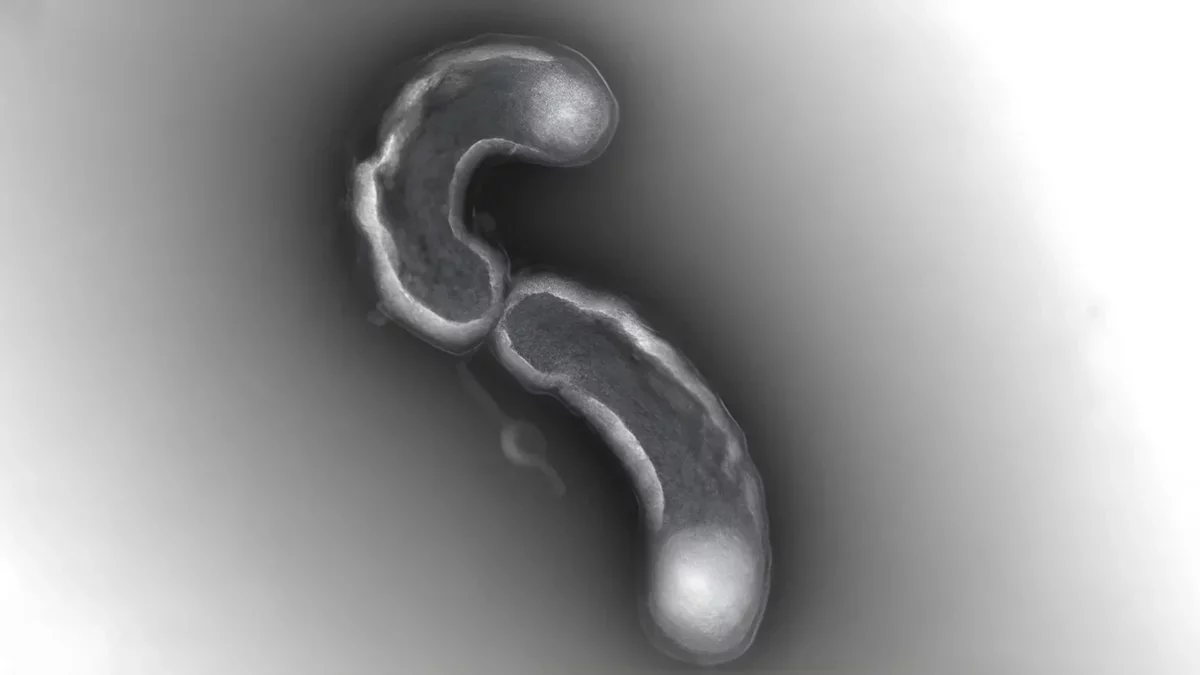
Rather than slowing their growth, many SAR11 cells continued to replicate their DNA but failed to undergo division.
"Their DNA replication and cell division became uncoupled. The cells kept duplicating their DNA but did not divide correctly, resulting in cells with abnormal chromosome counts," states Chuankai Cheng, a PhD candidate in biological sciences and the lead author of the study. "The emergence of such a distinct and consistent cellular signature was unexpected."
The Impact of Cellular Malfunction on Population Growth
Cells with extra chromosomes often grew larger than usual but eventually perished. Even in nutrient-rich conditions, these issues hindered overall population growth. This discovery challenges the prevalent notion that microbes will always flourish when resources are abundant.
The findings also provide insights into a long-standing question in ocean ecology. SAR11 populations frequently decline during the later phases of phytoplankton blooms, a time characterized by increasing organic matter in the water.
"We have long understood that these organisms are not particularly well adapted to the later stages of phytoplankton blooms," Thrash remarks. "Now we have an explanation: Late bloom stages coincide with the introduction of new dissolved organic matter that can disrupt these organisms, reducing their competitiveness."
Significance for Climate Change and Ocean Health
This study has significant implications for comprehending how marine ecosystems may react to climate change. SAR11 bacteria play a crucial role in the ocean's carbon cycle, influencing how carbon flows through marine food webs. Their sensitivity to rising temperatures and abrupt nutrient influxes could disrupt the balance of microbial communities as ocean conditions become increasingly unstable.
"This research highlights a novel way in which environmental changes can impact marine ecosystems, not just by limiting resources but also by disturbing the internal physiology of dominant microorganisms," Cheng noted. As environmental stability diminishes, he added, organisms with greater regulatory adaptability may gain an edge.
Researchers aim to delve deeper into the molecular mechanisms behind these disruptions. Understanding how SAR11 operates is essential, given the widespread influence these bacteria have in the global ocean.
About the Research
In addition to Cheng and Thrash, the research team comprises Brittany Bennett, Pratixa Savalia, Hasti Asrari, Carmen Biel, and Kate Evans from USC Dornsife, along with Rui Tang from the University of California, San Diego.
This research received support from the Simons Foundation Early Career Investigator in Marine Microbial Ecology and Evolution Award and a Simons Foundation Investigator in Aquatic Microbial Ecology Award.