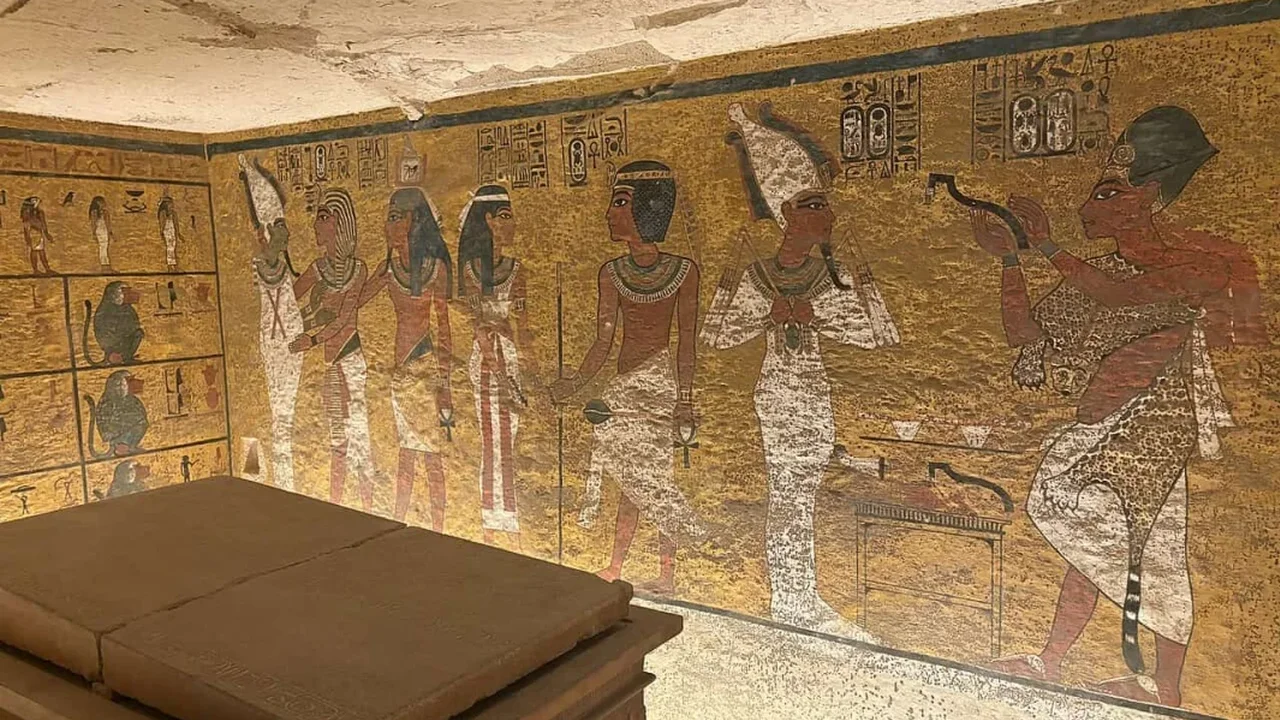
King Tutankhamun, affectionately known as King Tut, ascended to the throne of Ancient Egypt over 3,300 years ago at the tender age of nine. His reign, however, was short-lived, ending a mere decade later. While his rule may not have been particularly notable, the discovery of his tomb has captivated historians and archaeologists alike.
Unearthed by British archaeologists in 1922, King Tut's tomb was a treasure trove filled with artifacts intended to accompany the Pharaoh into the afterlife. Among these remarkable items were symbols of royal authority, such as the crook and flail, alongside intricate jewelry, musical instruments, and even board games. This extraordinary collection propelled King Tut into global fame.
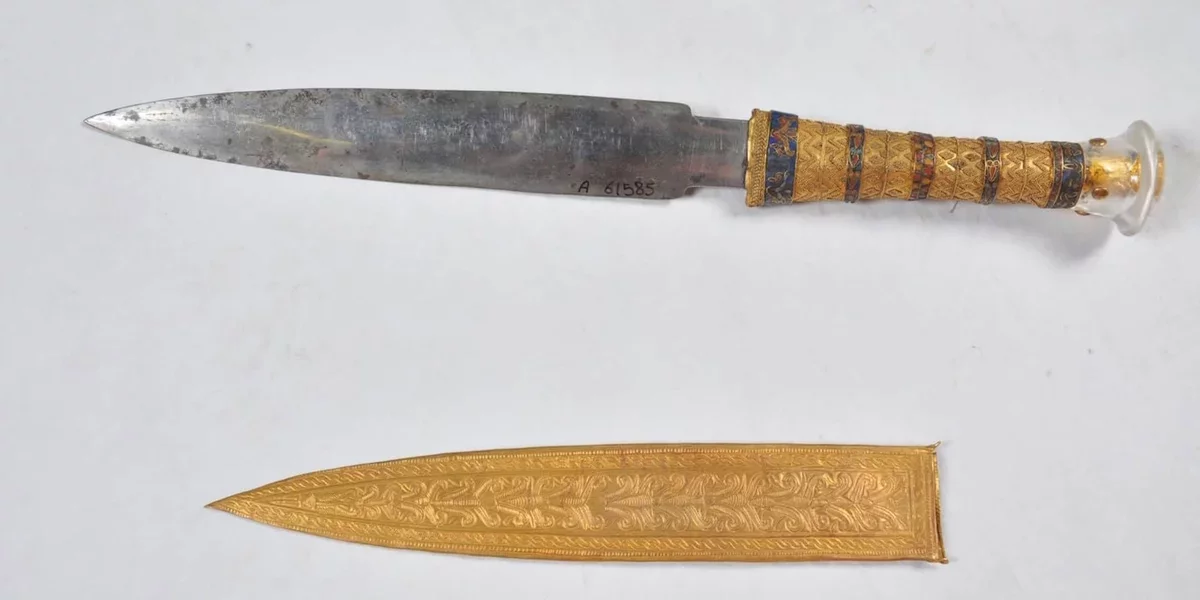
Among the astonishing finds were two exquisite daggers: one crafted from gold and the other from iron, adorned with a golden hilt and sheath. The presence of an iron dagger during the Bronze Age raises intriguing questions, as metallurgical advancements for working with iron were not yet developed. However, modern analyses revealed that this dagger was forged from a meteorite, aligning with historical findings that all iron used in this era was meteoric.
Research conducted by Albert Jambon from the Institut de minéralogie, de physique des matériaux et de cosmochimie in France in 2017 confirmed that the iron utilized during the Bronze Age primarily originated from meteorites. Thus, King Tut's dagger is not only a remarkable artifact but also a literal piece of extraterrestrial history.
A Celestial Gift
The dagger measures approximately 35.2 cm in length, with the blade accounting for about 21.8 cm and the hilt around 13.4 cm. In 2016, researchers from the Polytechnic University of Milan confirmed the dagger's meteoric origins through its unique composition of nickel and cobalt, which matched known iron-bearing meteorites.
To further trace the dagger's origins, scientists from the Chiba Institute of Technology in Japan utilized X-ray analysis, uncovering elements such as iron, nickel, and manganese, as well as a distinctive Widmanstätten pattern. This pattern is characteristic of octahedrite meteorites, commonly found in the Asteroid Belt between Mars and Jupiter.
Interestingly, the dagger wasn't specifically created for King Tut. Historical correspondence known as the Amarna letters mentions a similar iron dagger gifted to Pharaoh Amenhotep III, Tutankhamun's grandfather, suggesting that this meteorite dagger may have been a family heirloom.
Today, King Tut's extraordinary dagger is displayed at the Egyptian Museum in Cairo, serving as a testament to the remarkable craftsmanship of ancient civilizations and their connections to the cosmos.
The findings regarding the dagger were published in the journal Meteoritics and Planetary Science, highlighting the enduring allure of ancient artifacts and their ability to bridge the past with the mysteries of the universe.