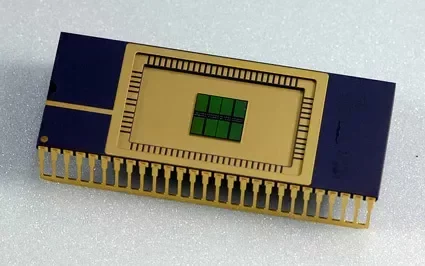
When discussing the expenses associated with AI infrastructure, the conversation often centers around Nvidia and GPUs; however, the significance of memory is rapidly increasing. As major tech companies plan to invest billions in new data centers, the cost of DRAM chips has surged approximately sevenfold over the past year.
Simultaneously, there is a growing expertise in managing memory effectively to ensure that the appropriate data reaches the right agent at the optimal moment. Companies that excel in this area will be able to perform the same queries with fewer tokens, which could be crucial for their survival.
Semiconductor analyst Dan O'Laughlin provides an insightful analysis on the importance of memory chips in his Substack, where he engages with Val Bercovici, the chief AI officer at Weka. Their discussion emphasizes the chips rather than the broader architecture, yet the implications for AI software are substantial.
One particularly noteworthy point made by Bercovici highlights the increasing intricacy of Anthropic's prompt-caching system. Initially, the pricing page for prompt caching was straightforward, but it has evolved into a comprehensive resource detailing how many cache writes to pre-purchase. Options for cache durations have expanded, indicating a significant shift in the landscape.
The central inquiry revolves around how long Claude retains your prompt in cached memory: options include a 5-minute or a more expensive hour-long window. Utilizing data still in the cache proves to be more economical, allowing for considerable savings if managed effectively. However, adding new data to a query may displace existing cached information.
This complexity underscores a critical takeaway: as AI models evolve, proficient memory management will become essential. Companies that master this will likely lead the industry.
There is ample room for advancement in this emerging field. Recently, I reported on a startup called TensorMesh, which is focusing on cache optimization, a vital layer within the AI stack.
Opportunities also arise at various levels within the stack. For instance, discussions are ongoing about how data centers utilize different memory types. As organizations enhance their memory orchestration capabilities, they will require fewer tokens, thereby reducing inference costs. Concurrently, models are becoming increasingly effective at processing each token, further driving down costs. As server expenses decline, many applications that currently appear unprofitable may start to become viable.