A groundbreaking study published as a Reviewed Preprint in eLife has unveiled new insights into the locomotion of crabs, combining the largest dataset to date on their movement patterns. Researchers have traced the unique sideways walking behavior of crabs back to a common ancestor that existed approximately 200 million years ago. This research, highlighted by eLife editors for its significance, holds broad implications for scientists exploring animal mobility.
The Significance of Sideways Movement
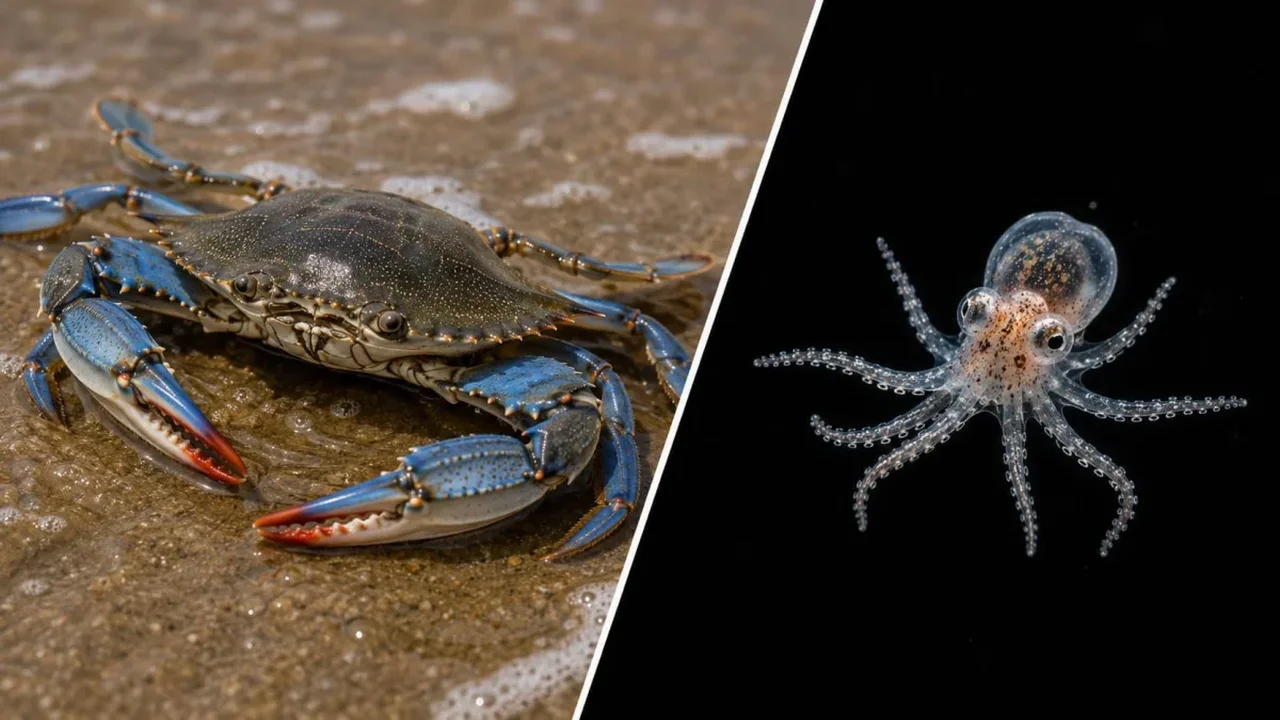
Sideways locomotion is characteristic of 'true crabs' (Brachyura), the predominant group within the decapod family. This distinctive mode of movement may provide critical survival advantages, such as enhancing their ability to evade predators by making their movements less predictable.
According to senior corresponding author Yuuki Kawabata, an Associate Professor at Nagasaki University's Graduate School of Integrated Science and Technology, the ecological success of true crabs is remarkable. "With about 7,904 species, true crabs vastly outnumber their closest relatives, the Anomura and Astacidea. They thrive in diverse habitats, from terrestrial to deep-sea environments, and exhibit a fascinating evolutionary phenomenon known as carcinization, where crab-like body structures have emerged repeatedly."
Despite extensive knowledge about true crabs, there has been limited data on their locomotion. While most species exhibit sideways movement, some walk forward, prompting intriguing questions about the origins and evolution of this behavior.
Investigating Crab Locomotion
Kawabata and his team examined the movement of 50 true crab species, capturing video footage of each for 10 minutes in a circular arena mimicking their natural habitats. Due to logistical constraints, only one individual per species was studied.
The researchers integrated these observations with previously published phylogenetic data that charted the evolutionary relationships of Brachyura, based on genetic information from 344 species. To address discrepancies between behavioral and phylogenetic data, they simplified the evolutionary tree to include 44 genera, five families, and one superfamily, allowing them to represent closely related species.
A Singular Evolutionary Shift
Of the 50 species analyzed, 35 primarily moved sideways while 15 walked forward. Mapping these behaviors onto the evolutionary tree revealed that sideways locomotion likely evolved just once from a forward-walking ancestor at the base of Eubrachyura, a lineage of more advanced crabs. This contrasts with the repeated occurrences of carcinization across various decapod species, underscoring the rarity of such behavioral adaptations.
Innovation in Survival
The researchers propose that this singular shift to sideways movement has significantly contributed to the success of true crabs, enabling rapid lateral movement to avoid predators. This locomotion style is uncommon in the animal kingdom, as it may hinder other essential activities like burrowing and mating.
Furthermore, the study emphasizes that evolutionary success is influenced not only by biological innovations but also by environmental factors. The emergence of sideways walking in true crabs coincided with major ecological changes around 200 million years ago, including the breakup of Pangaea and the expansion of marine habitats, which likely facilitated species diversification.
Broader Implications for Animal Movement
The findings underscore that sideways locomotion in true crabs is a rare but pivotal trait that may have played a significant role in their ecological success. This research expands our understanding of how animal movement evolves and adapts over time, potentially influencing future studies on locomotion across various species.
This research was conducted by Yuuki Kawabata and co-authors Junya Taniguchi, Tsubasa Inoue, and Kano Kohara, along with contributions from various institutions, including National Kaohsiung University of Science and Technology and Auburn University.