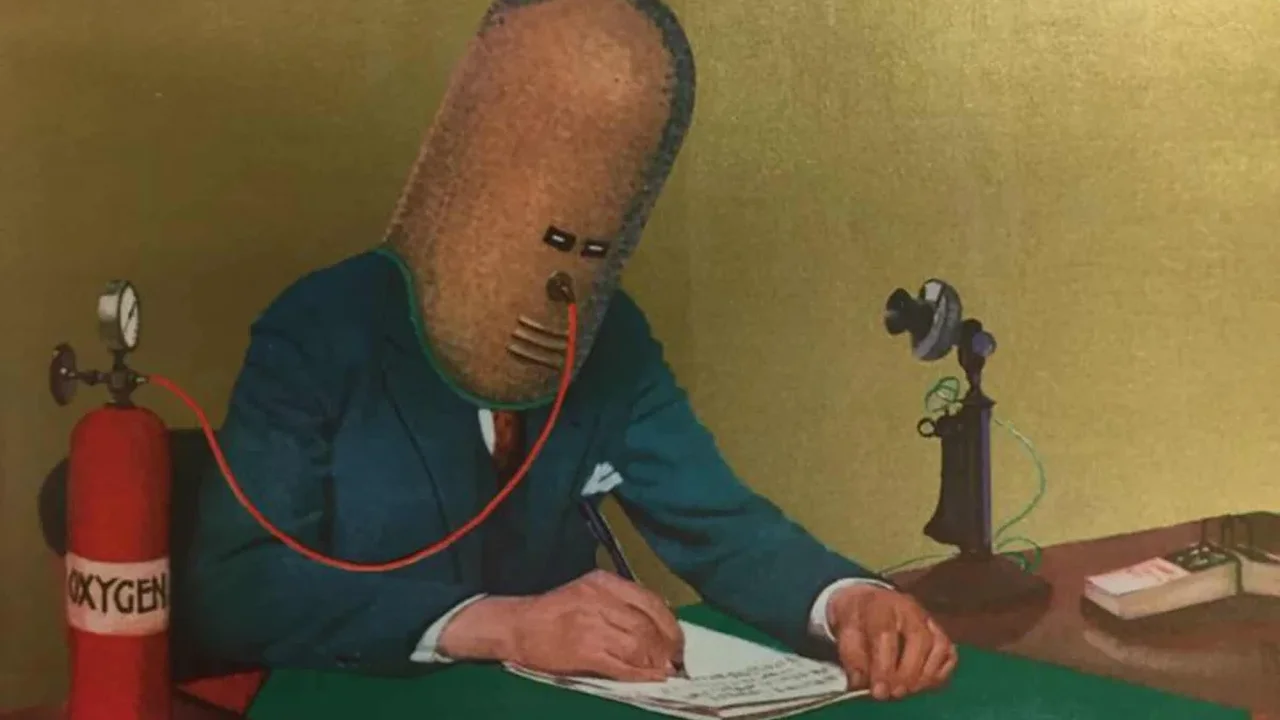
In 1925, inventor and science-fiction pioneer Hugo Gernsback introduced an unusual concept for better concentration: a helmet that enclosed the head, narrowed vision, reduced sound, and even delivered oxygen. He called it The Isolator.
The idea appeared in Science and Invention magazine and was designed to answer a problem that still feels familiar today: how to stay mentally sharp in a world full of interruptions. Gernsback believed distraction came from both the outside environment and the mind's tendency to drift.
His first version used wood, cork, and felt to block noise. Small viewing windows left only a limited field of vision, while a mouthpiece helped the wearer breathe inside the sealed structure. Gernsback later refined the concept by adding an air gap and blackened eye panels with narrow slits, aiming to reduce visual temptation as well as sound.
He claimed the device could greatly limit surrounding noise and keep attention locked on the task at hand. However, the helmet was never scientifically validated, and its oxygen system raised obvious practical concerns. Even so, the invention captured a timeless ambition: creating a space where the brain can work without interruption.
Today, that same goal appears in modern tools such as noise-cancelling headphones, focus apps, and distraction-free work setups. The Isolator may look like a relic of eccentric design, but it reflects an early and imaginative attempt to engineer concentration itself. Its legacy suggests that the future of productivity may continue to blend creativity, design, and human attention.