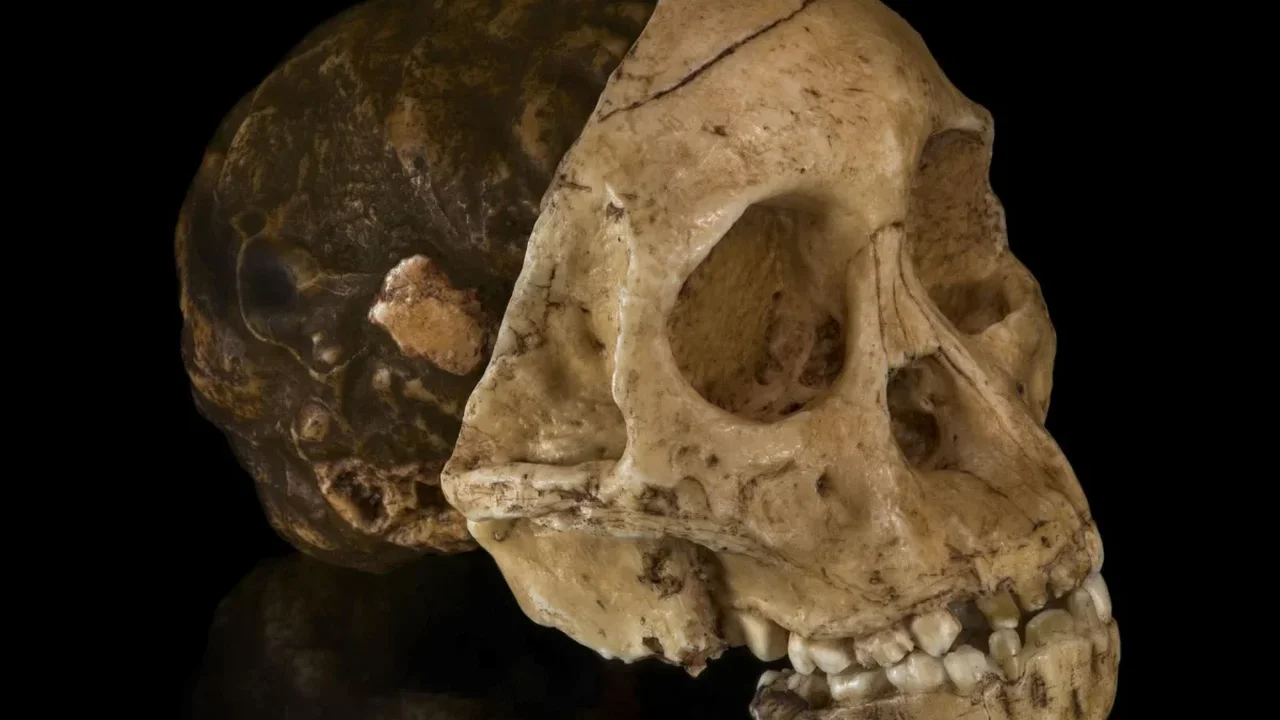
A new study has re-examined the Taung Child, a young hominin fossil discovered in South Africa in 1924, and raises questions about how early southern African fossils have been classified. The skull is the reference specimen for Australopithecus africanus, but researchers say many adult fossils assigned to the same species may not share its growth patterns.
Using uranium-lead dating on a mineral layer above the fossil deposit, the team estimated the Taung specimen to be at least 2.962 million years old, with an uncertainty of 59,000 years. Because the layer formed after the fossil-bearing material, the skull itself could be older.
Growth patterns complicate the classification
The researchers studied the child's developing teeth and braincase, then modelled how its skull might have changed with age. The projected adult form could resemble some fossils traditionally labelled A. africanus, but not others. An analysis of tooth structure also placed Taung near the edges of the range attributed to that species, with some measurements overlapping those of Paranthropus robustus.
The study therefore describes A. africanus as a poorly defined group and identifies the Taung Child as its only unequivocal representative. It does not propose a new species or settle how the fossils are related; instead, it calls for more precise dating, larger fossil collections and closer study of how anatomy changes during growth.
Climate may have shaped a varied landscape
Pollen evidence suggests Taung's surroundings included freshwater wetlands, open savanna and substantial tree cover. The presence of Podocarpus pollen points to a wetter, more wooded environment than might be expected for the area today.
The authors suggest that shifting rainfall could have changed habitats over time, separating hominin populations and later bringing them back into contact. The research appears in npj Palaeoecosystems.
By refining fossil ages and species definitions, future research may reveal a more detailed picture of how environmental change shaped the diverse branches of human evolution.