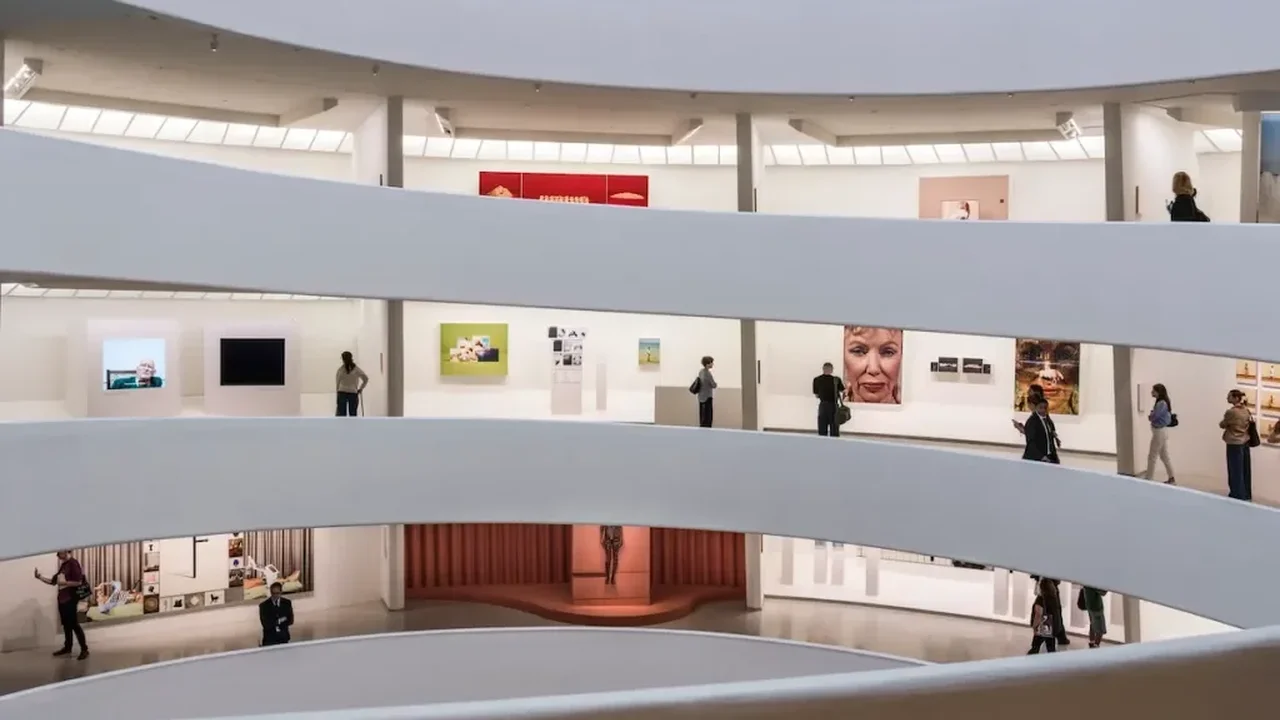
The Solomon R. Guggenheim Museum in New York presents Taryn Simon's new installation, Father Country I Do Love You, created for the United States' 250th anniversary year. Running from September 18, 2026, to March 14, 2027, the exhibition transforms the museum's iconic rotunda into a layered exploration of memory, institutions and collective storytelling.
Comprising 42 interconnected sections, the project brings together more than 1,000 photographs and extensive written material. At its center is Simon's long-term dialogue with an unnamed former federal agent, whom she began interviewing in 2017 after encountering his name in archival records.
A Nonlinear Portrait of Connection
Rather than following a conventional biography, Simon builds an expansive network of people, places and cultural references linked to the agent's experiences. The result moves between personal recollections, public records, everyday settings and carefully constructed associations.
The exhibition encourages visitors to consider how facts, recollection and interpretation shape the stories societies tell about themselves. Familiar-looking scenes gain new dimensions through accompanying texts, inviting viewers to question what is visible, what is omitted and how meaning is formed.
Art as Investigative Framework
Father Country I Do Love You continues Simon's distinctive practice of combining photography, research and documentary methods. Her installations often examine the distance between official narratives and lived experience, using detailed visual archives to make complex systems more accessible.
For the Guggenheim presentation, Simon also incorporates cultural touchstones that blur the boundaries between personal memory and shared imagination. The work does not offer a single conclusion; instead, it creates space for audiences to navigate multiple perspectives at their own pace.
With its ambitious scale and research-driven approach, the exhibition demonstrates how contemporary art can turn historical inquiry into an immersive public experience. It may help inspire future museums to create more participatory, multilayered ways of engaging audiences with history.