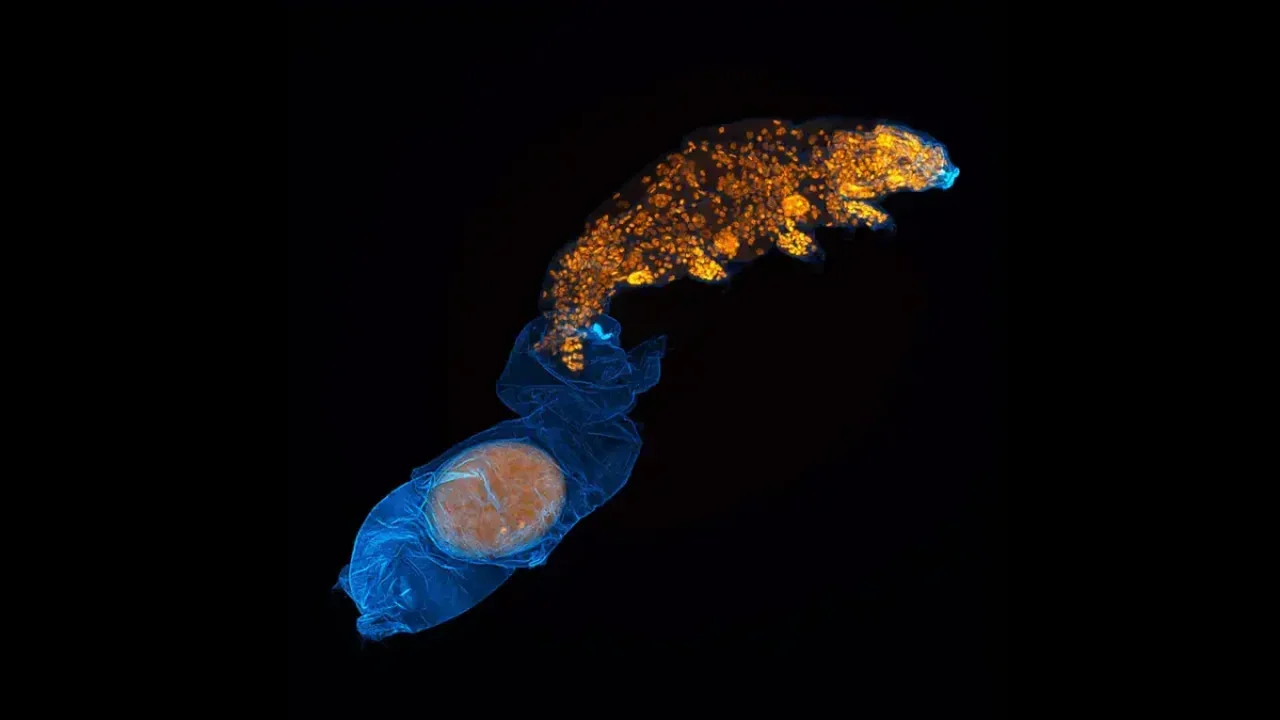
A tiny water bear has an unusual way of protecting its next generation: as it sheds its outer layer, it deposits eggs inside the cast-off skin.
The species, Hypsibius exemplaris, periodically molts to grow. During this process, a female can leave between one and a dozen eggs in the discarded casing, known as an exuvium. The embryos develop inside and later emerge through the opening their mother made while shedding.
A protective casing--and a surprising reproductive strategy
The empty cuticle may provide a physical barrier for developing embryos. Researchers have also proposed that it could help prevent eggs from drying out or being swept away, although those possible benefits have not yet been confirmed experimentally.
H. exemplaris reproduces through parthenogenesis, meaning females can produce offspring from unfertilized eggs. A 2026 study published in Genetics found that the species' egg formation preserves a full set of chromosomes, allowing reproduction without a mate while retaining genetic variation already present in the mother.
Some other tardigrade species take egg-carrying further: females keep the egg-filled shed skin attached to their bodies and tow it as they move. This behavior has been described in freshwater groups including Pseudobiotus, Isohypsibius and Borealibius.
These varied strategies show how even microscopic animals can evolve inventive ways to support their offspring. Further research may reveal how these adaptations help tardigrades reproduce across changing environments.