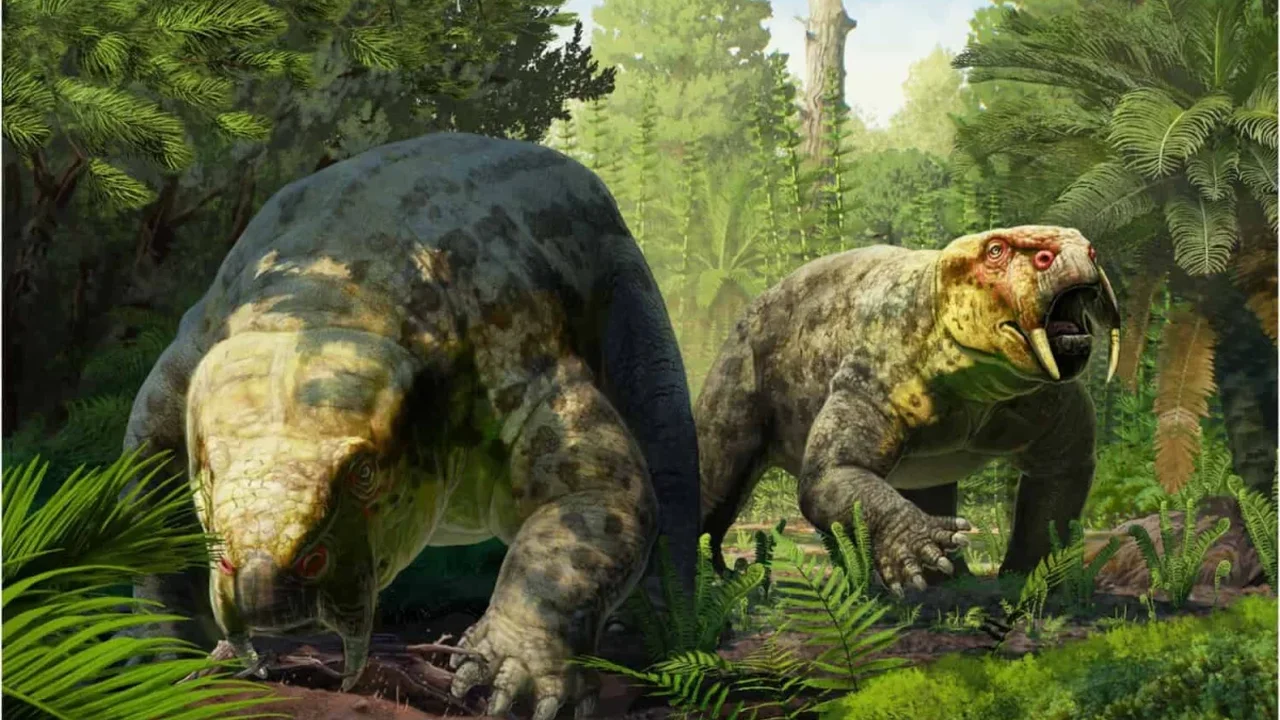
A fossil collected in Tanzania more than six decades ago has been identified as a previously unknown species of Dinodontosaurus, offering fresh insight into the age of rock layers associated with the earliest dinosaur relatives.
Named Dinodontosaurus isiyavamanda, the large plant-eating animal lived around 240 million years ago during the Triassic Period. Despite its dinosaur-like appearance, it was a synapsid--part of the evolutionary branch that eventually led to mammals.
A New Link Between Ancient Continents
The specimen was recovered from Tanzania's Manda Beds in the Ruhuhu Basin in 1963. Advanced CT scanning and 3D analysis later revealed distinct features in its skull, jaw and palate, confirming that it represented a new species.
Until now, Dinodontosaurus had only been confirmed in South America. Its discovery in Tanzania creates an important biological connection between Triassic ecosystems that once existed across the connected landmasses of Gondwana.
The species was named in recognition of the Wamanda people of the region. Researchers believe its broad palate ridge may indicate a specialised feeding style, potentially helping several large herbivores share the same prehistoric environment.
Rethinking the First Dinosaur Candidates
The discovery may also refine estimates for the age of the Manda Beds. These layers have yielded fossils such as Nyasasaurus and Asilisaurus, animals closely connected to the earliest stages of dinosaur evolution.
Earlier interpretations suggested that some Tanzanian dinosaur candidates could date back as far as 247 million years. However, the presence of Dinodontosaurus supports a closer match with fossil-rich formations in Argentina and Brazil, potentially placing key Manda Beds layers between roughly 242 and 227 million years ago.
This does not reduce Tanzania's importance in dinosaur research. Instead, it creates a more detailed picture of how early dinosaur relatives spread, diversified and adapted across southern continents during the Triassic.
As fossil analysis becomes increasingly precise, discoveries like this may help build a more connected global map of evolution--showing how ancient ecosystems shaped the rise of dinosaurs and the wider history of life.