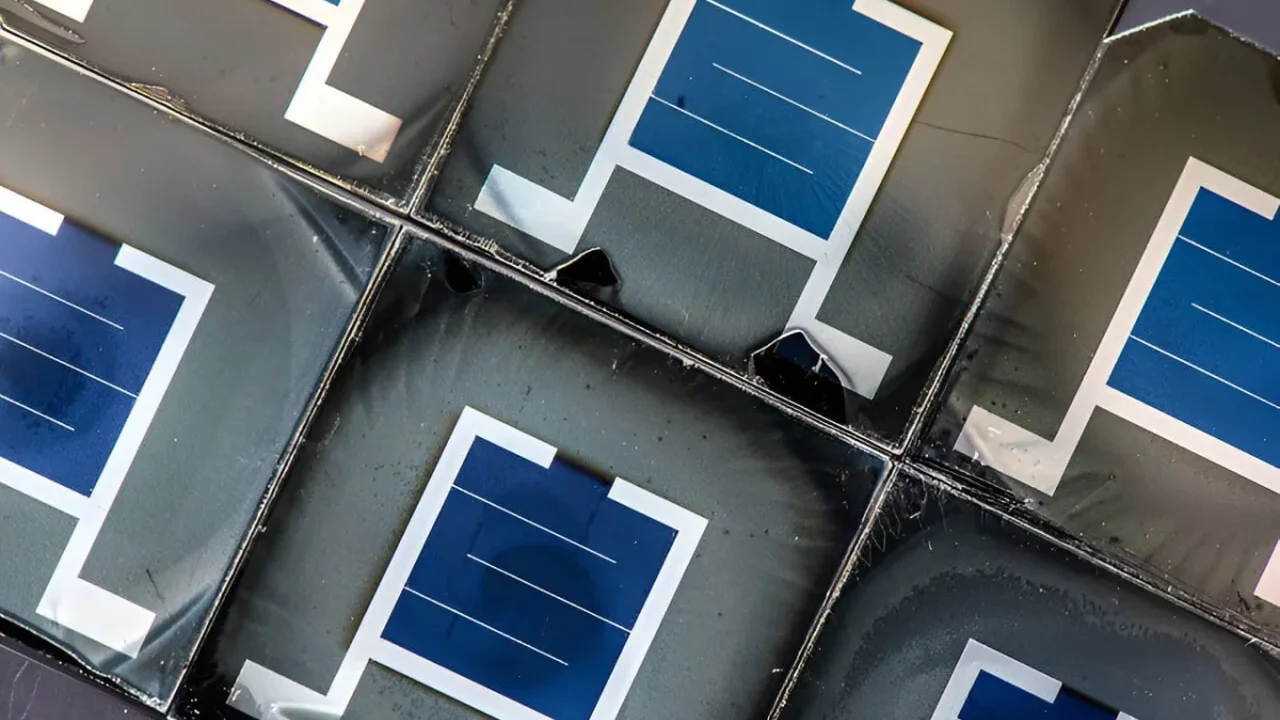
Solar technology is approaching a new performance chapter with tandem panels, which combine traditional silicon with a perovskite layer to capture a broader range of sunlight. The approach could enable panels to generate around 25% more electricity than many current products without expanding rooftop or solar-farm footprints.
Two materials, wider use of sunlight
Conventional silicon cells are highly effective but operate close to their practical efficiency ceiling. In a tandem design, a perovskite top layer absorbs higher-energy wavelengths, while the silicon layer below converts more of the remaining light into power. This complementary structure gives each material a distinct role in harvesting solar energy.
Laboratory progress has accelerated. LONGi reported a certified 35.5% efficiency for a perovskite-silicon tandem cell, while its tandem module reached 31.4%. By comparison, leading conventional silicon cells typically convert about 27% of incoming sunlight into electricity.
The U.S. Department of Energy notes that pairing materials with different light-absorption properties can unlock significantly greater output from the same sunlit surface. In theory, tandem designs could eventually move toward 40% efficiency.
From research milestone to real-world deployment
Commercial adoption is beginning to take shape. Oxford PV announced an early commercial shipment of perovskite-silicon tandem panels in 2024, designed to provide up to 20% more energy than standard silicon products. Meanwhile, Qcells has advanced outdoor testing and certification work for next-generation tandem technology.
For widespread use, manufacturers must demonstrate that high efficiency can be maintained through decades of heat, moisture, ultraviolet exposure and changing weather conditions. A 2026 study in Nature Synthesis showed a tandem cell retaining 95% of its initial performance after 1,100 hours of continuous illumination, adding to a growing body of durability research.
Higher output per square metre could reduce the land, mounting equipment and cabling needed for new installations. As production methods mature, tandem solar cells may help cities, businesses and households generate more clean electricity from the spaces they already use.
Tandem solar technology could reshape how efficiently solar energy is integrated into everyday infrastructure, turning limited surface area into a more powerful resource for the future.