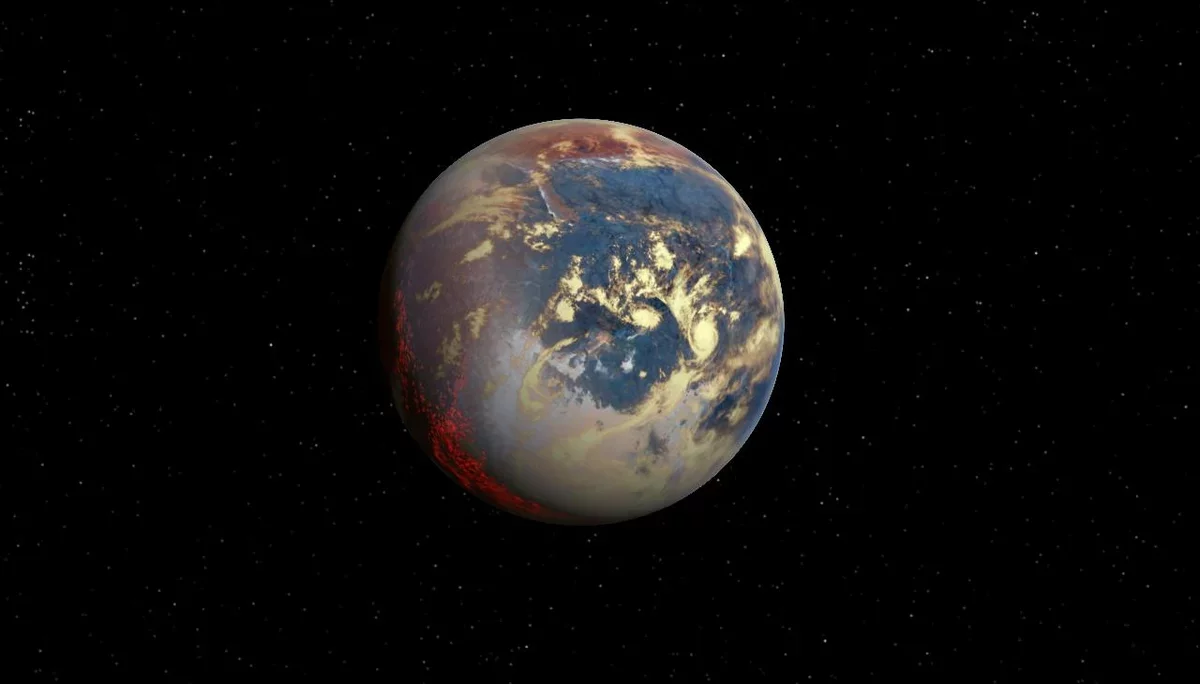
Super-Earths, often seen as the "middle children" of the cosmos, are larger than Earth yet smaller than gas giants like Neptune. These intriguing planets are frequently located within the "Goldilocks zone," an optimal region where liquid water can exist on their surfaces.
A significant concern regarding these planets has been their magnetic fields, crucial for safeguarding life. Previously, many scientists believed that Super-Earths lacked such protective fields.
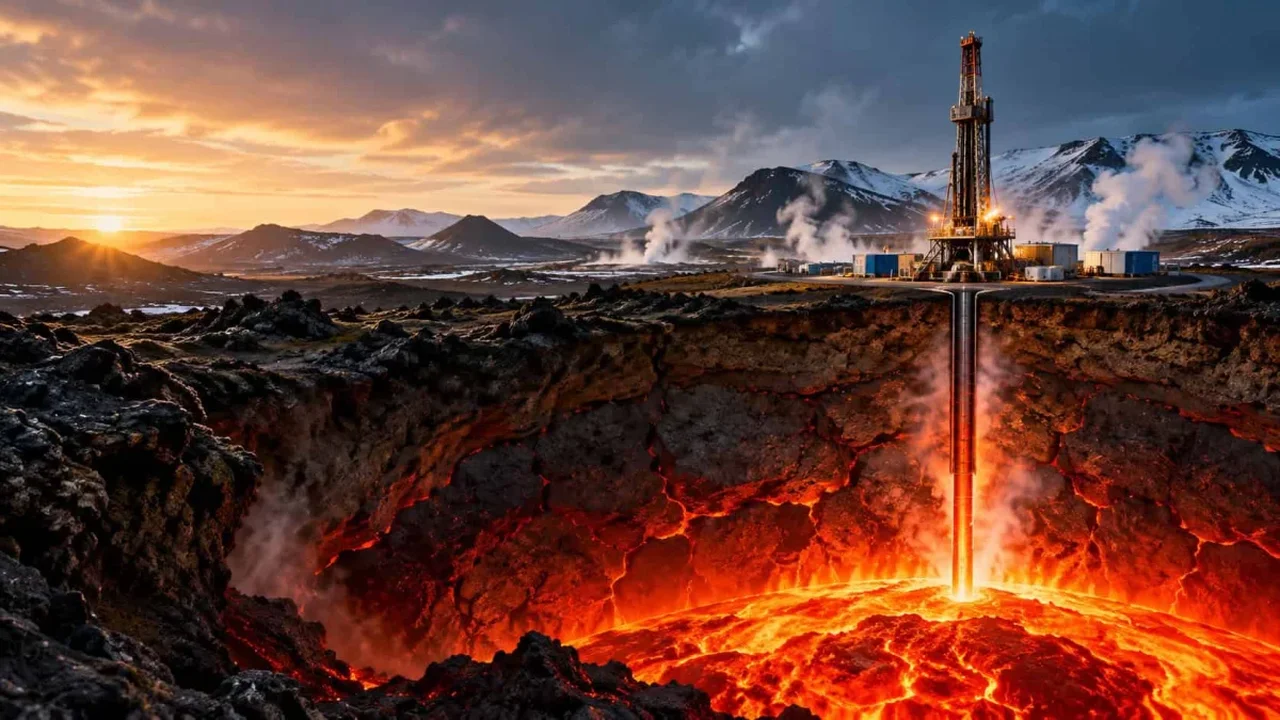
However, a recent study presents a new perspective. Researchers propose that, in contrast to Earth's magnetic field, which is generated by its core, the magnetic fields of these planets could originate from magma in the mantle.
Luca Maltagliati, a senior editor at Nature Astronomy, who was not involved in the study, noted that exoplanets may not follow the same magnetic field generation patterns observed in our solar system.
When Rocks Conduct Electricity
Earth's magnetic field is produced by the swirling iron in its outer core, creating an electric current that generates a magnetic field. On a Super-Earth, however, the immense weight can compress the iron core into a solid form, eliminating the possibility of a dynamo effect.
Miki Nakajima and her team at the University of Rochester explored the idea that under extreme planetary conditions, rocks could conduct electricity. They conducted experiments using powerful lasers to apply pressures of up to 1,400 Gigapascals to magnesium oxide, a common mineral found on planets.
The results were astonishing: the electrons within the rock began to move freely, effectively turning the rock into a metallic substance.
A More Robust Shield
This groundbreaking research challenges long-held beliefs. It reveals that iron is not a necessity for magma to become conductive; instead, the pressure itself can facilitate this process. Consequently, even planets with low iron content can maintain magnetic activity if they are three to six times the mass of Earth.
Moreover, the model developed by the research team indicates that a magma-driven dynamo can be up to ten times stronger than a traditional iron-core dynamo.
This revelation alters our understanding of what defines an "Earth-like" planet. The universe may be filled with "magma-shielded" worlds that, while appearing alien on the inside, could offer a protective environment on the surface.
The study also provides insights into the early Earth, which likely existed as a molten mass shortly after its formation. This primordial Earth may have lacked a solid inner core, raising questions about how it generated a magnetic field to protect early life. It's possible that a basal magma ocean fueled this magnetic protection. The research team plans to explore lower pressures that would have been present on the young Earth.
A New Era in Astronomy
While this remains a hypothesis, researchers are optimistic. The possibility of detecting magnetic fields generated by magma in Super-Earths could soon become a reality.
We stand on the brink of a new age in astronomy, with upcoming telescopes potentially capable of identifying the magnetic signatures of these distant planets. When we finally observe these signals, we may find not the pulse of an iron core, but the shimmering glow of a metallic ocean hidden in the depths.
This research underscores that habitability is not solely about a planet's distance from its star; it also depends on the geological processes beneath its surface. A vast ocean of liquid rock could be the ultimate safeguard for a planet's ability to host life.
The findings were published in Nature Astronomy.